16 Leopard Gecko Enclosure Ideas
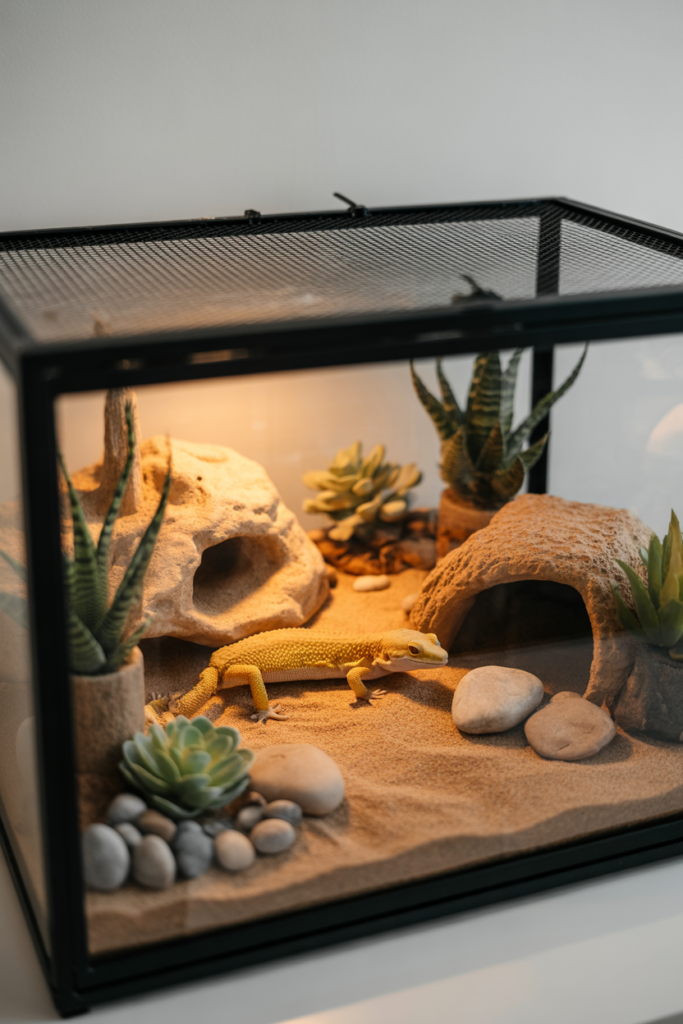
A proper enclosure is essential for keeping a Leopard Gecko healthy and stress-free. Unlike tropical reptiles, leopard geckos prefer dry, warm environments with plenty of hiding spots. The goal is to create a setup that feels secure while also supporting natural behaviors like hiding, exploring, and thermoregulating
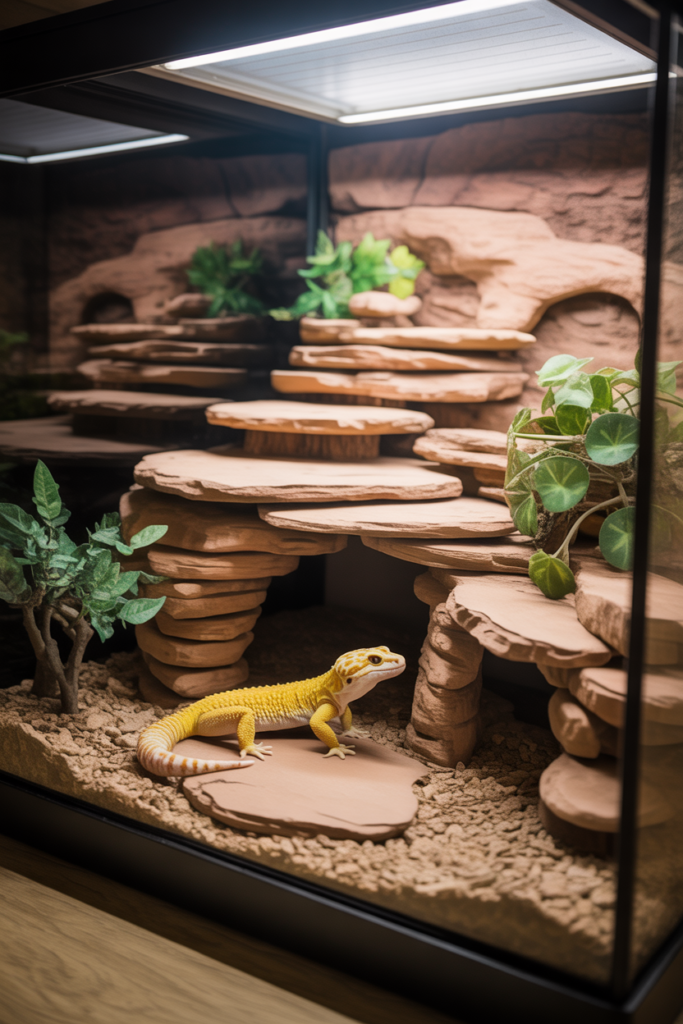
1. Natural Rocky Desert Enclosure
Recreate a dry, rocky habitat using stone structures, sand-safe substrate, and natural hides. Add stacked rocks or slate to create caves and climbing areas. This setup works because leopard geckos naturally live in rocky, arid regions where they can hide in crevices.
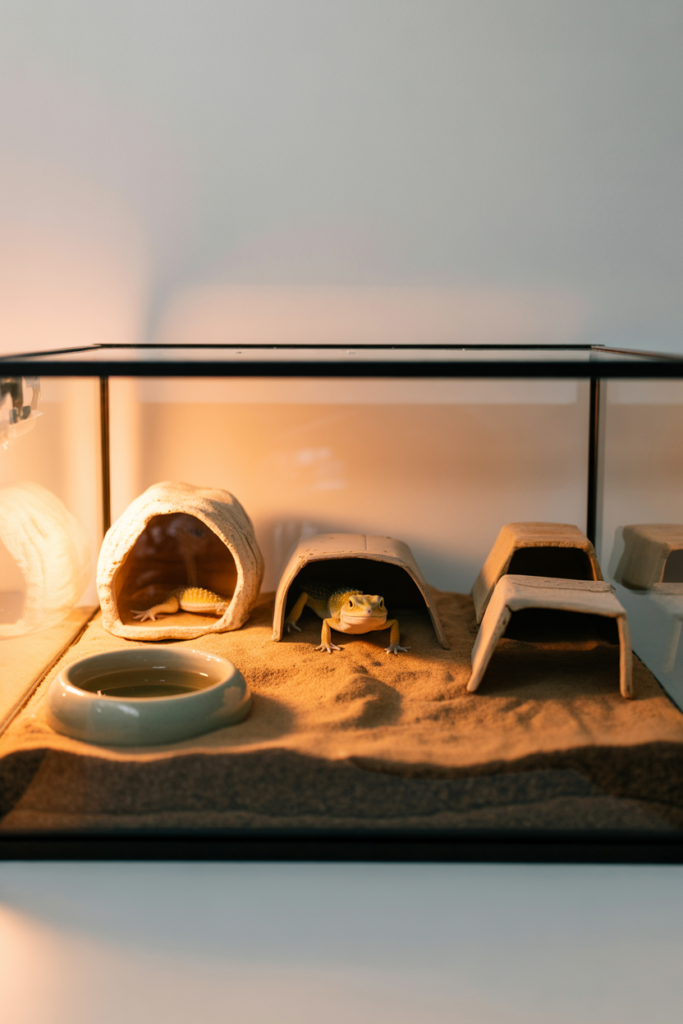
2. Minimal Beginner Setup with Essential Hides
For beginners, a simple enclosure with three hides (warm, cool, and humid), a water dish, and safe substrate is perfect. Avoid clutter but ensure the gecko has secure hiding spots. This idea works because leopard geckos prioritize safety and don’t need complex layouts to thrive.
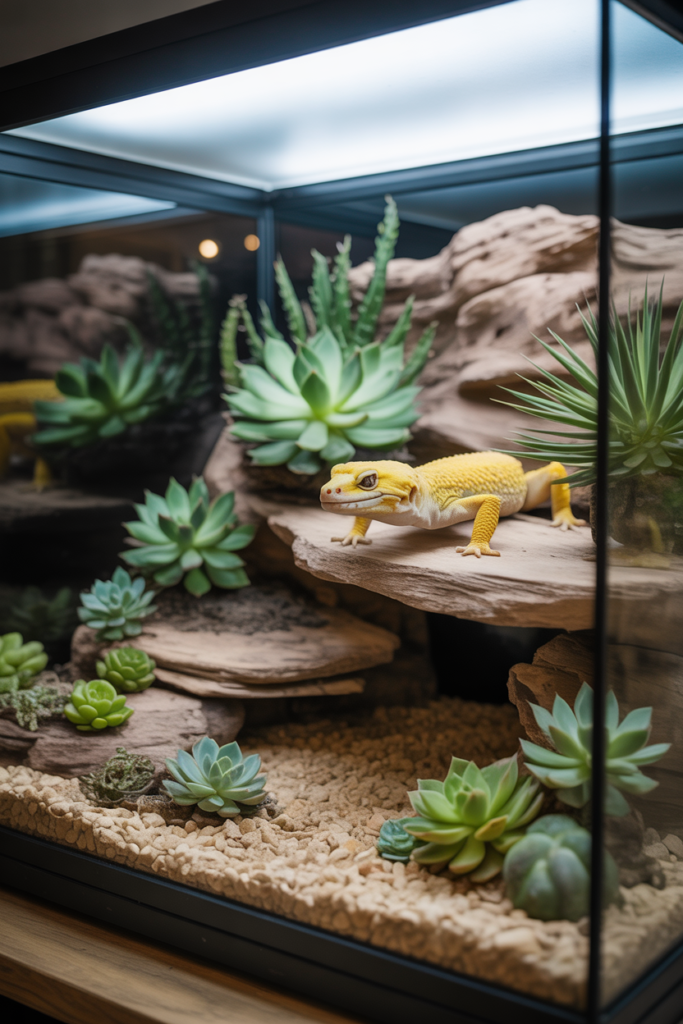
3. Bioactive Arid Enclosure
Create a bioactive desert setup using live succulents, isopods, and layered substrate. This forms a small ecosystem that helps maintain cleanliness. This idea works because it mimics nature while reducing maintenance.
4. Sand and Stone Mixed Terrain
Use a mix of packed substrate (sand + soil mix) with flat stones to create a natural walking surface. Avoid loose sand alone. This setup works because it supports natural movement while preventing health issues.
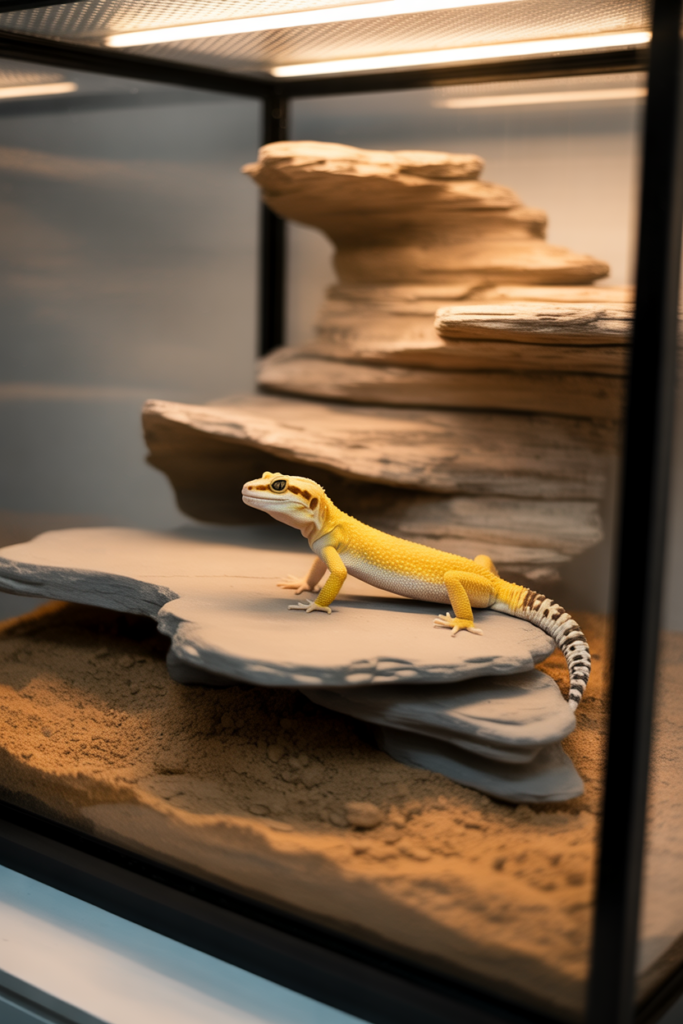
5. Multi-Hide Enclosure with Clutter
Add multiple hides, plants, and decor to create a cluttered environment. This reduces stress and encourages exploration. This idea works because leopard geckos feel safer when they can move between covered areas.
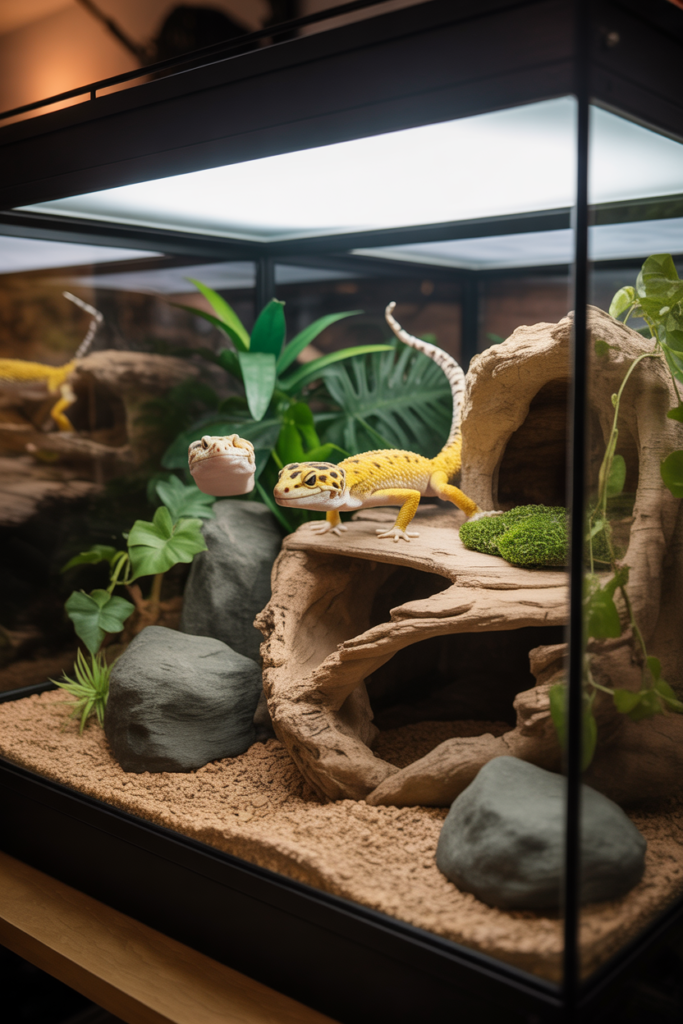
6. Three-Zone Layout (Warm, Cool, Humid)
Design the enclosure with clear zones: a warm side (for basking and digestion), a cool side (for resting), and a humid hide (for shedding). Place hides in each zone so your Leopard Gecko can choose comfort without feeling exposed. This idea works because proper thermoregulation is essential for health, and multiple zones give flexibility.
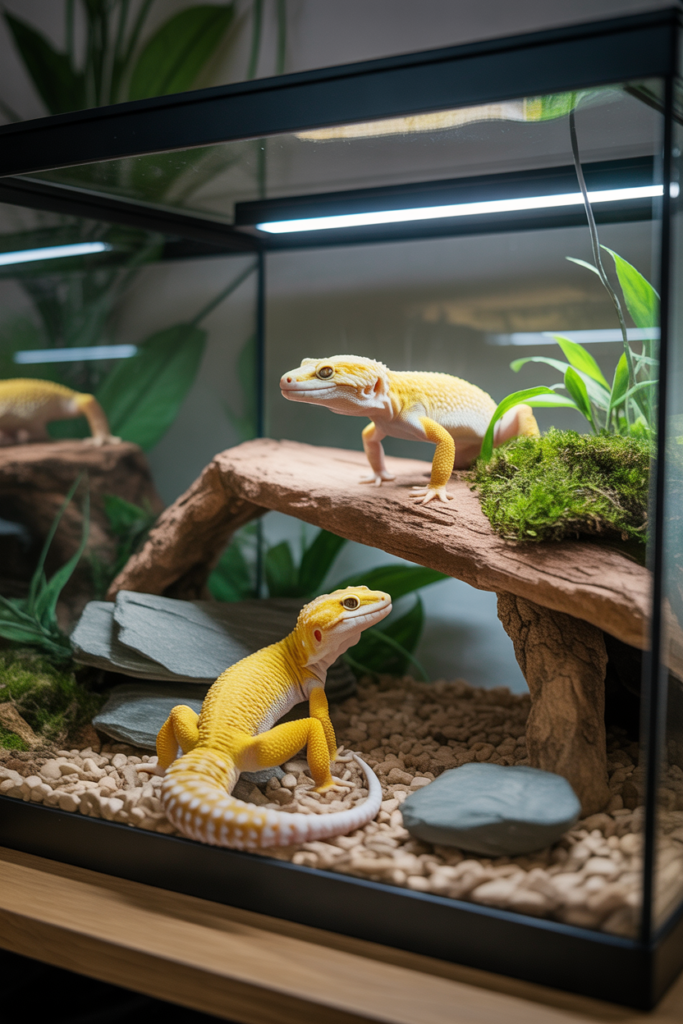
7. Slate Tile Flooring for Easy Maintenance
Use slate or ceramic tiles as the main flooring. It holds heat well, provides a natural look, and is very easy to clean. You can place loose substrate only in specific digging areas. This idea works because it combines hygiene, safety, and practicality—perfect for beginners.
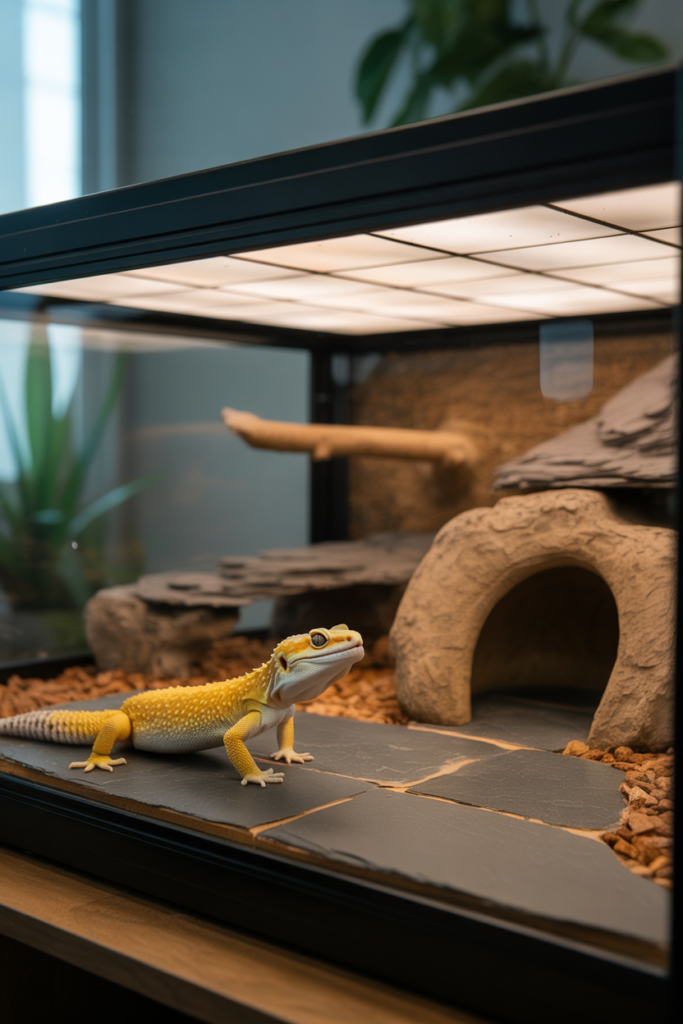
8. Enclosure with Dig Box Enrichment
Add a dedicated “dig box” filled with safe substrate like soil/sand mix or coconut fiber. This allows natural digging behavior without risking impaction. This idea works because enrichment improves activity and reduces stress.
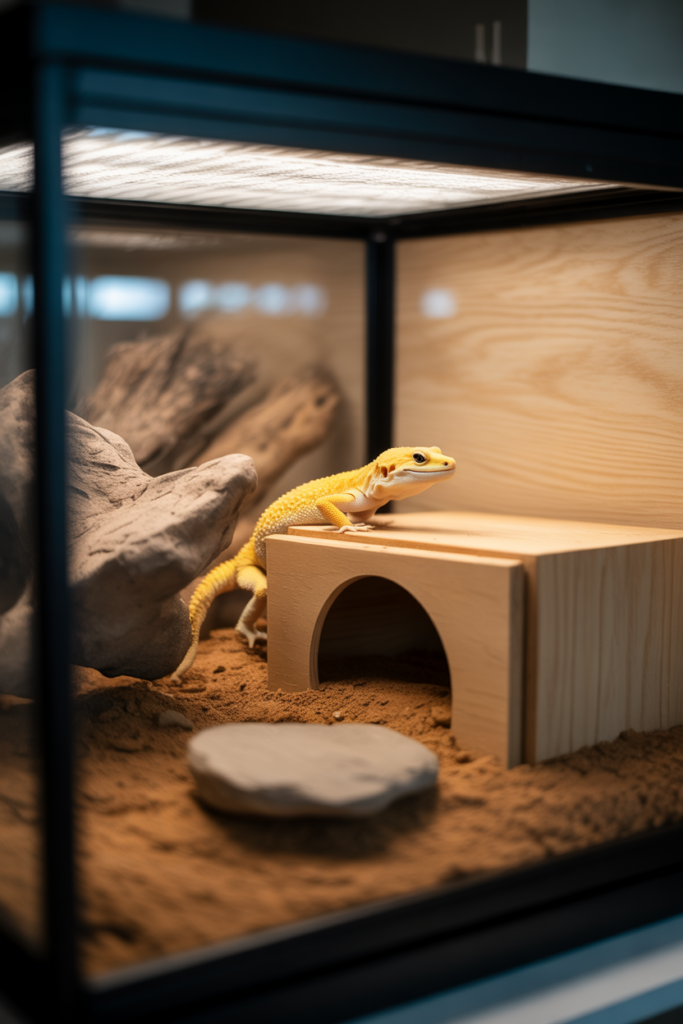
9. Background Wall with Rock Texture
Install a 3D foam or rock-textured background to create depth and climbing opportunities. It makes the enclosure look natural and gives the gecko more surfaces to explore. This idea works because it adds enrichment without taking up floor space.
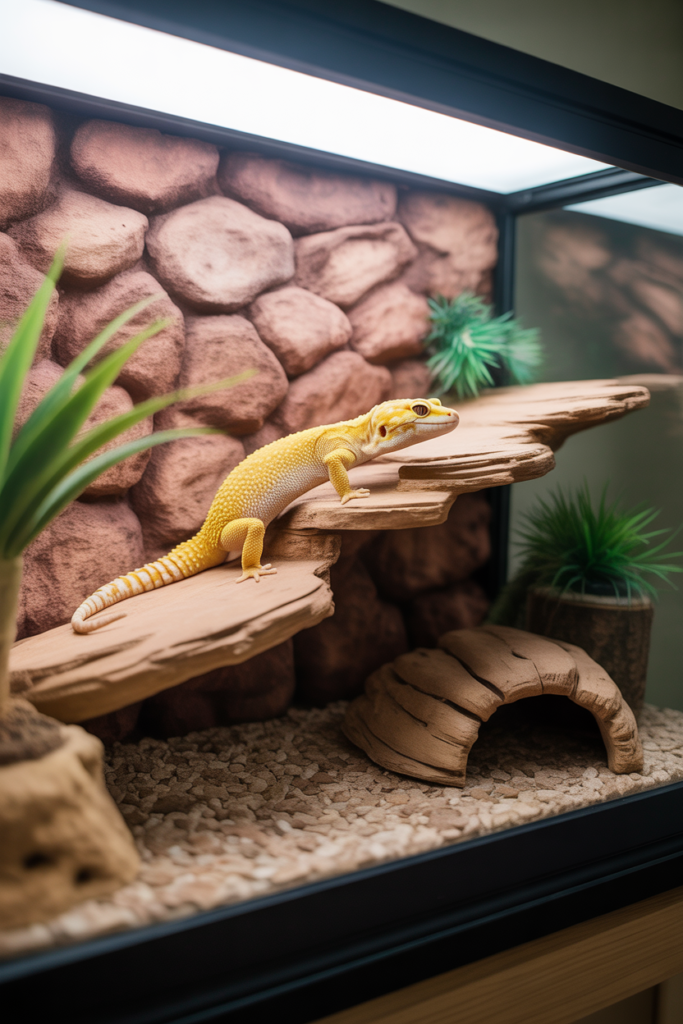
10. Low-Climb Platform Setup
Although leopard geckos are not strong climbers, they enjoy low-height platforms. Add flat rocks or ledges for basking and exploring. This idea works because it adds variety without risking falls or injury.
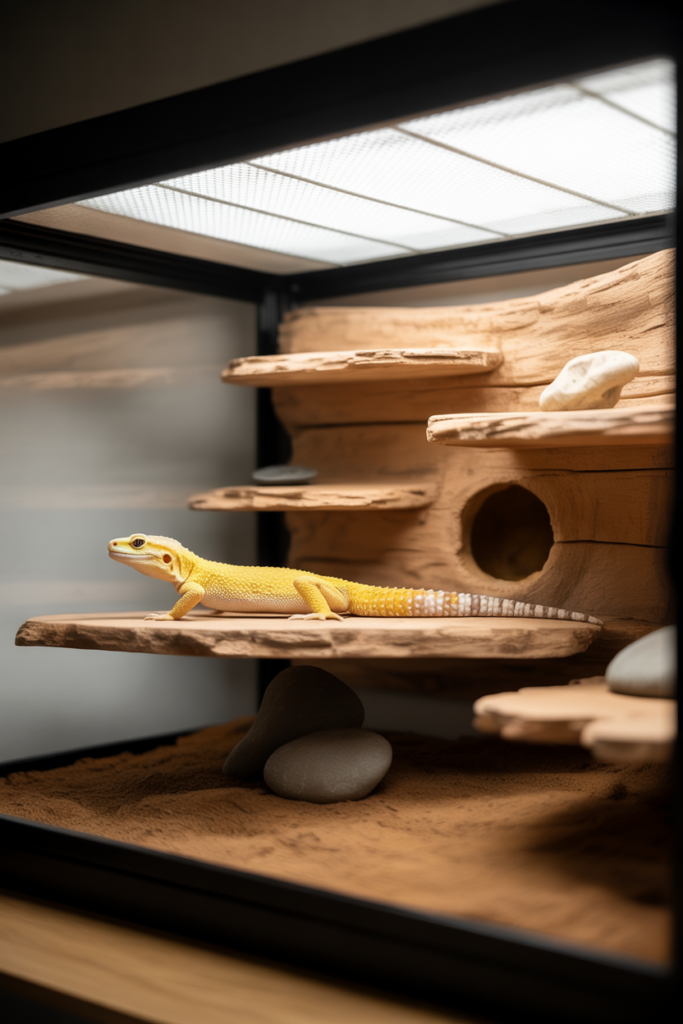
11. Overhead Heating with Thermostat Control
Use overhead heating like a halogen bulb or ceramic heat emitter connected to a thermostat. This creates a natural heat gradient and prevents overheating. This idea works because stable temperatures are critical for your Leopard Gecko to digest food and stay active.
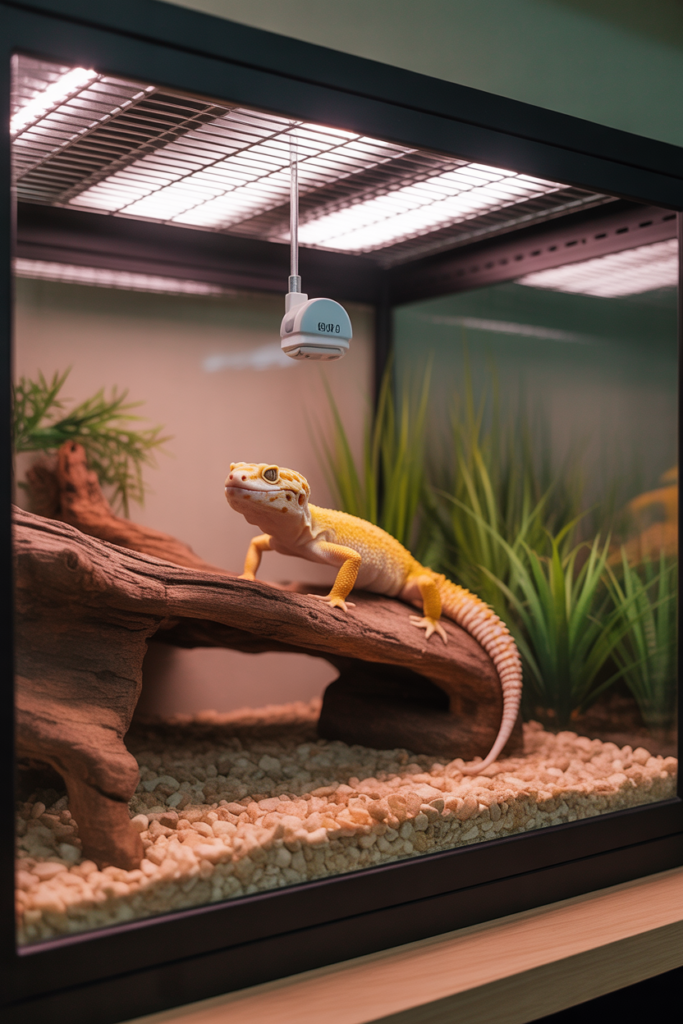
12. Humid Hide with Moss for Shedding
Add a humid hide filled with damp sphagnum moss to help your gecko shed properly. Place it on the warm side so moisture stays consistent. This idea works because leopard geckos need a moist microclimate even in a dry enclosure.
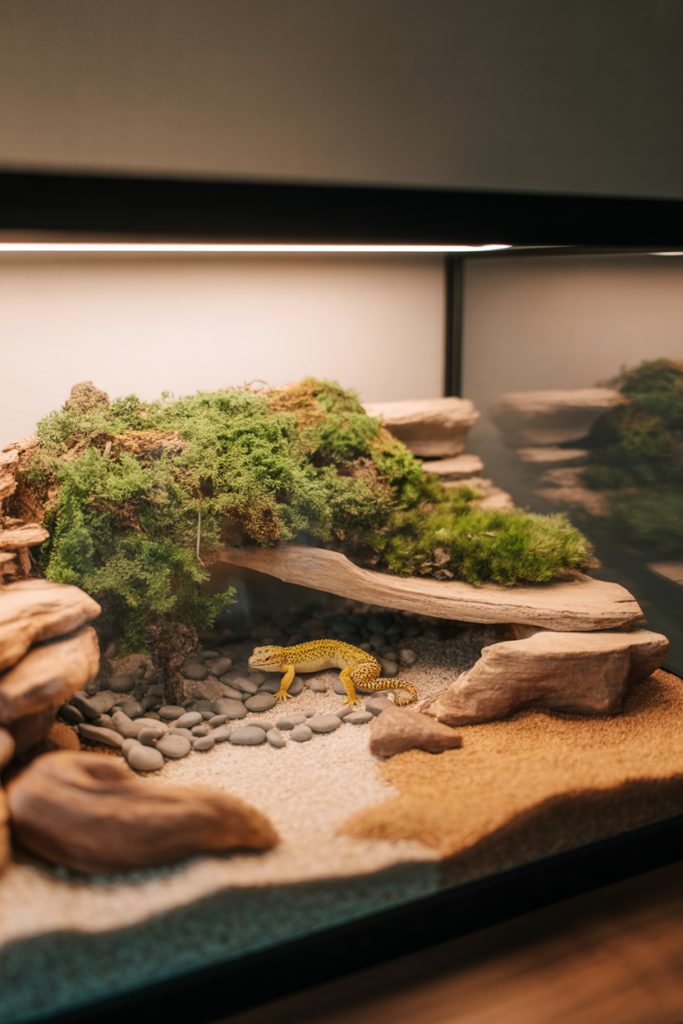
13. Large Water Dish with Safe Placement
Provide a shallow but stable water dish placed on the cool side. This prevents excess evaporation while keeping hydration accessible. This idea works because proper hydration is essential without raising humidity too much.
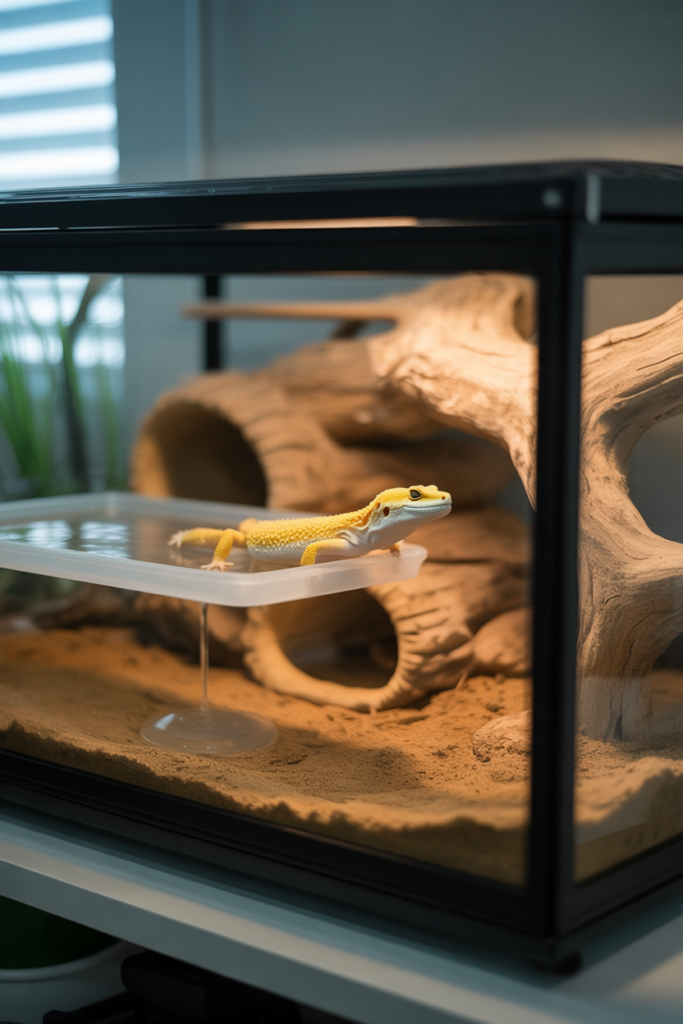
14. Cluttered Enclosure for Security
Fill the enclosure with multiple hides, rocks, plants, and decor to reduce open space. This helps the gecko feel secure and encourages natural movement. This idea works because leopard geckos avoid open exposure and prefer covered pathways.
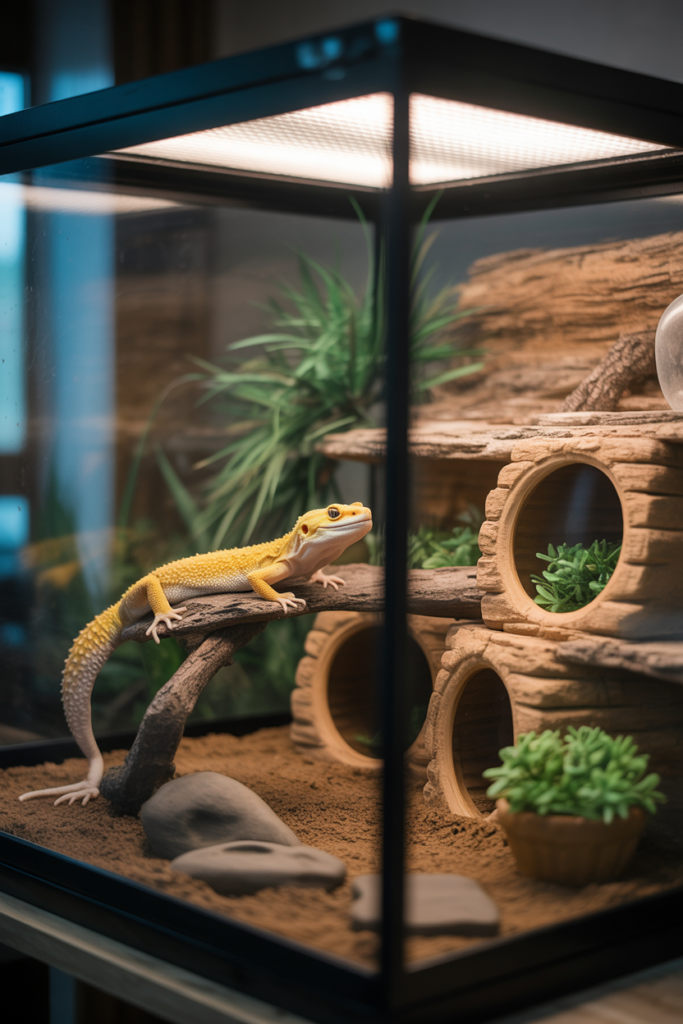
15. Feeding Station Area
Designate a small area for feeding using a dish or flat surface. This helps keep the enclosure clean and makes feeding easier. This idea works because it creates routine and reduces mess from loose insects.
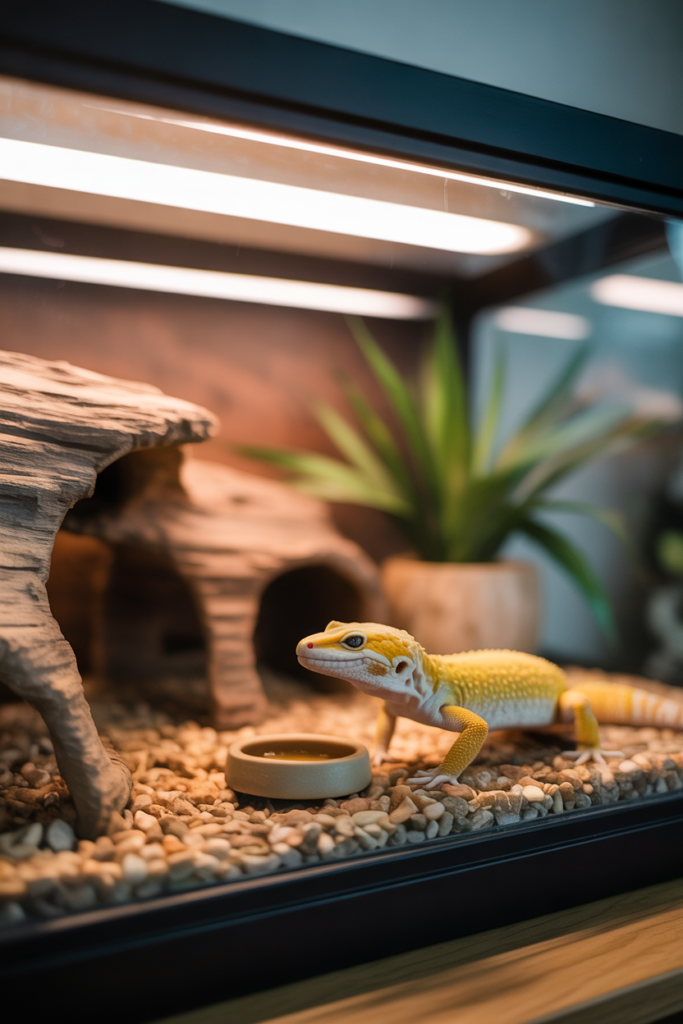
16. Escape-Proof Enclosure with Secure Lid
Make sure your enclosure has a secure lid or front-opening doors with locks. Leopard geckos are curious and can escape through small gaps. This idea works because safety is essential for both the reptile and your home.
Conclusion
A well-designed enclosure is the foundation of a healthy leopard gecko. These reptiles thrive in environments that are warm, dry, and full of secure hiding spots.
To create the ideal setup:
- provide multiple hides (warm, cool, and humid)
- maintain a proper temperature gradient with controlled heating
- use safe substrate and enrichment features
- ensure the enclosure is secure and easy to maintain
Whether you choose a simple beginner setup or a detailed naturalistic enclosure, the goal is always the same—create a space where your leopard gecko feels safe, comfortable, and able to behave naturally