19 Bearded Dragon Enclosure Ideas
A proper enclosure is essential for keeping a Bearded Dragon healthy and active. These reptiles come from dry, desert-like environments, so they need high heat, strong lighting, open space, and climbing areas. The goal is to create a habitat that allows basking, movement, and natural behaviors while staying safe and easy to maintain.
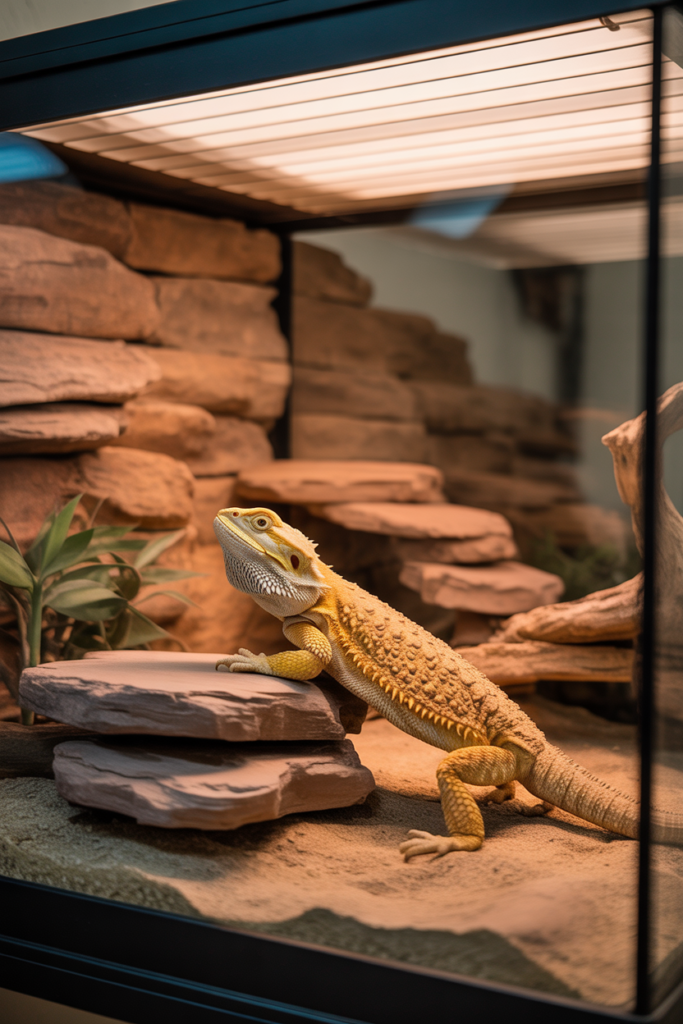
1. Natural Desert Rockscape Enclosure
Create a desert-style habitat using rocks, sand-safe substrate, and natural textures. Add stacked stones and basking platforms under a heat lamp. This setup works because bearded dragons love basking on elevated surfaces and need high temperatures to regulate their body.
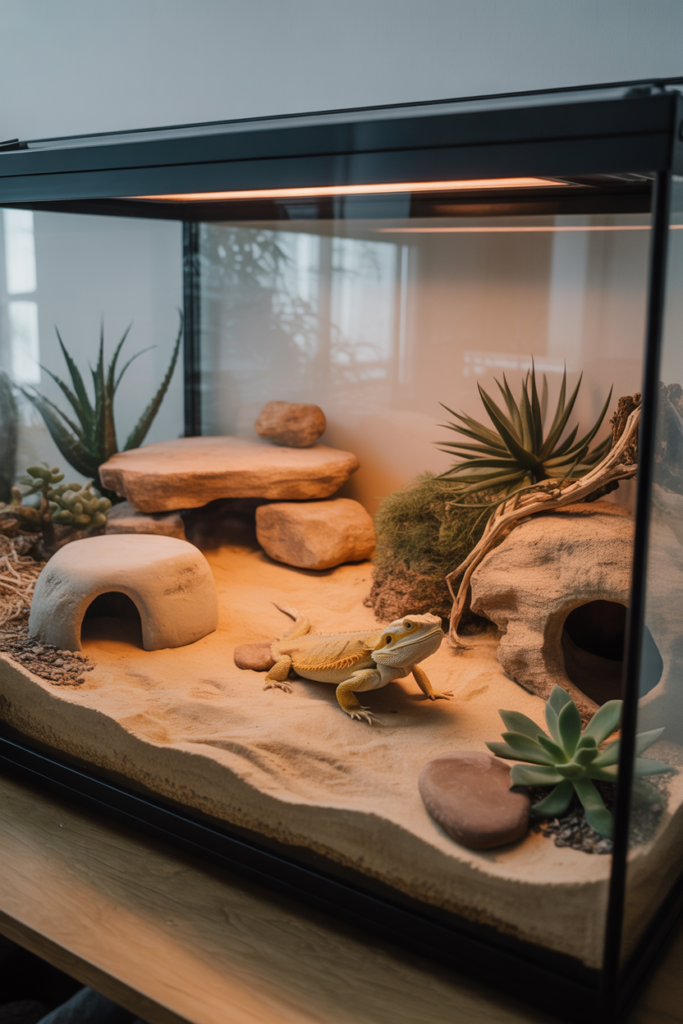
2. Large Open Enclosure for Movement
Bearded dragons need space to move, explore, and stretch. Use a wide enclosure with minimal clutter but include key features like basking spots and hides. This idea works because these reptiles are active and benefit from open, walkable areas.
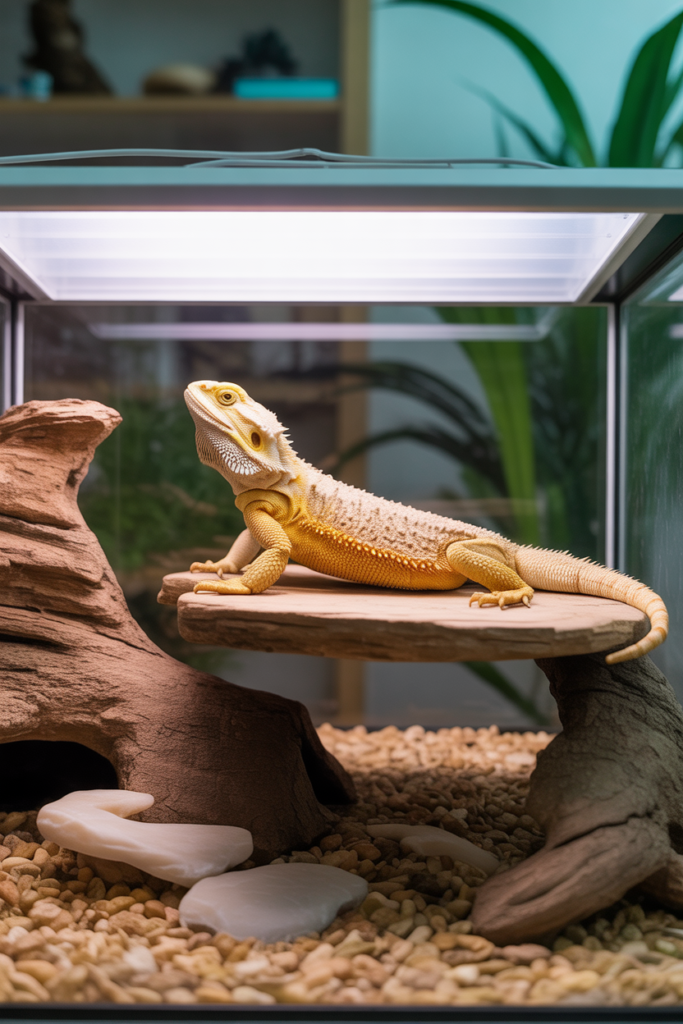
3. Basking Zone with Elevated Platform
Design a strong basking area using rocks or wood positioned close to the heat source. Ensure proper UVB exposure. This idea works because basking is essential for digestion and overall health.
4. Bioactive Desert Enclosure
Create a bioactive setup with arid plants, isopods, and natural substrate layers. This forms a self-cleaning ecosystem. This idea works because it mimics natural conditions while reducing maintenance.
5. Wood and Branch Climbing Setup
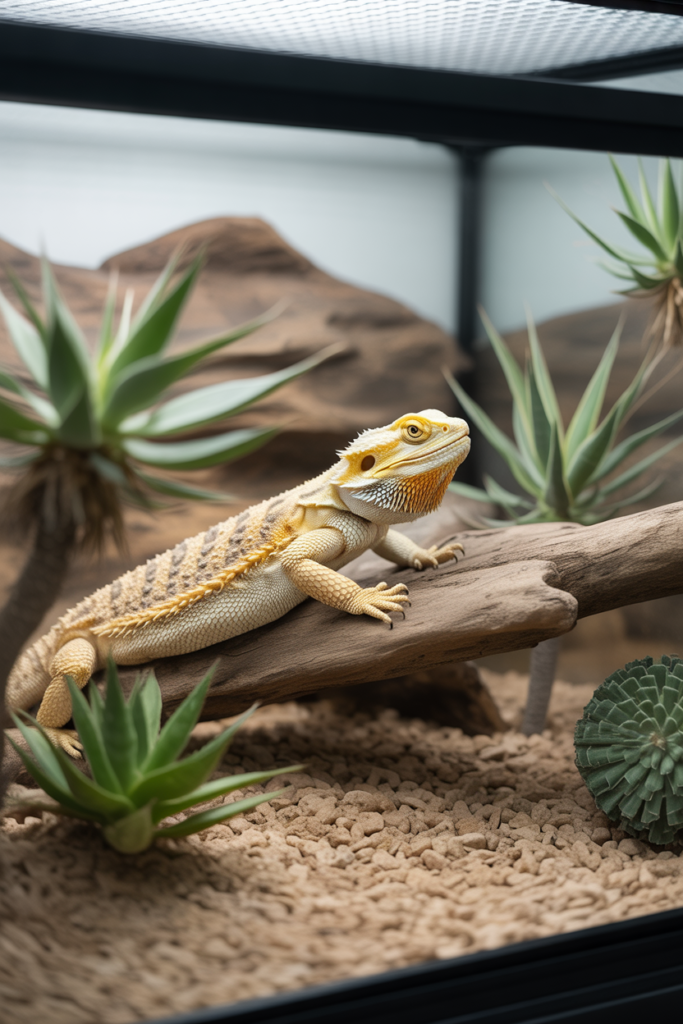
Add sturdy branches and driftwood for climbing and exploration. While bearded dragons are ground-dwelling, they enjoy climbing low structures. This idea works because it adds enrichment and encourages activity.
6. Full-Length UVB Lighting Setup
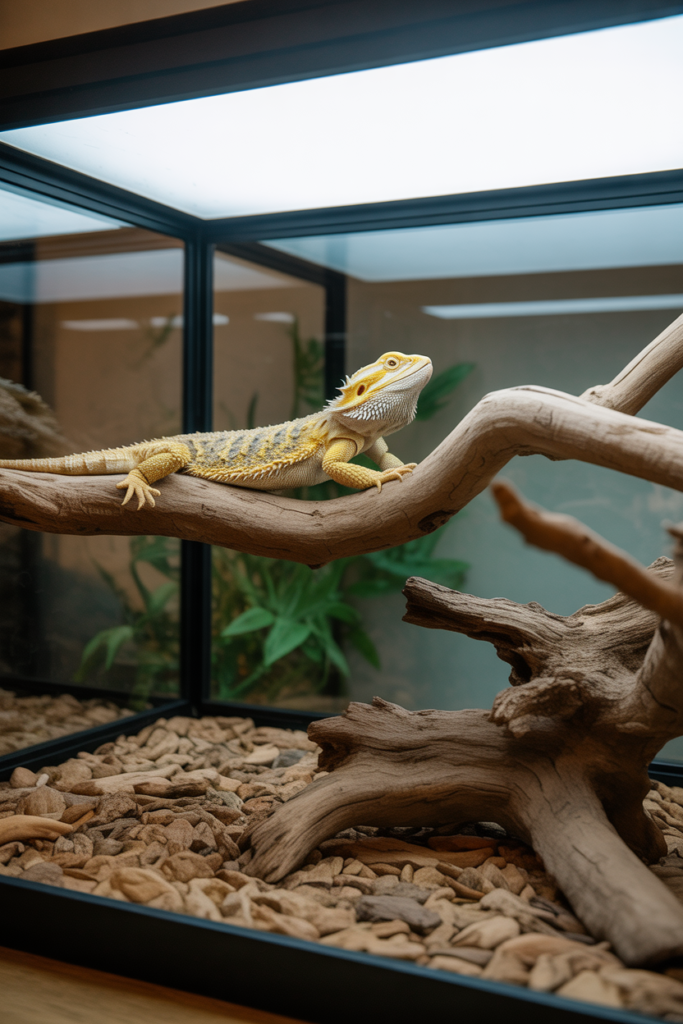
Install a long UVB tube (T5 HO) that spans at least half to two-thirds of the enclosure. Position it so your Bearded Dragon can bask within the correct distance (follow the bulb’s manufacturer guidelines). This idea works because proper UVB is essential for calcium metabolism and prevents metabolic bone disease. Pair it with a bright basking lamp to create a strong, sun-like zone.
7. Solid Substrate (Tile or Packed Mix) for Safety
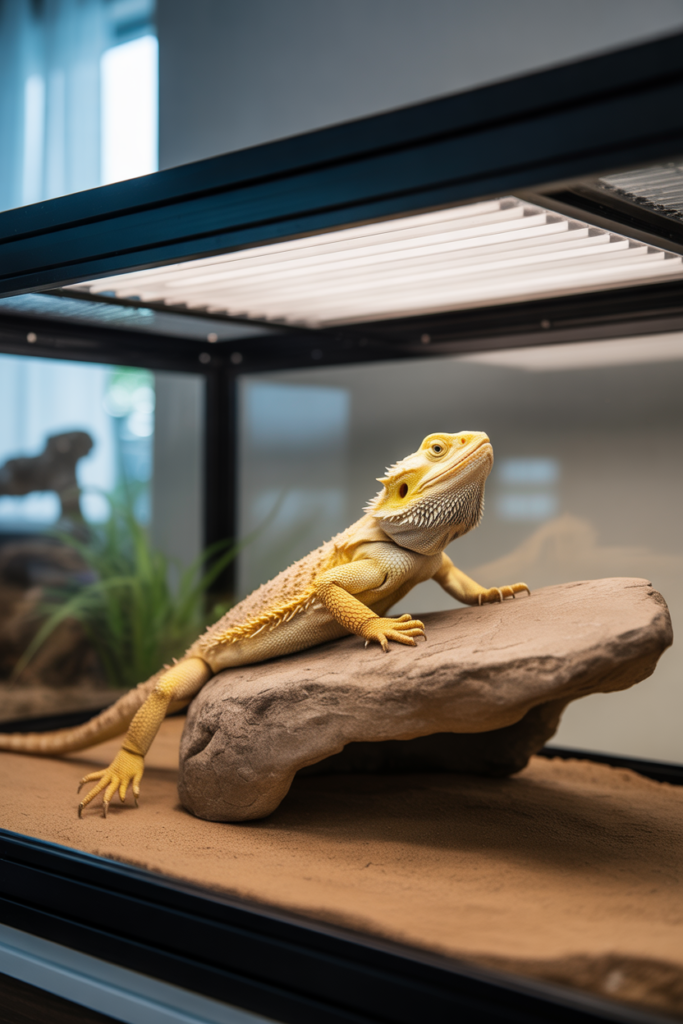
Use ceramic/slate tile or a packed sand–soil mix instead of loose sand. Tiles are easy to clean and hold heat; packed substrate allows natural digging without impaction risk. This idea works because it balances hygiene, safety, and natural behavior.
8. Hide Zones on Warm and Cool Sides
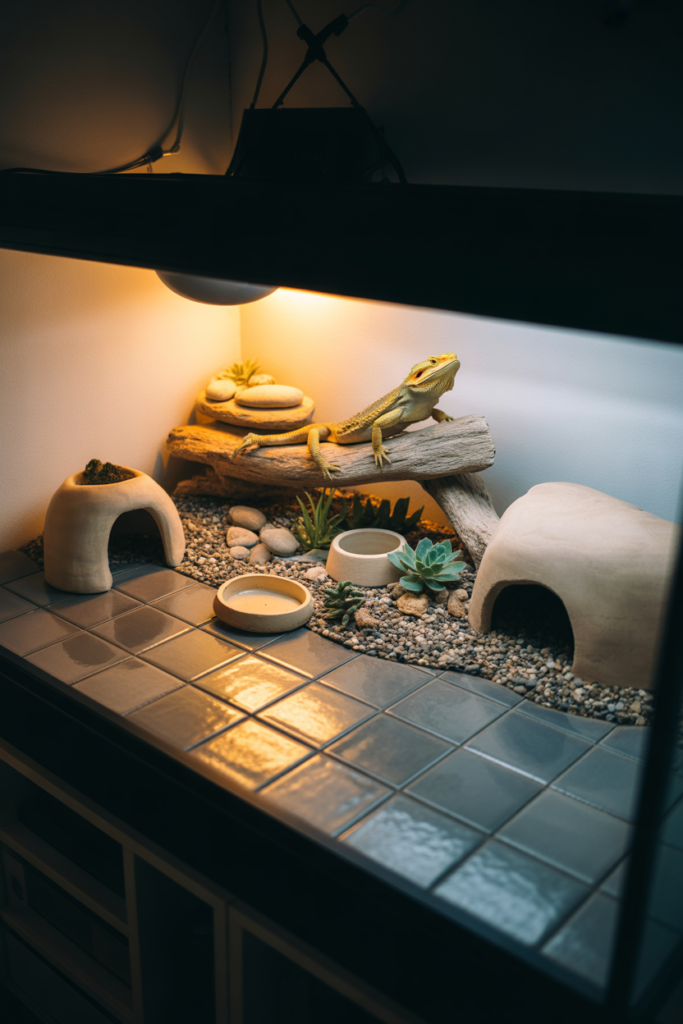
Provide at least two hides—one on the warm side and one on the cool side. Keep them snug but accessible. This idea works because dragons need a place to retreat while still maintaining their preferred body temperature without stress.
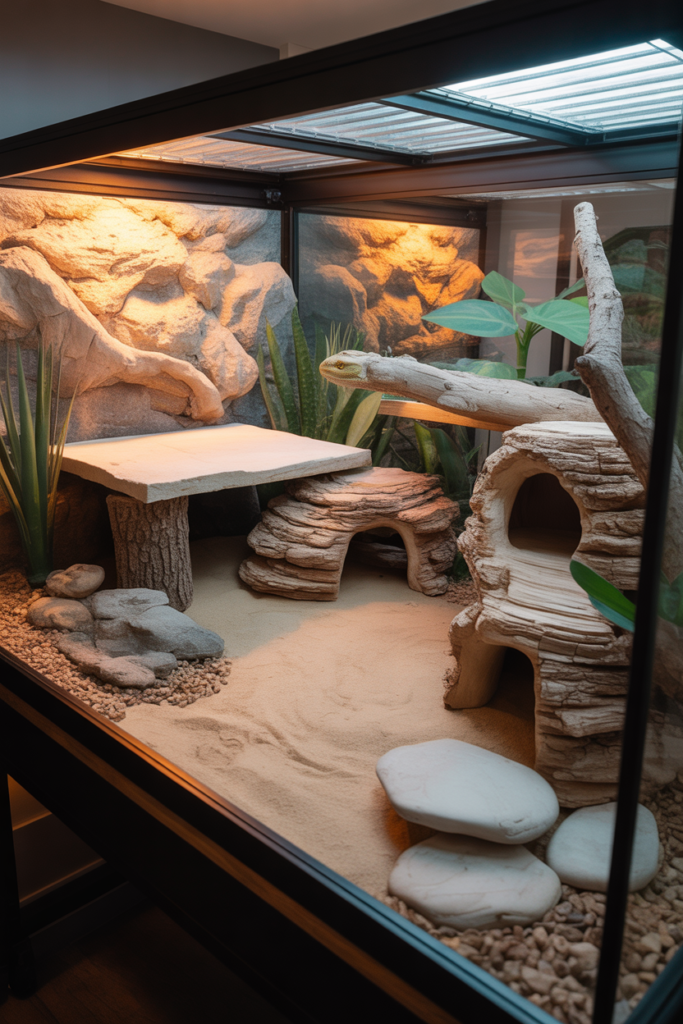
9. Feeding Station with Veg Bowl & Insect Dish
Create a dedicated feeding area using a low veg bowl for greens and a smooth-sided insect dish to keep feeders contained. This idea works because it keeps the enclosure cleaner, establishes routine, and prevents insects from hiding in the substrate.Detailed Enclosure Prompt:
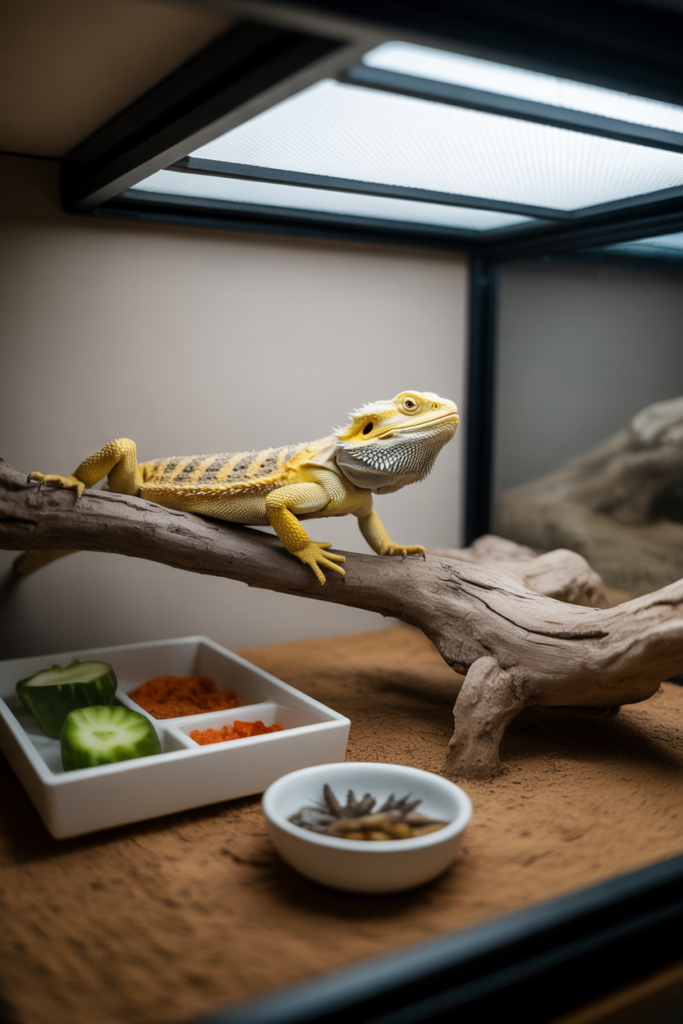
10. Hammock or Mesh Lounger for Elevated Resting
Add a reptile hammock or mesh lounger near the basking zone. It gives your dragon a comfortable elevated spot to rest and thermoregulate. This idea works because it provides enrichment and varied perching options without adding heavy structures.
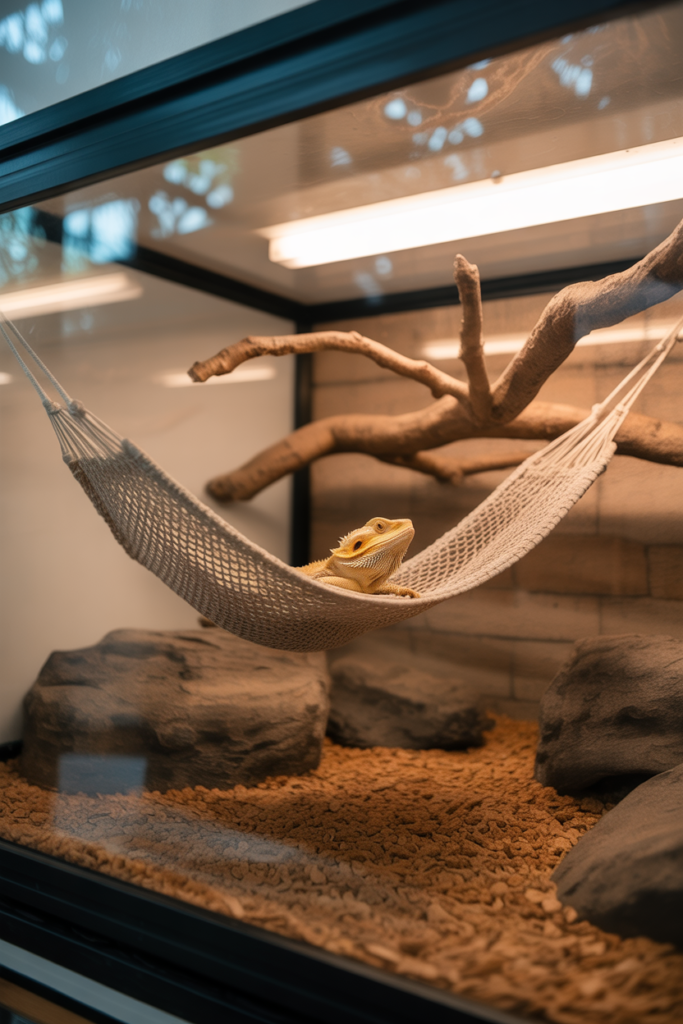
11. Temperature Gradient Layout (Hot → Cool)
Create a clear gradient: basking zone ~100–110°F, warm side ~90°F, cool side ~75–85°F. Place the basking platform directly under the heat source and keep the opposite end shaded. This idea works because your Bearded Dragon relies on external heat to regulate digestion, activity, and overall health.
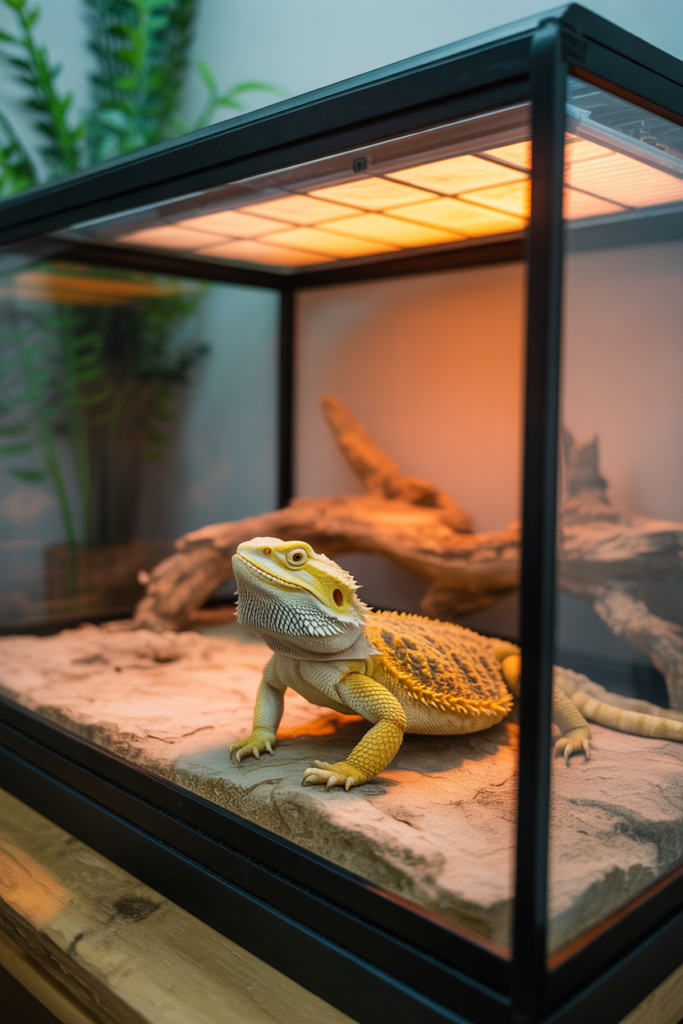
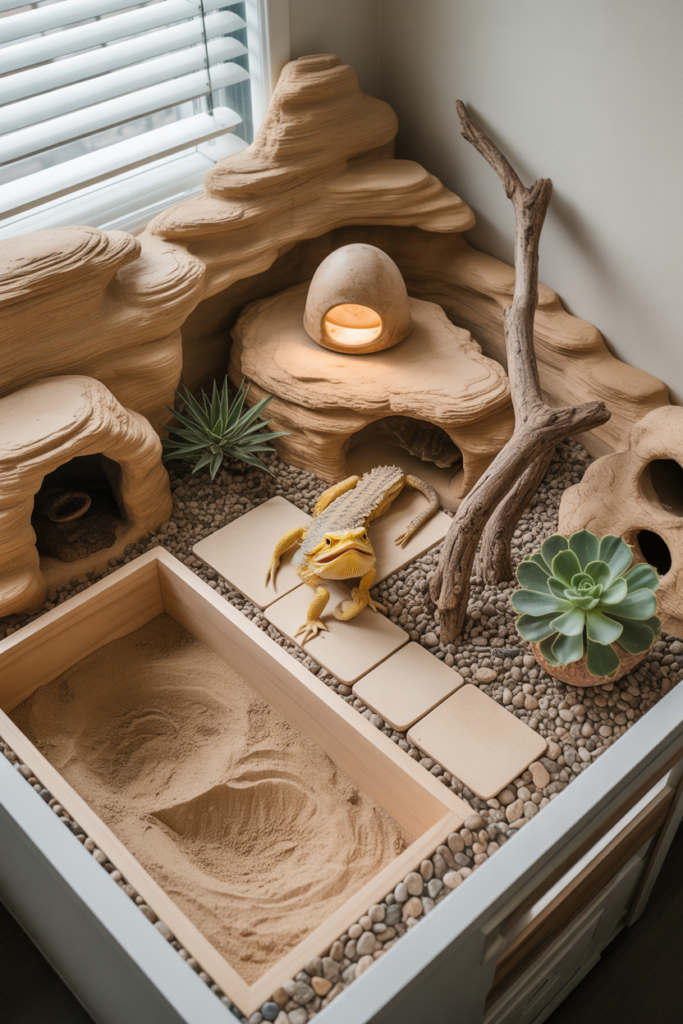
12. Dig Box for Natural Burrowing Behavior
Add a dig box filled with a safe, slightly moist sand–soil mix. Keep it contained so the rest of the enclosure stays clean. This idea works because digging is a natural behavior—especially for females—and it provides enrichment without risking impaction.
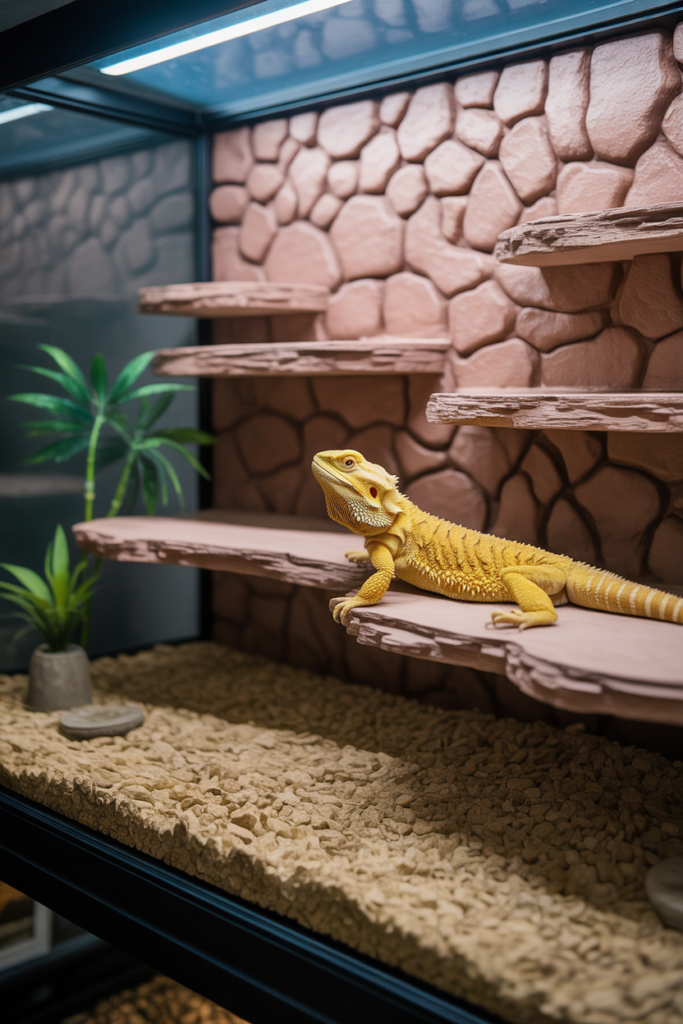
13. 3D Background Wall for Depth & Climbing
Install a foam or cork 3D background with ledges and textures. It adds depth and low climbing opportunities without crowding the floor. This idea works because it increases usable space and creates a more natural, visually rich habitat.
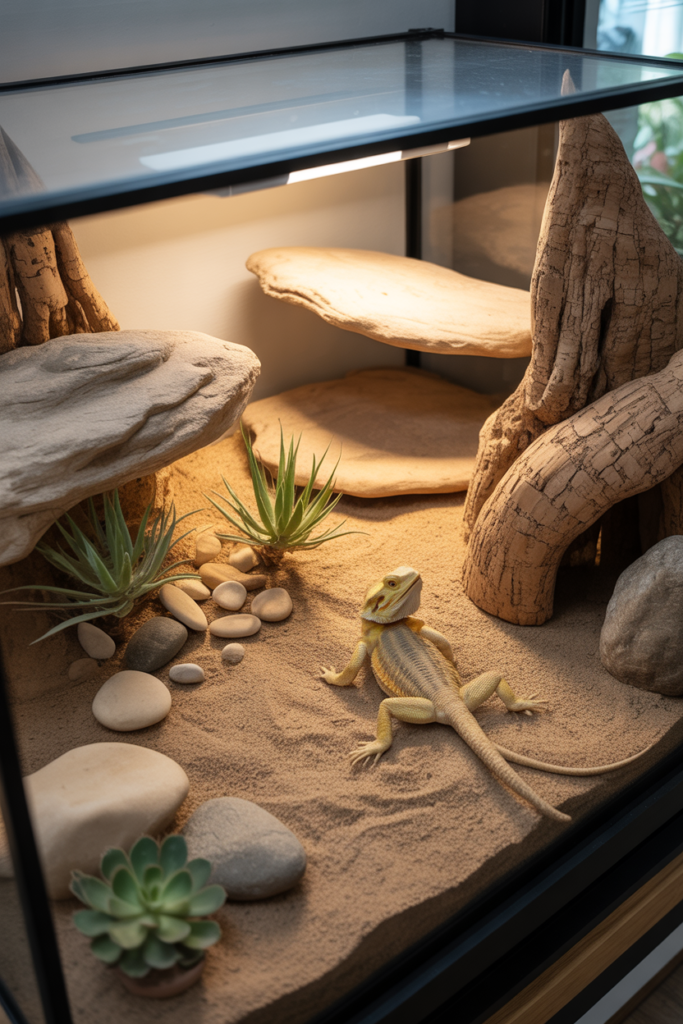
14. Low, Wide Hides for Easy Access
Use low-profile hides that are easy to enter and exit. Avoid tall, narrow caves that restrict movement. This idea works because bearded dragons are ground-oriented and prefer accessible shelter without tight vertical spaces.
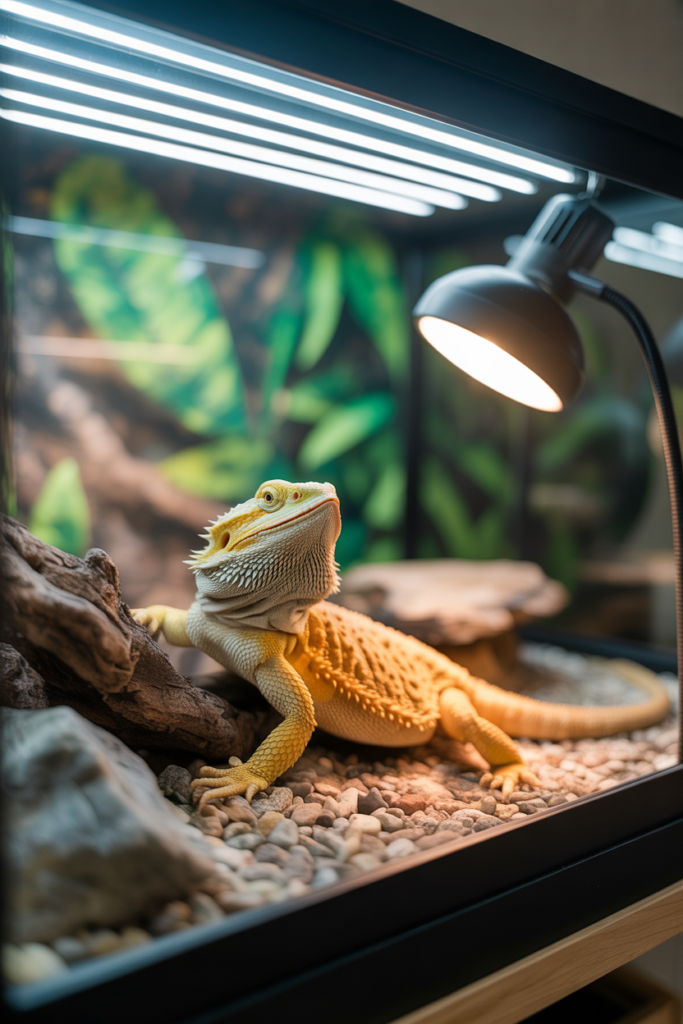
15. Bright Visible Lighting (Daylight Effect)
Combine your heat and UVB with bright visible lighting (LED/daylight bulbs) to mimic a sunny environment. This encourages activity and appetite. This idea works because bearded dragons are diurnal and respond to strong, natural-looking light.
16. Front-Opening Enclosure for Easy Access
A front-opening enclosure makes feeding, cleaning, and handling much easier compared to top-opening tanks. It also reduces stress for your Bearded Dragon since you’re not approaching from above like a predator. This idea works because it improves both convenience for you and comfort for your reptile.
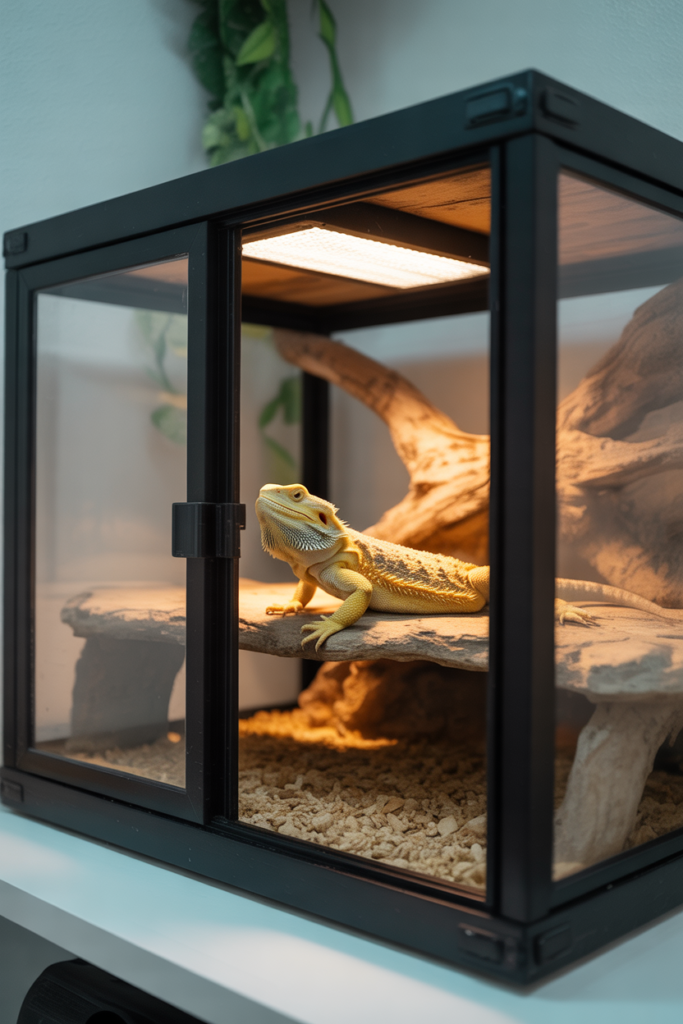
17. Enclosure with Natural Decor Accents
Add natural-looking decor like rocks, driftwood, and desert plants (real or artificial) to make the enclosure visually appealing. Keep it functional and not overcrowded. This idea works because it creates a natural environment while still maintaining open space for movement.
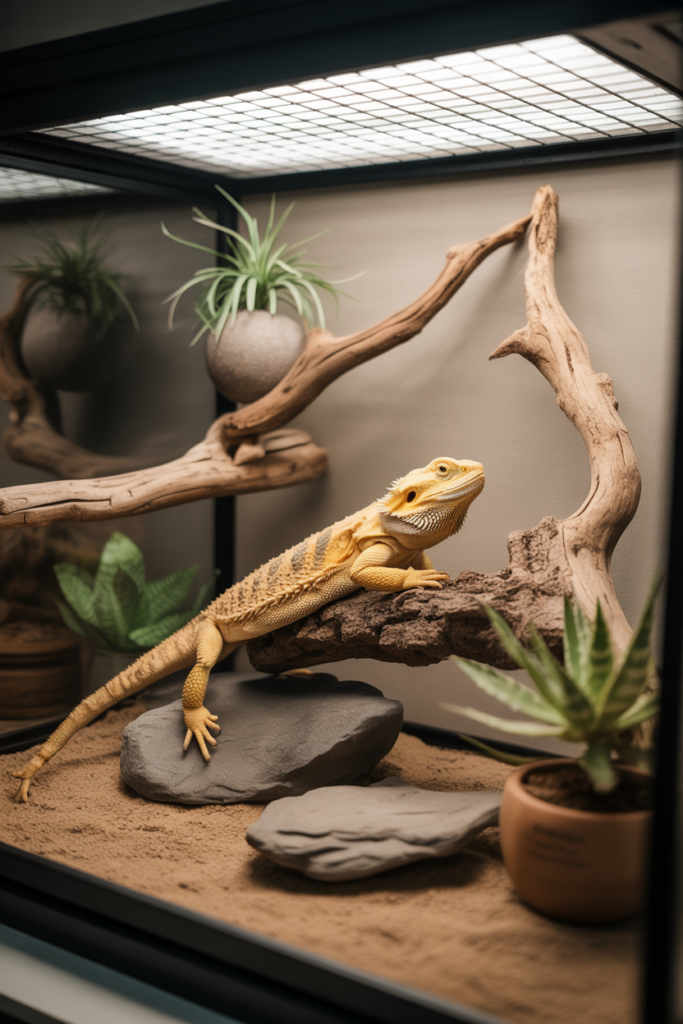
18. Secure Ventilation Setup for Airflow
Proper airflow is important in a bearded dragon enclosure. Use enclosures with side or back vents to prevent stale air and maintain a healthy environment. This idea works because good ventilation reduces humidity buildup and keeps conditions stable.
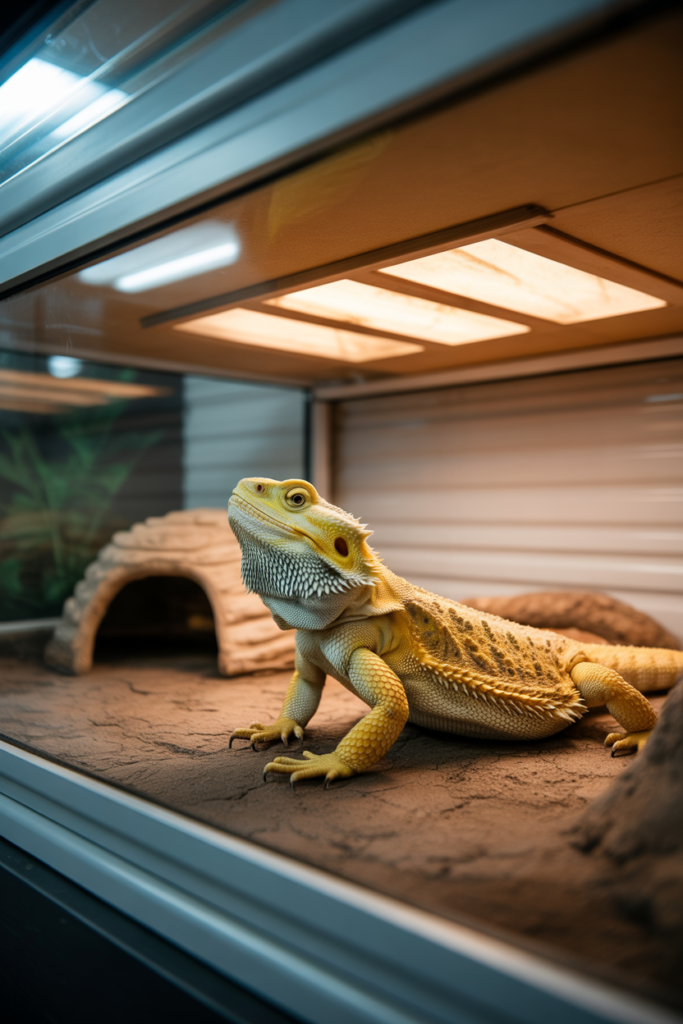
19. Escape-Proof Enclosure with Locking System
Always ensure your enclosure has a secure lid or locking doors. Bearded dragons can be surprisingly strong and curious. This idea works because it prevents escapes and keeps your reptile safe at all times.
Conclusion
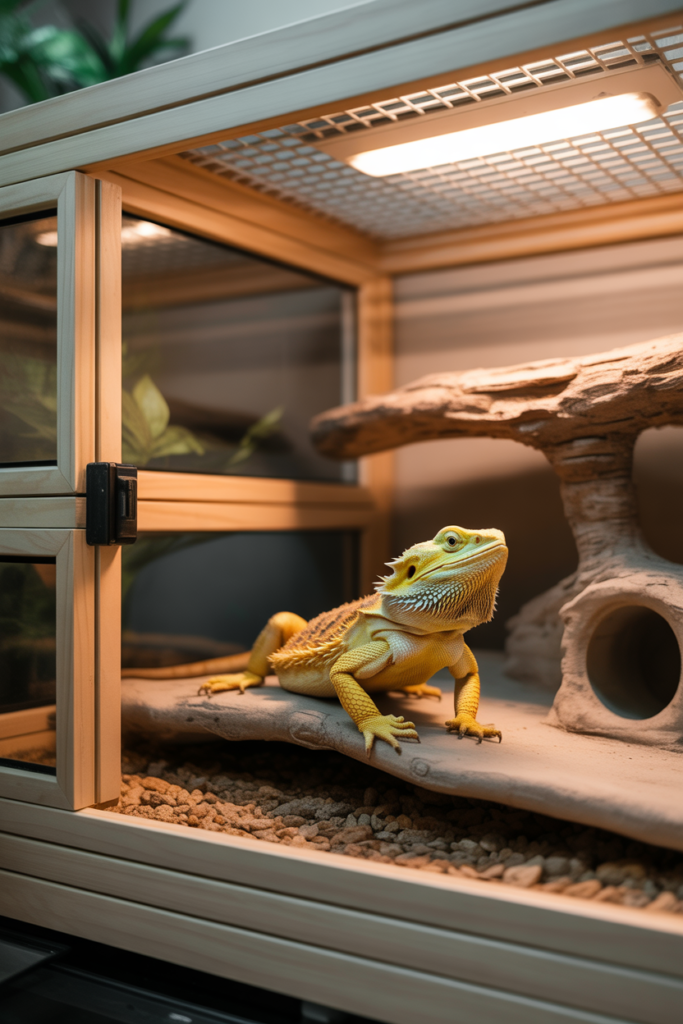
A well-designed enclosure is the foundation of a healthy bearded dragon. These reptiles need space, heat, strong lighting, and a safe environment to thrive.
To create the ideal setup:
- provide a clear temperature gradient with proper basking heat
- install full-length UVB lighting for health
- use safe substrate and enrichment features
- ensure proper ventilation and secure housing
Whether you choose a simple beginner setup or a detailed natural enclosure, the goal is always the same—create a habitat that supports natural behavior and keeps your bearded dragon active, healthy, and stress-free