
16 Mediterranean Courtyard Garden Ideas
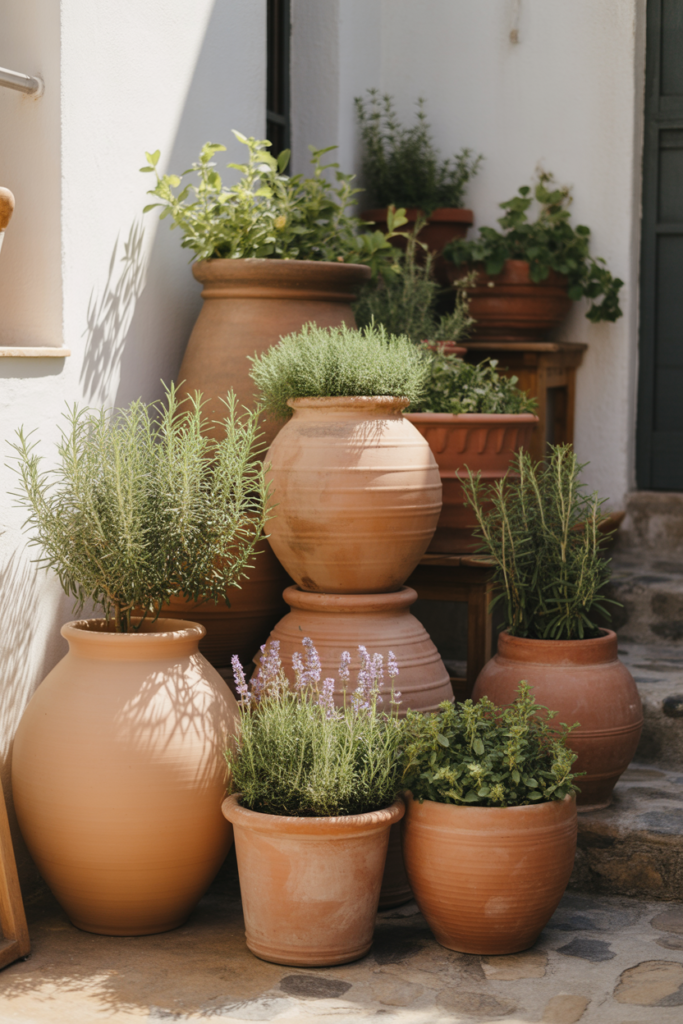
1. Terracotta Pot Clusters with Layered Heights
Terracotta pots are the heart of Mediterranean design, but the real magic comes from how you arrange them. Instead of placing pots evenly, create clusters with different heights and sizes. Place large pots at the back, medium in the middle, and smaller ones in front. This layering creates depth and makes the courtyard feel full and lived-in. Use plants like rosemary, lavender, thyme, or small citrus trees to enhance authenticity. The warm clay tones contrast beautifully with greenery and white walls, creating that iconic Mediterranean warmth. This idea works especially well in small courtyards because it adds richness without needing furniture or complex structures.
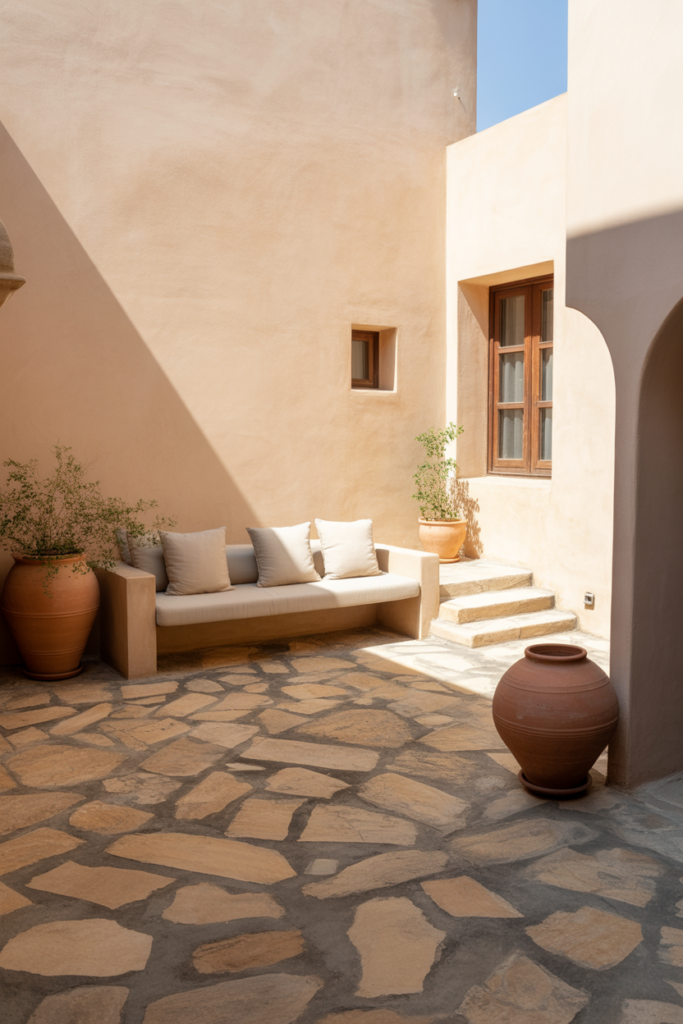
2. Sun-Faded Stone Flooring with Natural Imperfections
Perfect Mediterranean courtyards don’t look perfect—they look aged and natural. Instead of polished tiles, go for stone flooring with slight color variations, cracks, or irregular shapes. This creates a sun-aged effect that feels authentic. The texture reflects sunlight differently throughout the day, adding visual depth. Pair this with minimal furniture so the flooring becomes part of the design rather than just a base. This idea works because it instantly sets the tone of the entire courtyard—rustic, warm, and timeless.
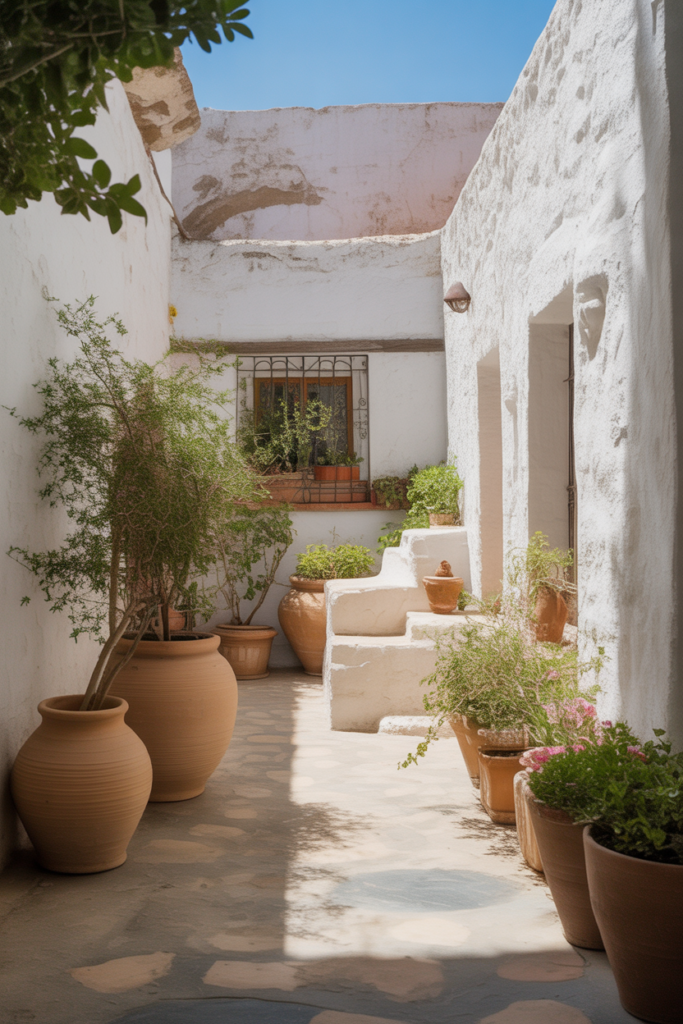
3. Whitewashed Walls with Soft Weathering Effect
Mediterranean walls are rarely perfectly painted—they have texture, fading, and subtle imperfections. A whitewashed wall with slight discoloration or rough plaster adds character and reflects light beautifully. This helps small courtyards feel brighter and more open. The white also acts as a backdrop that makes plants, pottery, and furniture stand out more. This idea works because it balances simplicity with visual richness—nothing flashy, but very effective.
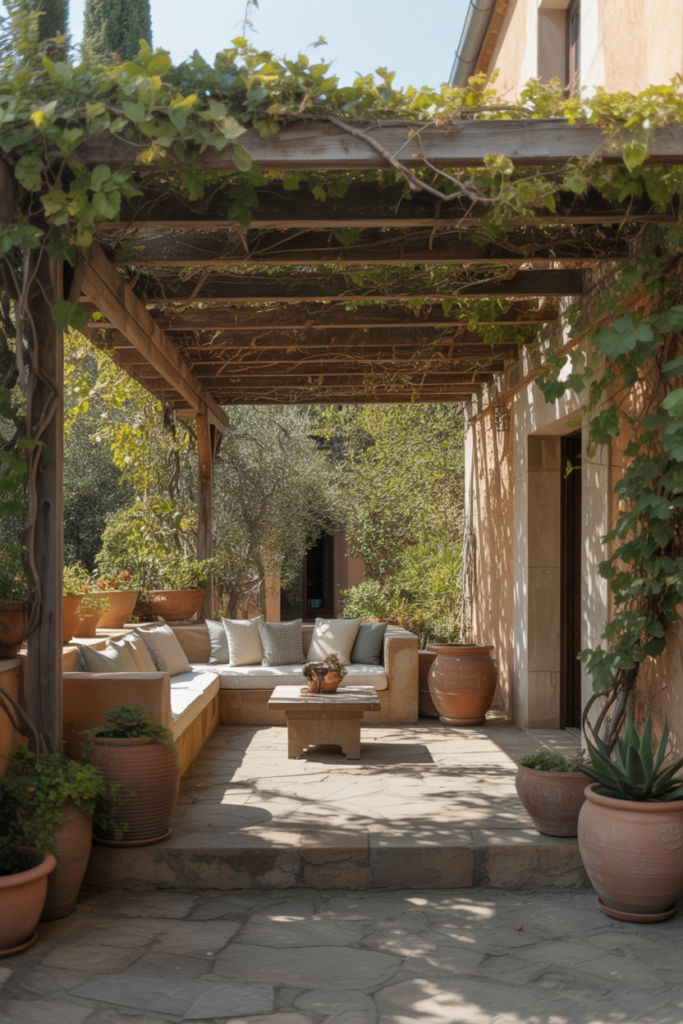
4. Wooden Pergola with Climbing Vines
A pergola adds structure without closing off the space. Use natural wood beams and let climbing plants like grapevines or jasmine grow over it. Over time, the vines create filtered shade, which is a signature Mediterranean feature. This idea works because it combines architecture with nature, making the courtyard feel both designed and organic. It also creates a cozy shaded area for seating or dining.
5. Olive Tree as a Sculptural Centerpiece
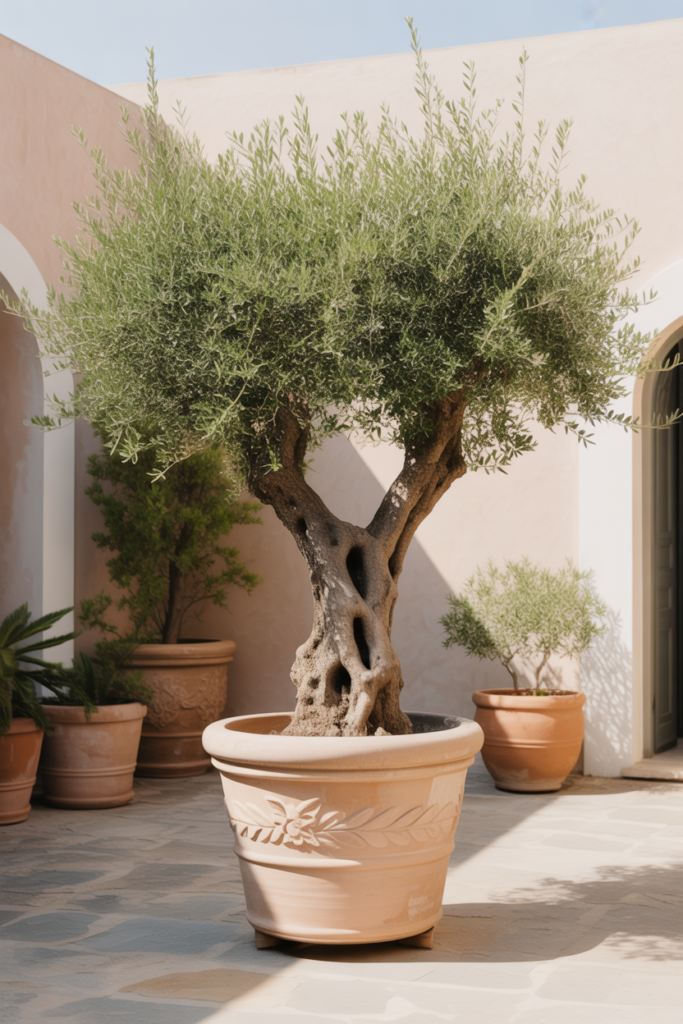
An olive tree is not just a plant—it’s a design element. Its twisted trunk and soft gray-green leaves create a calm and elegant focal point. Even in a small courtyard, a single olive tree in a large pot can anchor the entire space. Place it slightly off-center for a natural look rather than perfectly aligned. This idea works because it adds height, texture, and authenticity without cluttering the space.
6. Central Water Fountain for Movement and Sound
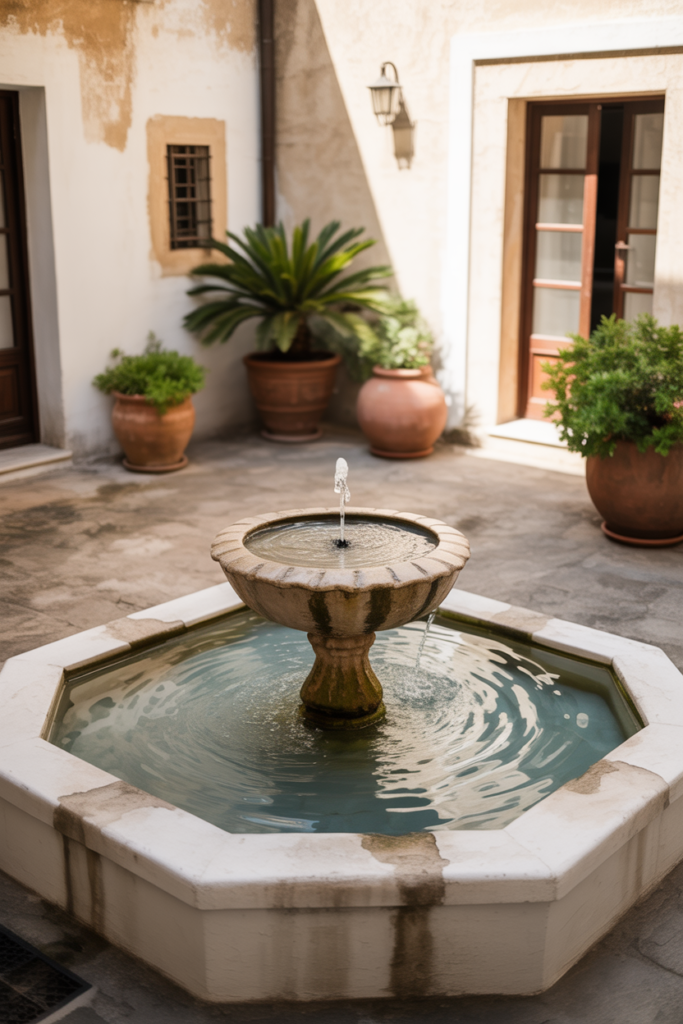
A water fountain is one of the most defining features of Mediterranean courtyards because it adds both visual beauty and sensory experience. The gentle sound of flowing water creates a calm, peaceful environment that makes the space feel like a private retreat. Even a small wall-mounted fountain or a simple stone basin can completely change the atmosphere. Place it in a central or visible spot so it becomes a natural focal point. This idea works especially well because it adds life and movement to an otherwise still space, making the courtyard feel more immersive and relaxing.
7. Wrought Iron Furniture with Soft Cushions
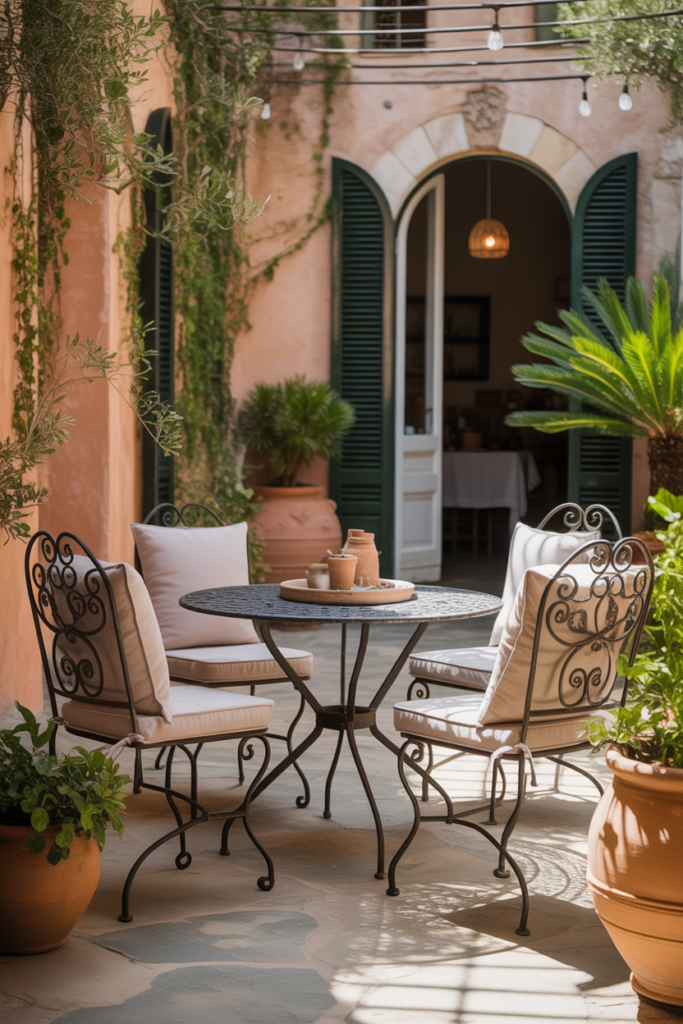
Wrought iron furniture is a classic Mediterranean element that brings both durability and elegance. The dark metal contrasts beautifully with light walls and earthy tones, creating a balanced look. To soften the feel, add neutral cushions in beige, cream, or muted patterns. This idea works because it blends structure with comfort, making the courtyard both stylish and functional. Keep the furniture minimal—one table and a few chairs are enough to create a complete seating area.
8. Climbing Vines on Walls for Natural Softness
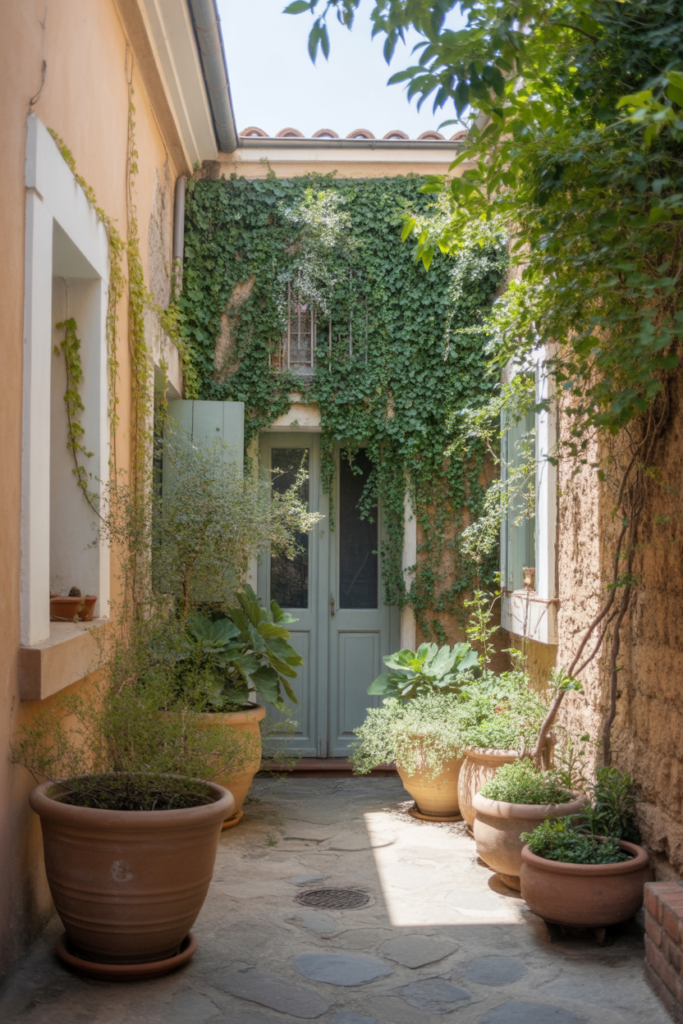
Bare walls can feel too harsh, but climbing plants instantly soften the space and make it feel more organic. Plants like ivy, jasmine, or bougainvillea can grow along walls, creating a lush and slightly wild look. This idea works because it adds vertical greenery without taking up floor space, which is perfect for small courtyards. Over time, the vines create shade, texture, and a natural sense of enclosure.
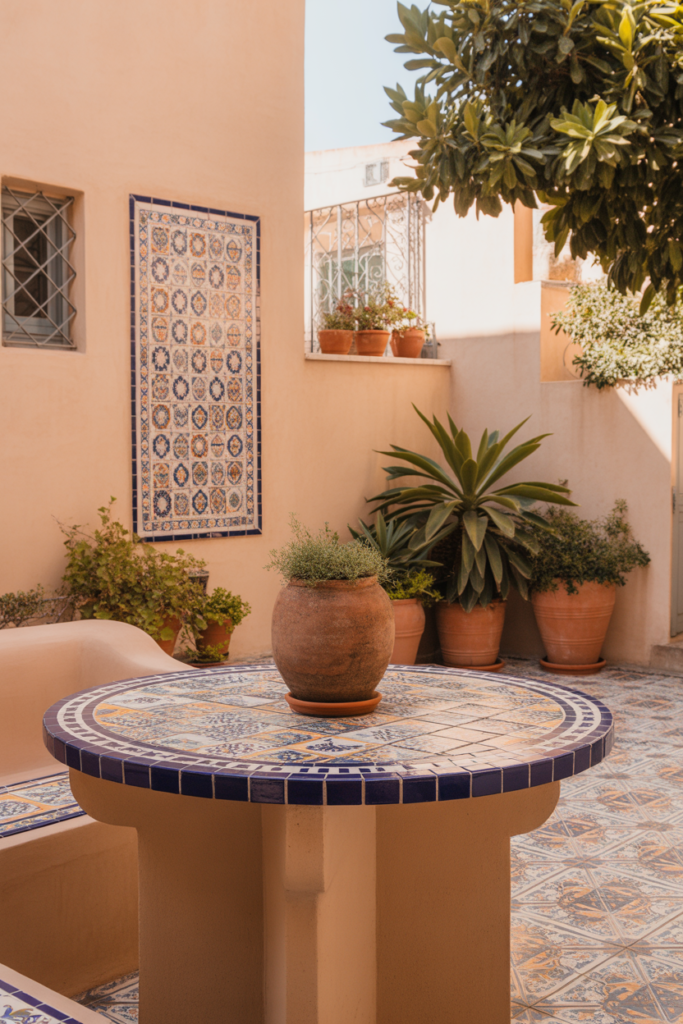
9. Mosaic Tile Accents for Artistic Detail
Mediterranean design often includes small artistic touches, and mosaic tiles are a perfect example. You don’t need to tile the entire courtyard—just adding mosaic patterns to a table, a fountain base, or a small wall section is enough. The mix of colors and patterns adds personality while still keeping the overall look balanced. This idea works because it introduces visual interest without overwhelming the space.
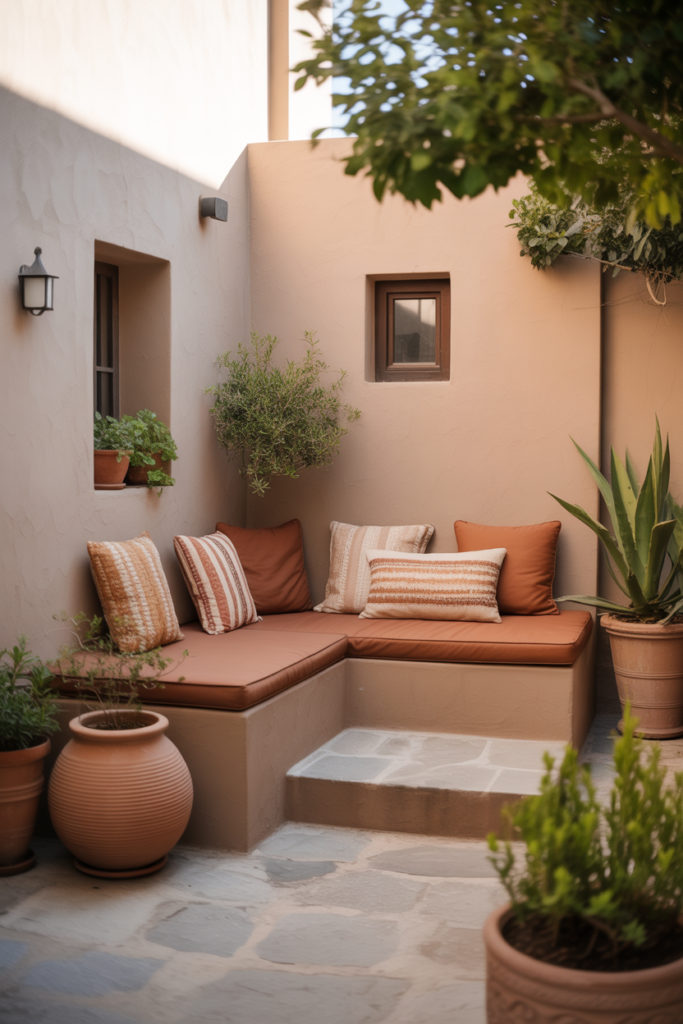
10. Built-In Bench Seating with Earth-Tone Cushions
Built-in benches are perfect for Mediterranean courtyards because they blend seamlessly with the architecture. Use stone or concrete for the base, then add soft cushions in earthy tones like sand, rust, or olive green. This idea works especially well in small spaces because it saves room while still providing comfortable seating. It also makes the courtyard feel more structured and intentional.
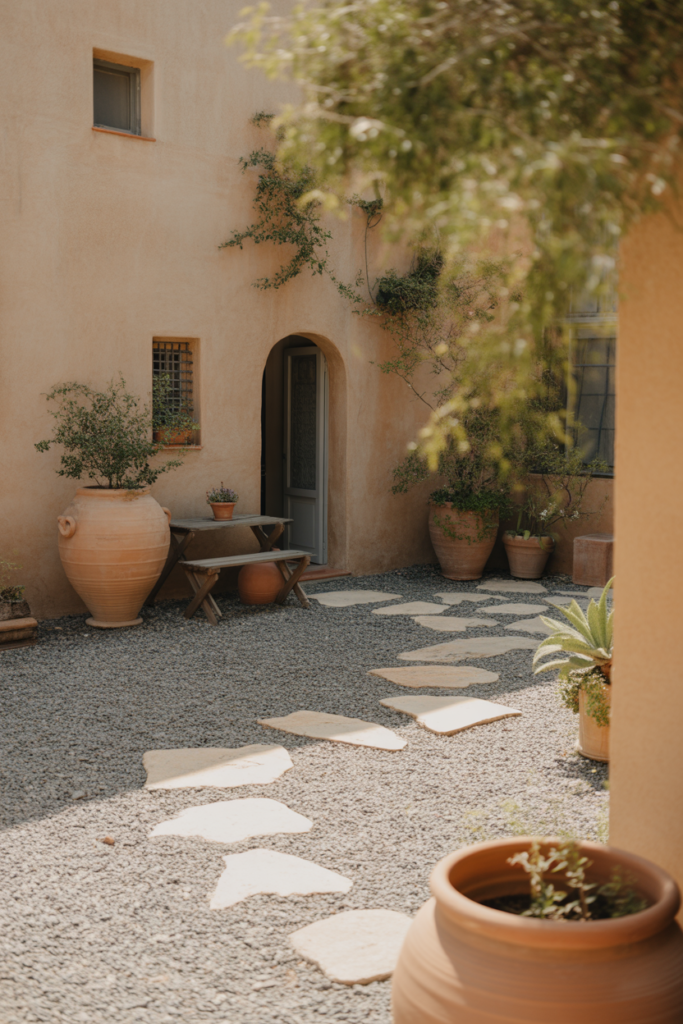
11. Gravel Ground with Stepping Stones for Texture
Gravel is a signature Mediterranean element because it’s simple, affordable, and naturally beautiful. Instead of covering the entire courtyard with solid flooring, combine gravel with irregular stepping stones. This creates contrast between rough and smooth textures, making the space feel more organic. It also improves drainage and keeps the courtyard cool in hot weather. This idea works especially well in small spaces because it adds depth without clutter. Keep the stones slightly uneven for that authentic, relaxed Mediterranean look.
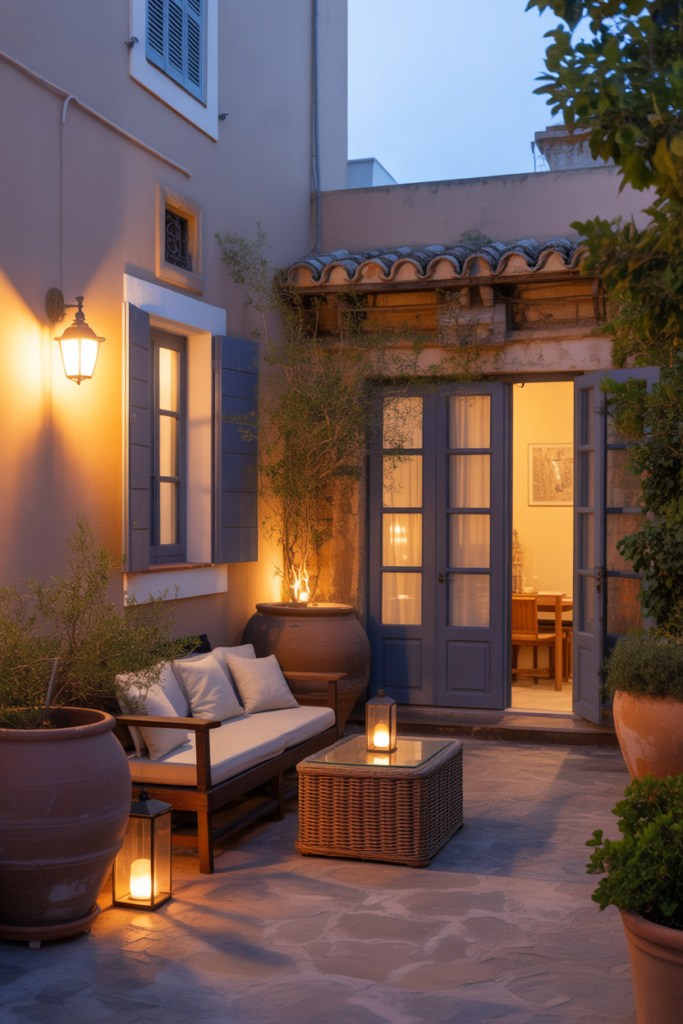
12. Warm Lantern Lighting for Evening Glow
Lighting is what transforms a courtyard from daytime space into an evening retreat. Use warm-toned lanterns, wall lights, or small floor lights instead of bright white lighting. Place them at different heights—on walls, tables, and corners—to create depth. This layered lighting gives a soft golden glow that feels cozy and intimate. This idea works because it enhances textures like stone, wood, and plants at night, making the courtyard feel magica
13. Arched Doorways and Openings for Character
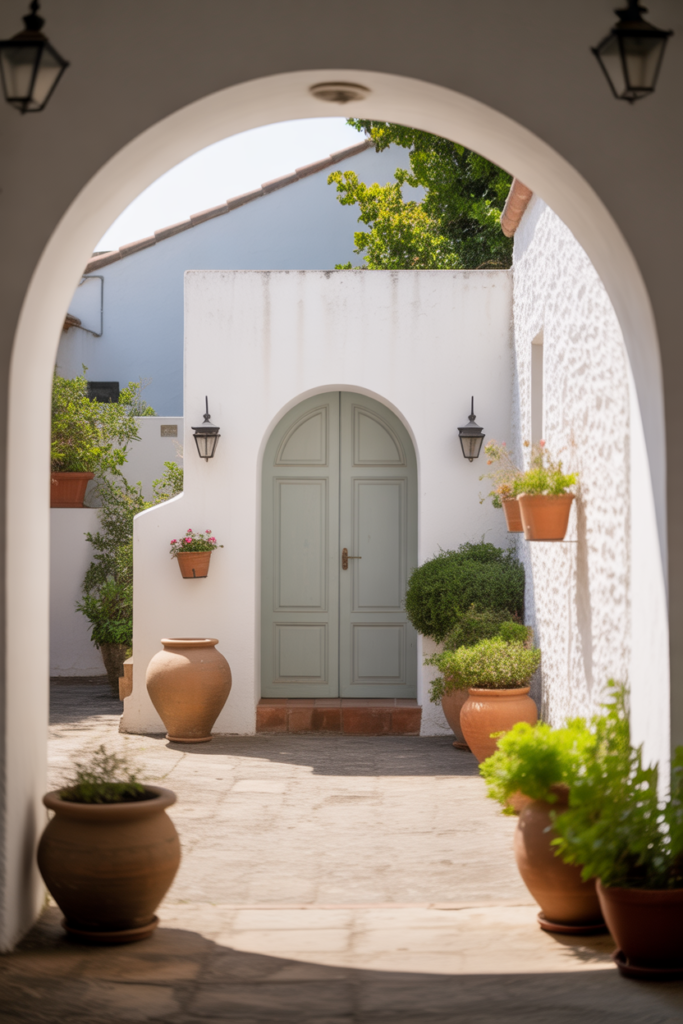
Arches are one of the most recognizable Mediterranean architectural features. Adding an arched doorway, window, or even a decorative wall cutout instantly elevates the courtyard. The curved shape softens the space and creates a sense of flow. This idea works because it adds architectural depth without needing extra decor. Even a simple painted arch can make a big difference.
14. Layered Planting for a Full, Lush Look
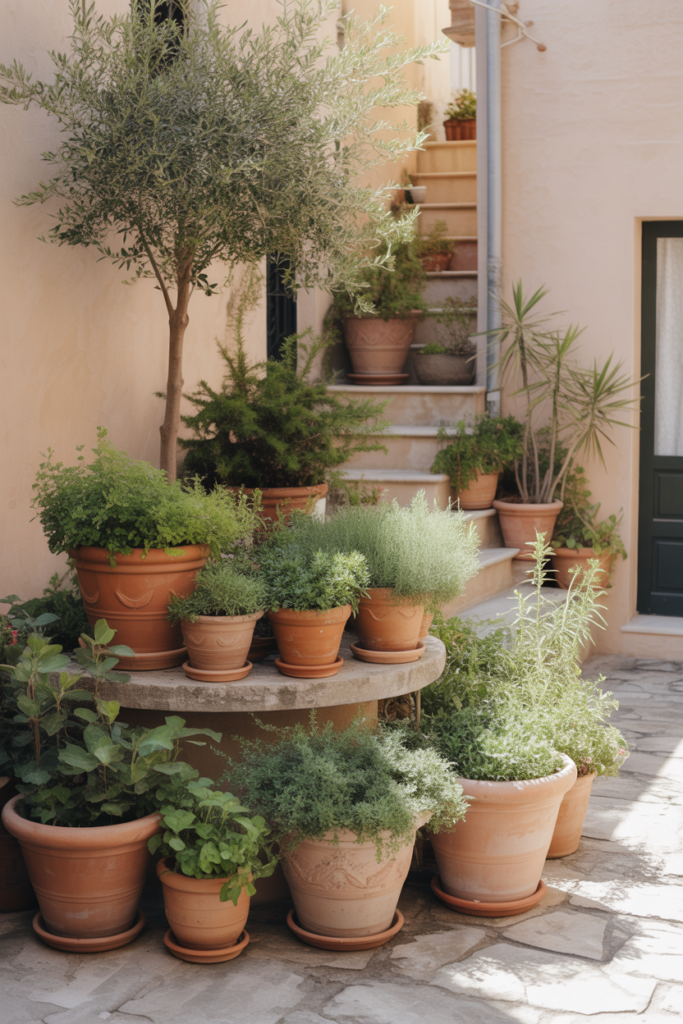
Instead of placing plants randomly, create layers using different heights and textures. Combine low herbs, medium shrubs, and taller plants like olive trees or palms. This makes the courtyard feel rich and alive without overcrowding. The key is balance—group plants naturally rather than symmetrically. This idea works because it mimics nature and creates depth in even the smallest space.
15. Cozy Dining Corner with Rustic Table
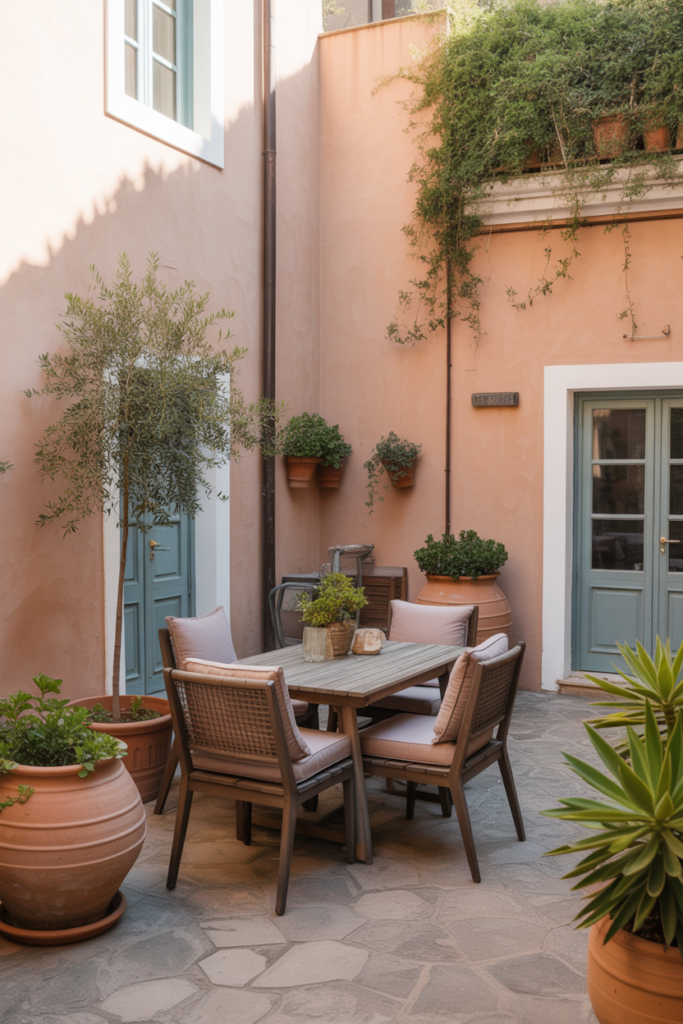
A small dining setup turns the courtyard into a functional living space. Use a rustic wooden or wrought iron table with simple chairs. Keep the styling minimal—maybe a linen cloth, a few candles, or a small plant. This idea works because it gives the space purpose while maintaining the relaxed Mediterranean vibe. It’s perfect for morning coffee or evening meals.
16. Soft Neutral Textiles for a Relaxed Mediterranean Feel
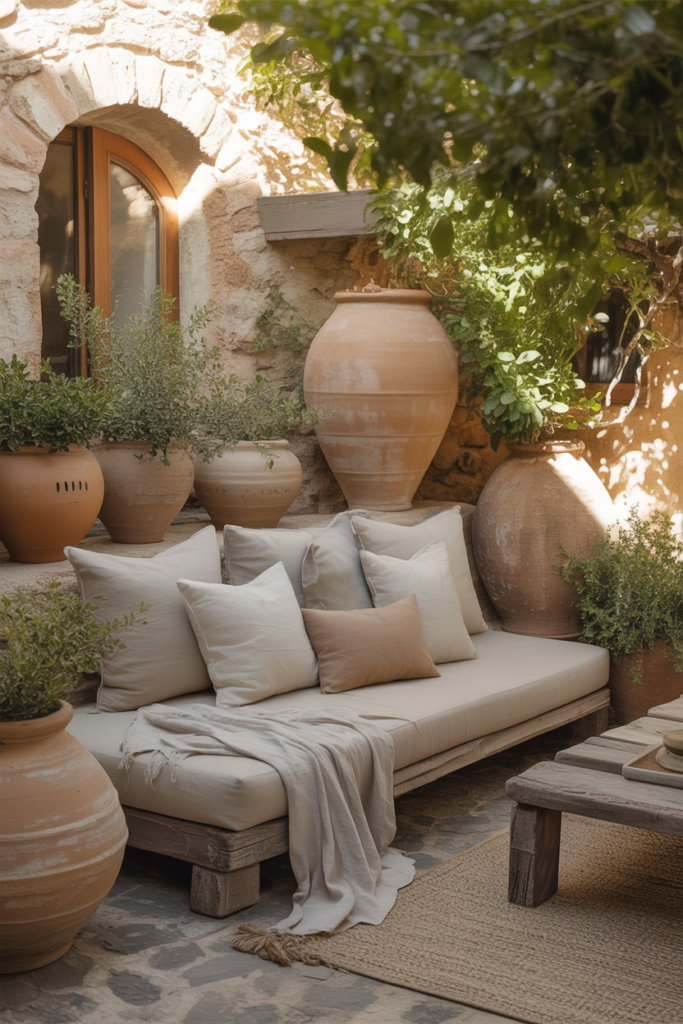
Textiles are what turn a courtyard from “nice” into “comfortable and lived-in.” In Mediterranean design, fabrics are always soft, natural, and neutral—think linen cushions, light throws, and simple seat pads in shades like beige, cream, sand, or muted terracotta. These tones blend perfectly with stone, wood, and greenery without overpowering the space.
This idea works especially well because it adds comfort without clutter. You don’t need many pieces—just a few well-placed cushions on a bench, a light throw over a chair, or even a simple fabric table runner can completely change the mood. The key is to keep everything relaxed and slightly imperfect, not overly styled. When combined with warm sunlight and natural textures, textiles help create that effortless Mediterranean atmosphere where everything feels calm, soft, and inviting.
🌿 Conclusion
A Mediterranean courtyard garden is not about perfection—it’s about warmth, simplicity, and natural beauty. Every element works together to create a space that feels calm, inviting, and timeless.
To create your own Mediterranean-style courtyard, focus on these core principles:
- use natural materials like stone, wood, and terracotta
- keep colors warm, neutral, and sun-inspired
- add layered greenery instead of overdecorating
- mix structure with softness (walls + plants, furniture + textiles)
- create a space that feels lived-in, not staged
Whether your courtyard is large or small, modern or rustic, these ideas help you design a space that feels like a peaceful escape inspired by places like Italy, Spain, and Greece.
In the end, the goal isn’t just to decorate—it’s to create a space where you can slow down, enjoy the outdoors, and feel completely at ease 🌿