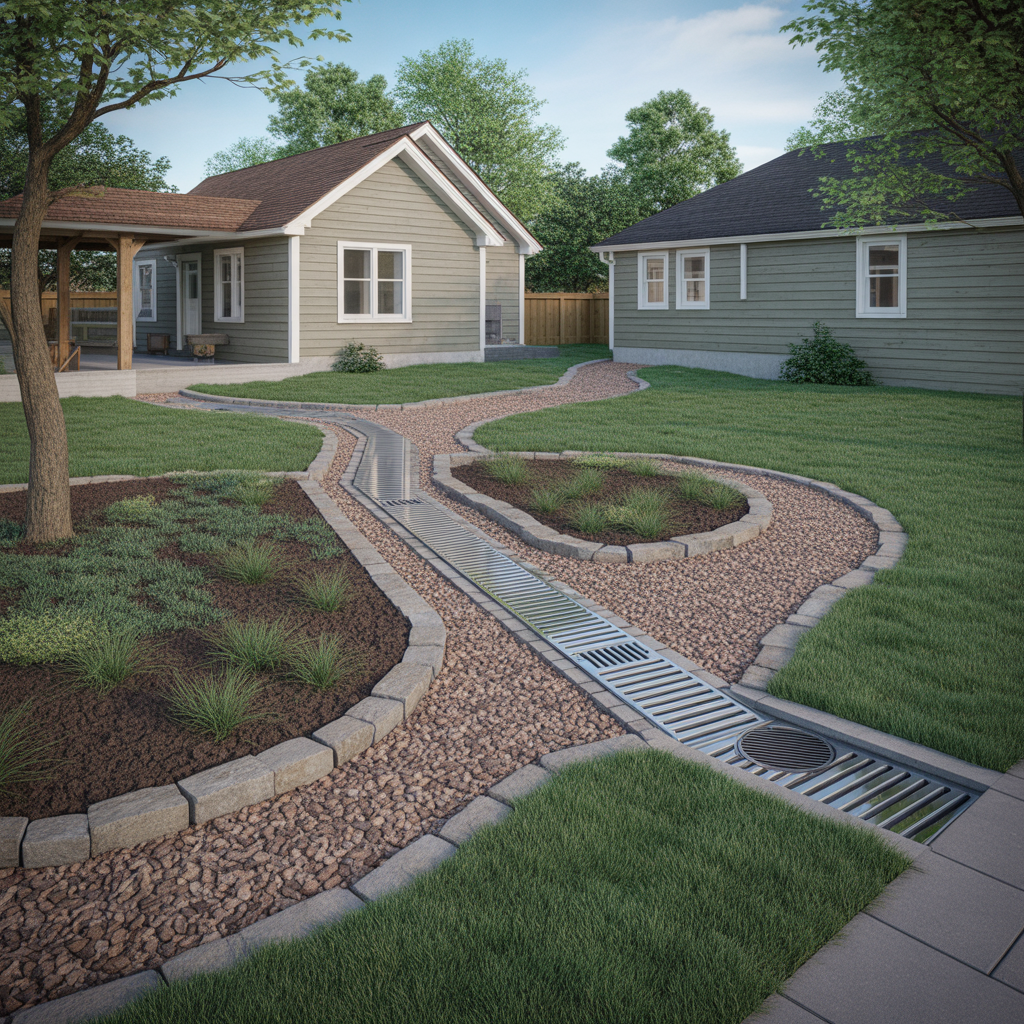
🌧️ 18 Backyard Drainage Ideas That Actually Solve Water Problems
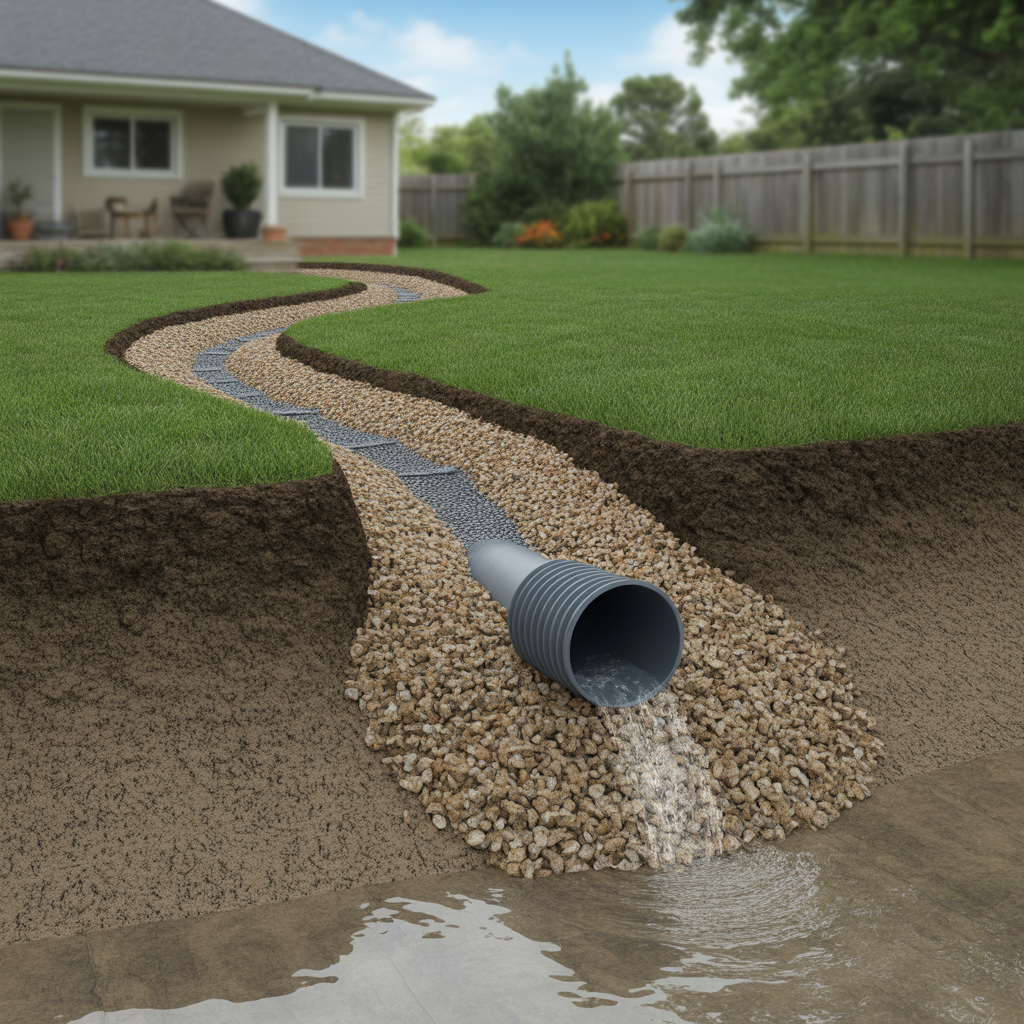
🌧️ 1. Install a French Drain for Hidden Water Control
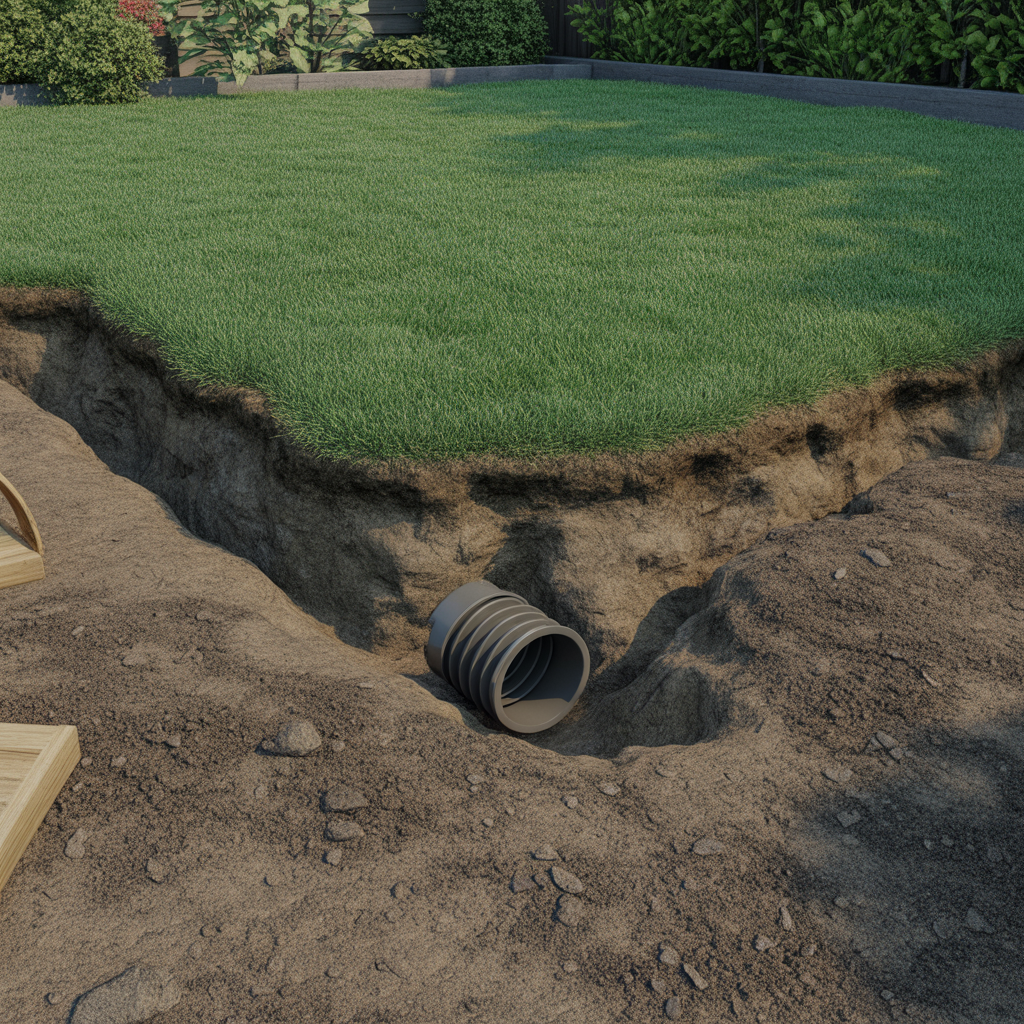
A French drain is one of the most reliable and professional drainage solutions for backyards with persistent standing water. It works by redirecting water away from problem areas through a gravel-filled trench containing a perforated pipe. Instead of allowing water to pool on the surface, the system collects and moves it underground toward a safer drainage point.
This method is especially useful for yards where water gathers after heavy rain or near foundations where excess moisture can cause long-term damage. The beauty of a French drain is that it remains mostly invisible once installed, preserving the natural look of your landscape while quietly solving the issue beneath the surface.
For best results, position the drain along natural low spots where water naturally flows. Covering the trench with decorative gravel or grass helps it blend seamlessly into the design. Though installation requires planning, it offers a long-term, low-maintenance solution that prevents muddy patches and protects plants from root rot.
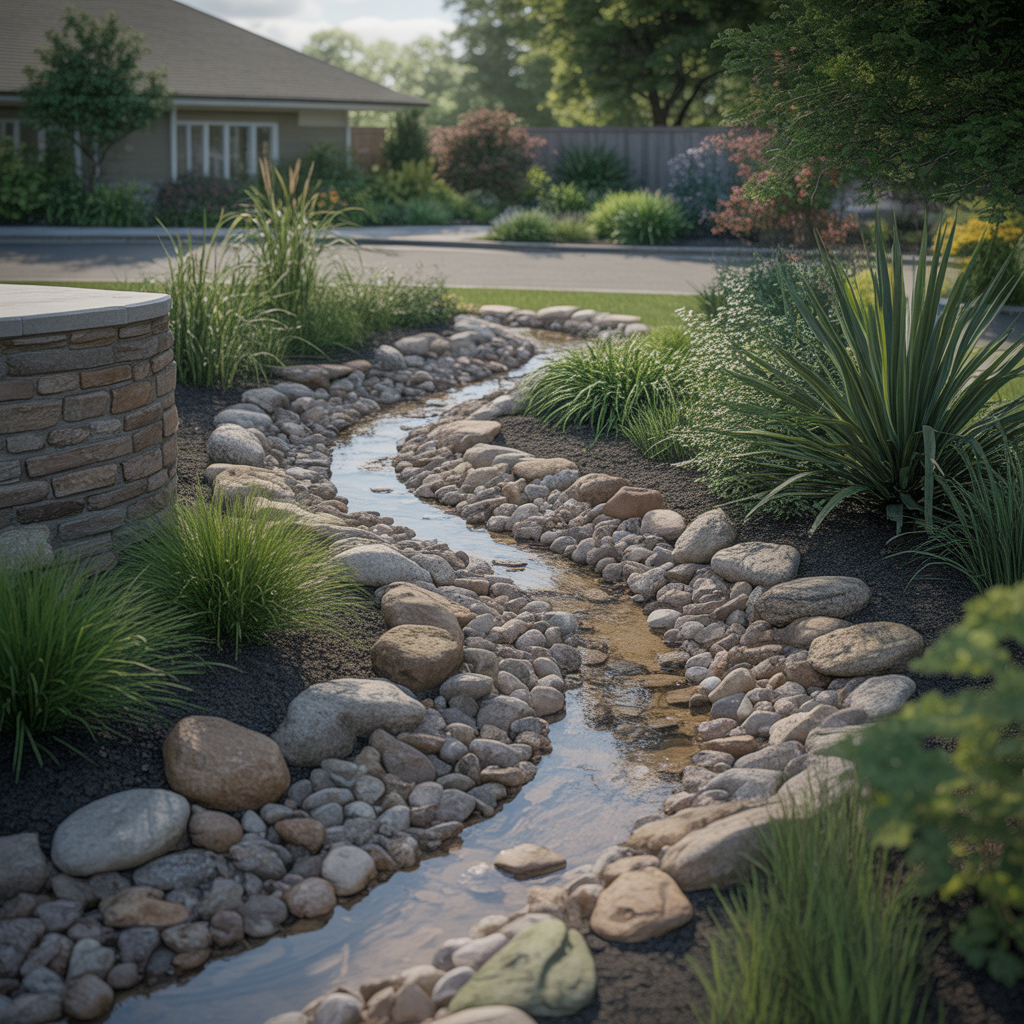
🌧️ 2. Create a Dry Creek Bed for Natural Drainage
A dry creek bed is both functional and visually beautiful. It mimics a natural stream using stones and gravel, guiding excess rainwater safely across your yard without causing erosion. During dry weather, it looks like a decorative landscape feature, but during storms, it becomes an active drainage channel.
This idea works especially well in yards with slopes or areas where water naturally flows. By shaping the creek bed to follow the natural path of runoff, you reduce pressure on lawns and prevent flooding. Adding larger rocks along the edges stabilizes soil and gives the design a realistic appearance.
Planting drought-tolerant grasses or small shrubs around the edges softens the look and helps integrate the feature into the landscape. Unlike underground systems, a dry creek bed adds visual interest while solving real drainage problems — making it one of the most popular professional landscaping solutions.
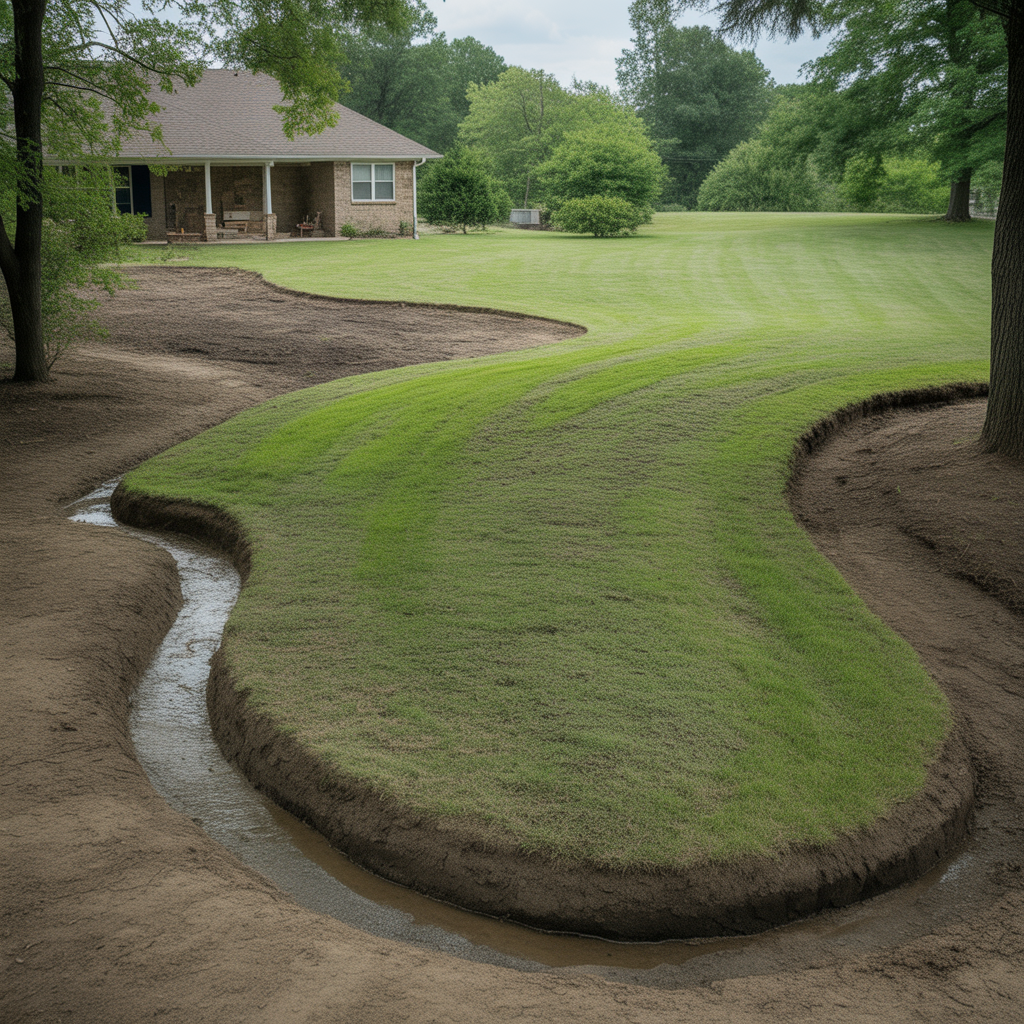
🌧️ 3. Regrade the Yard to Improve Water Flow
Sometimes the biggest drainage issue comes from improper grading. If your yard slopes toward your house or has uneven low spots, water will naturally collect in unwanted areas. Regrading involves reshaping the soil so water flows away from structures and toward designated drainage zones.
This solution is often overlooked because it doesn’t involve visible features, but it’s one of the most effective long-term fixes. Even small adjustments to slope can dramatically reduce standing water. Professionals typically aim for a gentle slope that directs runoff safely without causing erosion.
After regrading, you can restore grass or add landscaping to maintain aesthetics. Though it requires initial labor, this method prevents future issues and improves the effectiveness of other drainage solutions like French drains or dry creek beds.
🌧️ 4. Add a Rain Garden to Absorb Excess Water
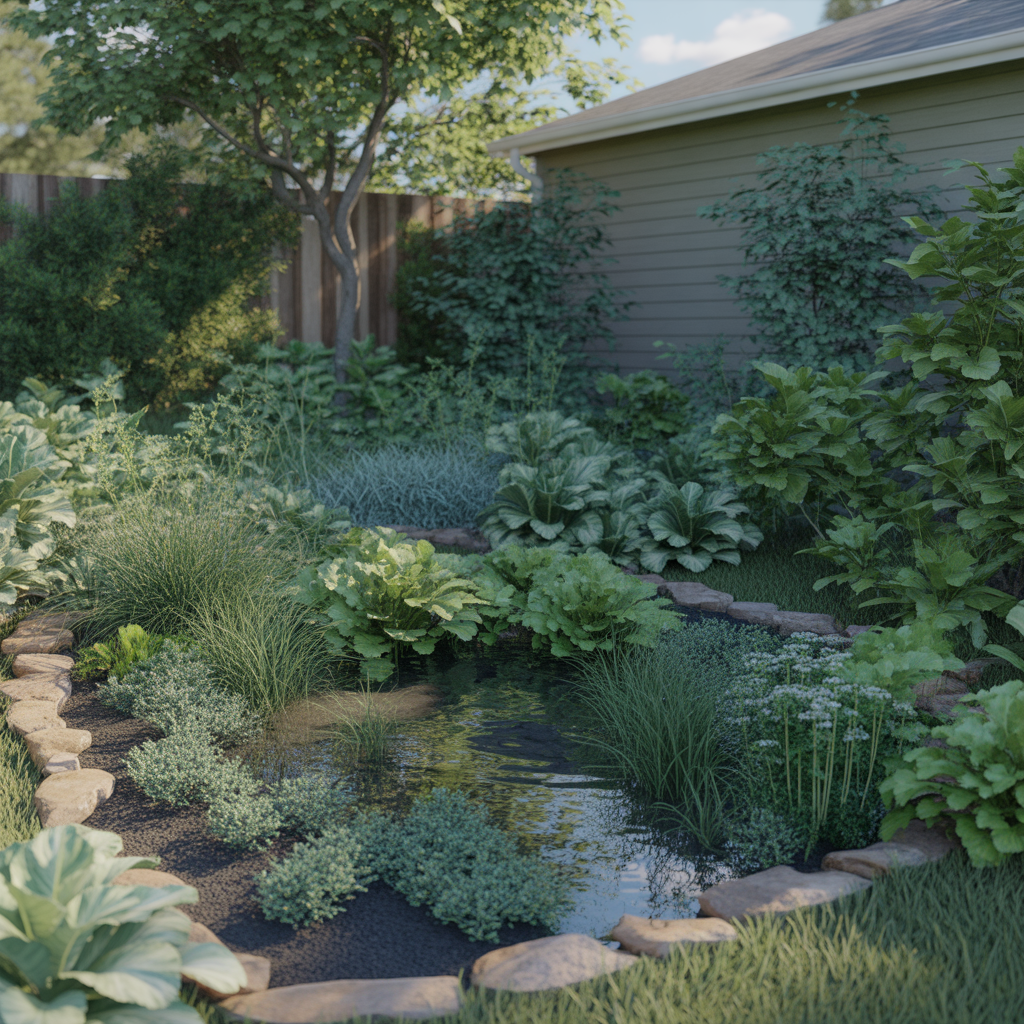
A rain garden is a shallow planted area designed to collect and absorb runoff naturally. Instead of sending water away, this method allows it to soak slowly into the ground, reducing flooding while supporting healthy plant growth.
Rain gardens are typically placed in low spots where water already gathers. Fill them with moisture-tolerant plants that thrive in both wet and dry conditions. Over time, the soil improves its ability to absorb water, making the system increasingly effective.
Besides solving drainage problems, rain gardens attract pollinators and enhance biodiversity. They turn a problem area into a beautiful landscape feature that feels intentional rather than functional alone.
🌧️ 5. Install Permeable Pavers for Better Drainage
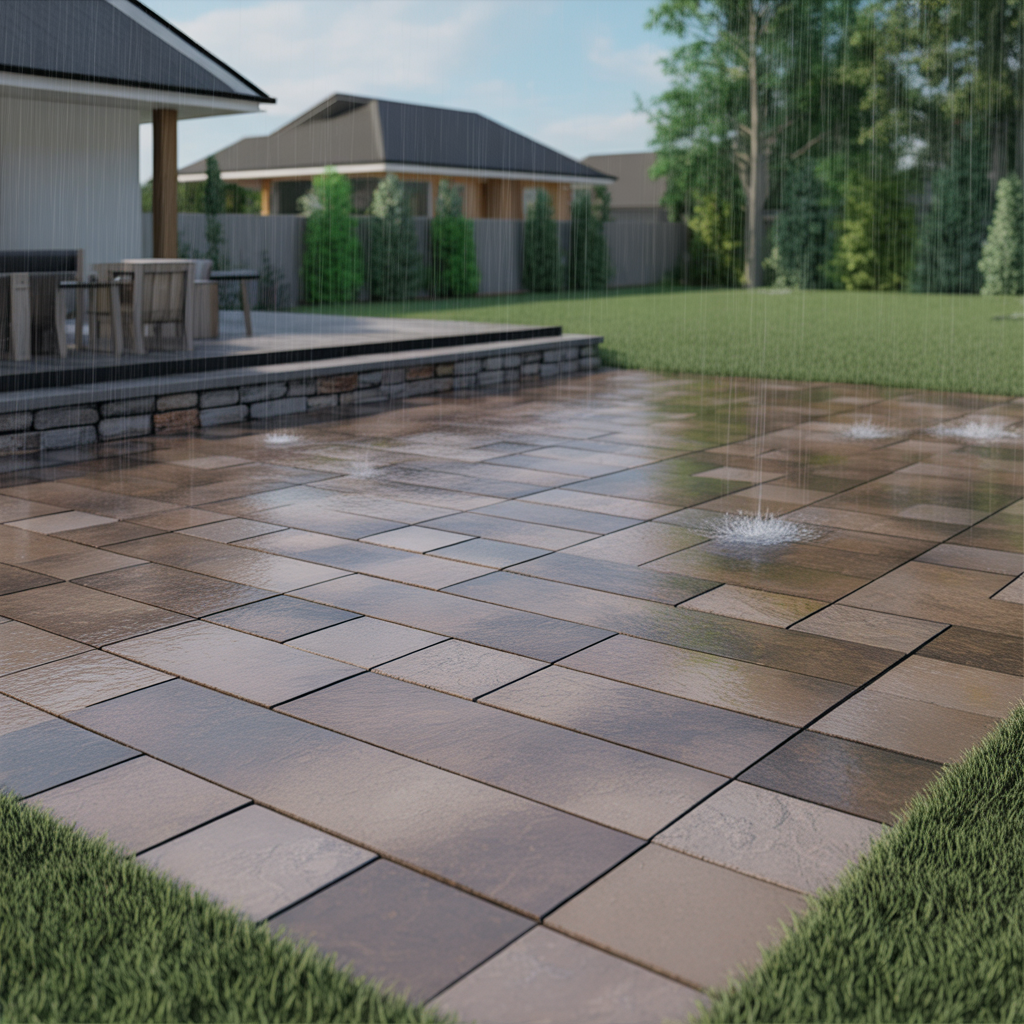
Traditional concrete surfaces often cause runoff problems because water cannot penetrate them. Permeable pavers solve this by allowing rainwater to pass through gaps into the ground below.
These pavers work well for patios, pathways, and driveways. They reduce puddles and prevent water from overwhelming nearby lawns. Visually, they look just as attractive as standard paving but function much better in wet conditions.
Because water filters naturally through the surface, permeable pavers help recharge groundwater and reduce erosion. They’re an excellent long-term investment for homeowners dealing with recurring drainage issues.
🌧️ 6. Extend Downspouts Away from the House
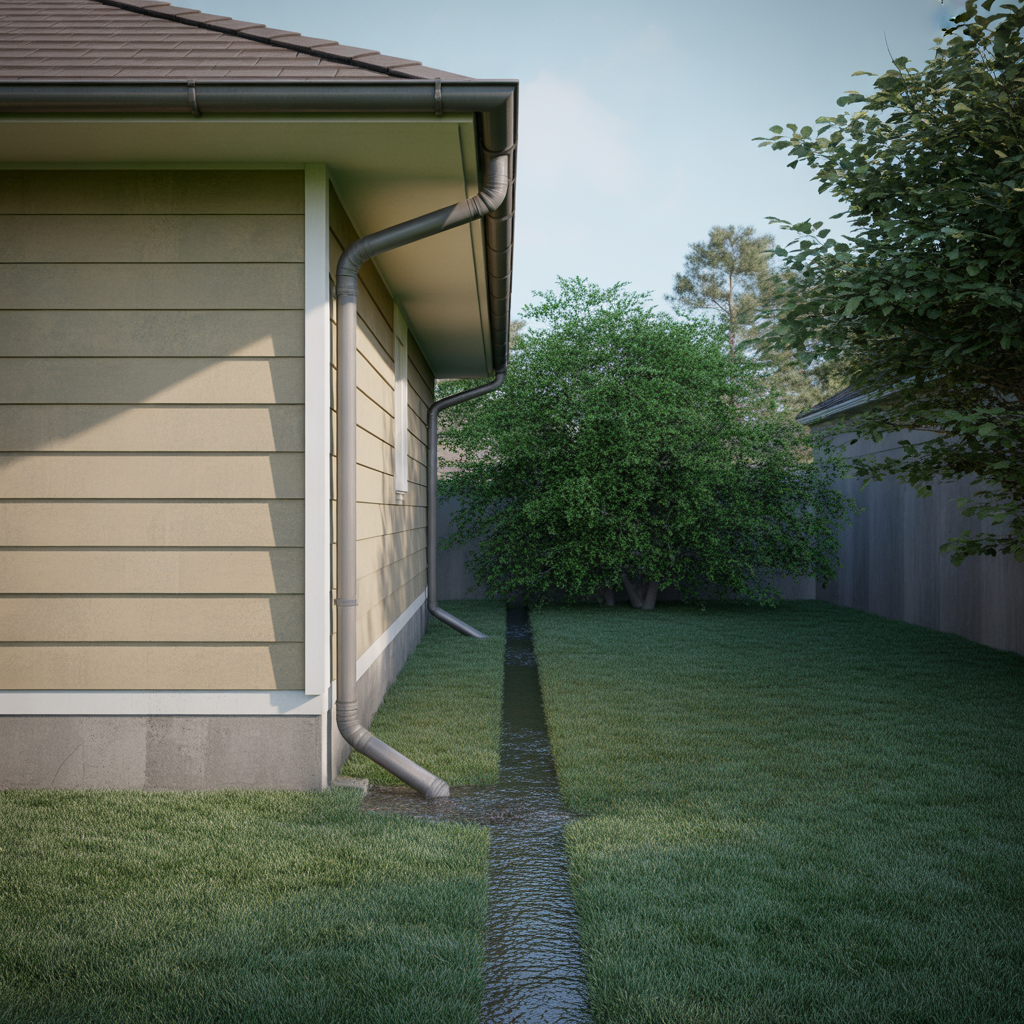
One of the simplest drainage fixes is extending gutter downspouts. Many water problems start because roof runoff dumps directly near the foundation, causing pooling and soil saturation.
Adding extensions or underground drain pipes directs water farther into the yard where it can disperse safely. This prevents basement leaks, erosion, and muddy areas near walls. Flexible extensions are inexpensive and easy to install, making this one of the fastest drainage improvements.
Pairing downspout extensions with gravel beds or rain gardens improves effectiveness even more. Though simple, this solution often solves major problems without large construction.
🌧️ 7. Install a Catch Basin to Collect Surface Water
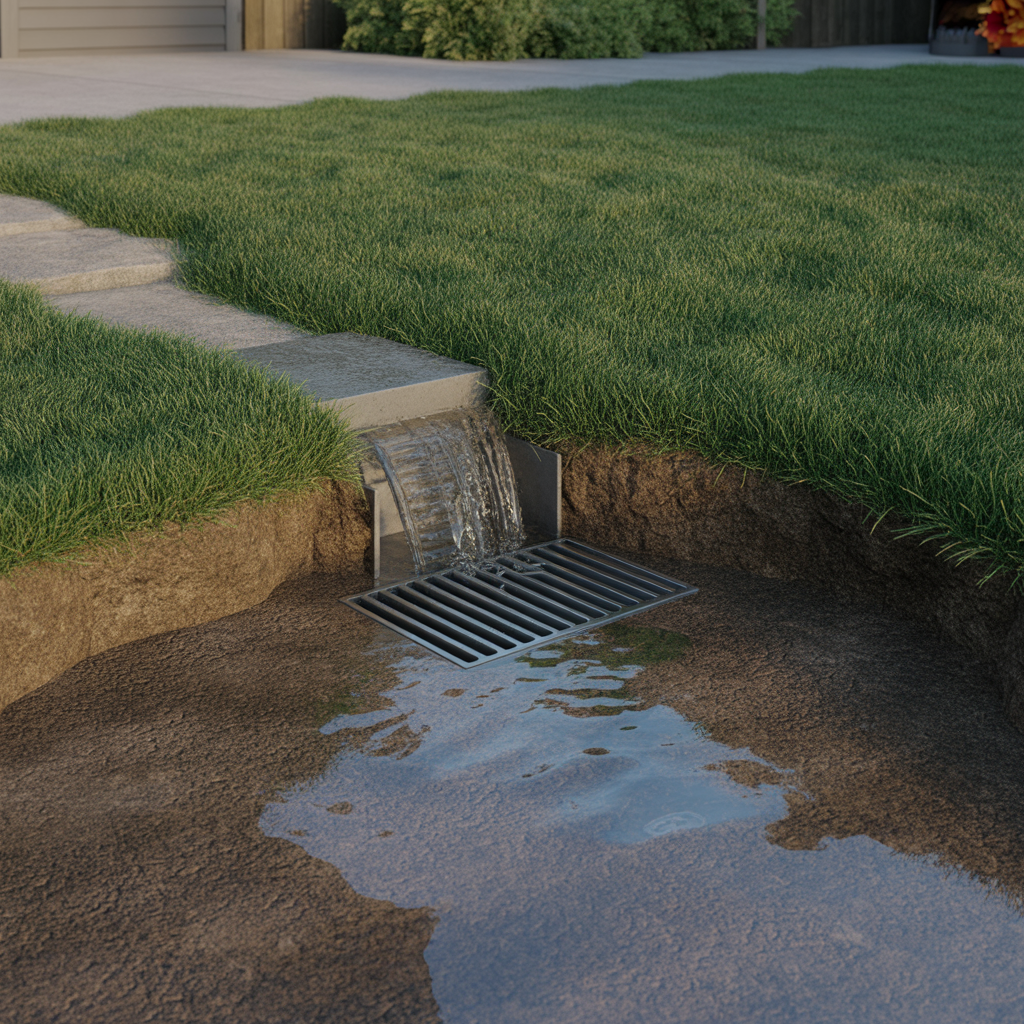
A catch basin is one of the most effective solutions for yards where water quickly pools after heavy rain. It works like a drain placed at ground level, collecting surface water and channeling it through underground pipes to a safer drainage location. Unlike temporary fixes, a properly installed catch basin directly addresses the root problem by removing water before it spreads across the yard.
Catch basins are especially useful in low spots, near patios, or at the base of slopes where runoff naturally gathers. They prevent standing water that can damage grass, create mud, and attract mosquitoes. The visible grate sits flush with the ground, allowing water to flow in while keeping debris out. Many homeowners appreciate that once installed, the system is mostly hidden and requires minimal maintenance besides occasional cleaning.
When paired with other drainage systems such as French drains or dry creek beds, catch basins dramatically improve overall water management. They keep outdoor spaces usable even after storms and protect nearby structures from excess moisture.
🌧️ 8. Build a Swale to Redirect Runoff Naturally
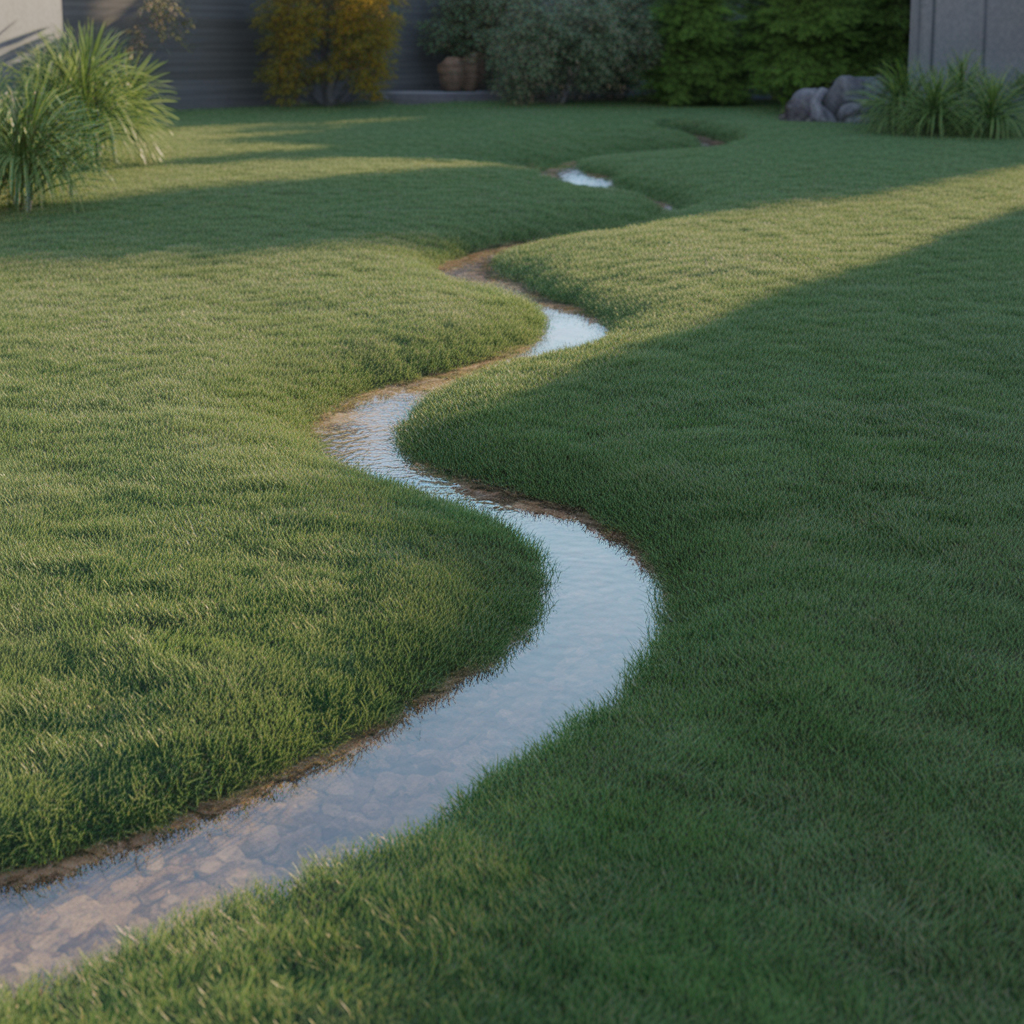
A swale is a shallow, gently sloped channel designed to guide water across your yard without causing erosion. Unlike pipes or drains, swales use natural land shaping to move water slowly and safely toward a designated area. This makes them an eco-friendly and visually subtle solution for drainage issues.
Swales are ideal for larger yards or properties with gentle slopes. By slowing down water flow, they allow more absorption into the soil, reducing flooding and runoff damage. Adding grass or low plants inside the swale stabilizes the soil and helps it blend naturally into the landscape. From a distance, a well-designed swale often looks like a simple landscaping feature rather than a drainage system.
Because swales rely on gravity rather than mechanical systems, they require little maintenance once established. They work especially well when combined with rain gardens or dry creek beds, creating a complete water-management strategy that looks natural and intentional.
🌧️ 9. Add Gravel Trenches Along Problem Areas
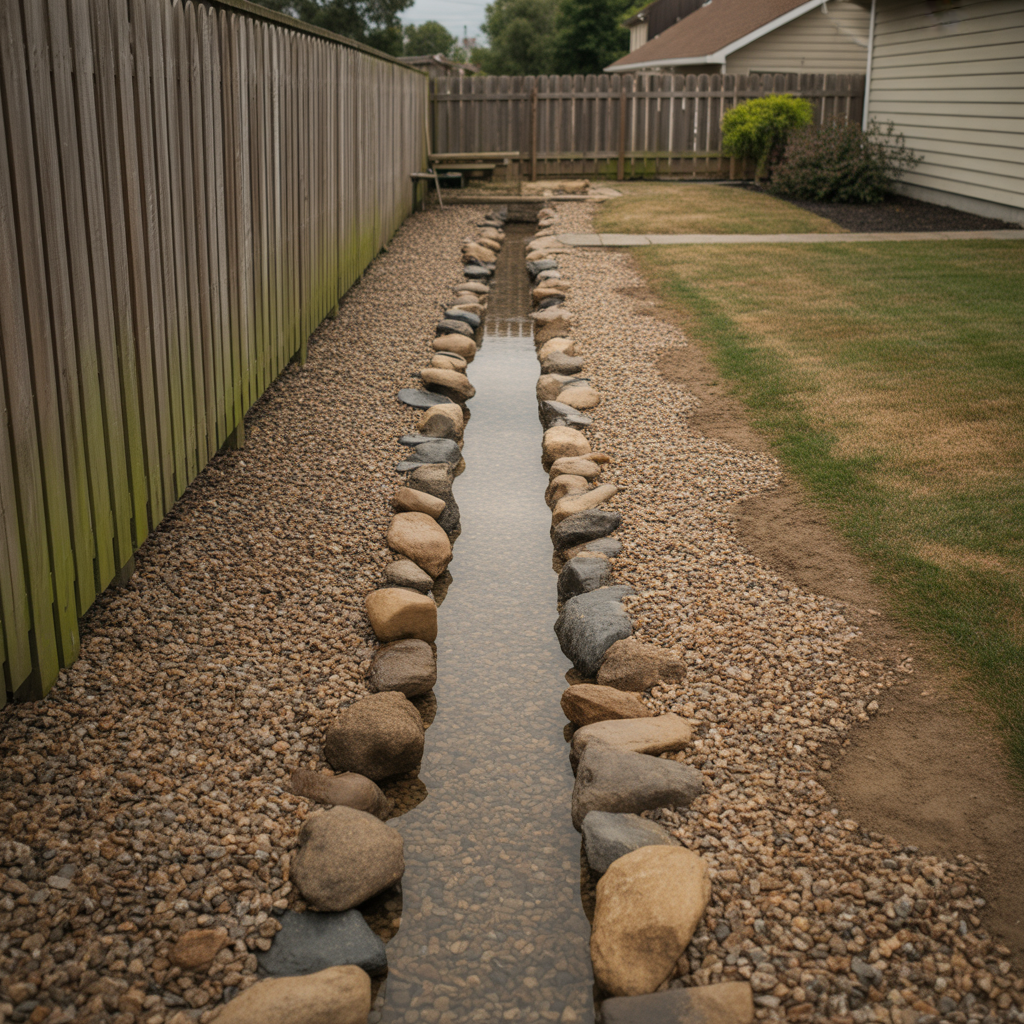
Gravel trenches are simple but highly effective for absorbing and dispersing excess water. These shallow trenches filled with gravel allow water to seep down into the ground instead of pooling on the surface. They work particularly well along fences, patios, or areas where runoff repeatedly collects.
The gravel acts as a filtration layer, preventing soil compaction and helping water spread evenly underground. Because the surface remains permeable, it also reduces muddy conditions and protects nearby plants from overwatering. Decorative stone can be used on top to improve appearance, turning a functional solution into an attractive design feature.
Gravel trenches are often used as supplemental drainage systems alongside larger solutions like French drains. They’re affordable, relatively easy to install, and require very little maintenance — making them ideal for homeowners looking for practical improvements without major construction.
🌧️ 10. Install a Rain Barrel to Reduce Overflow
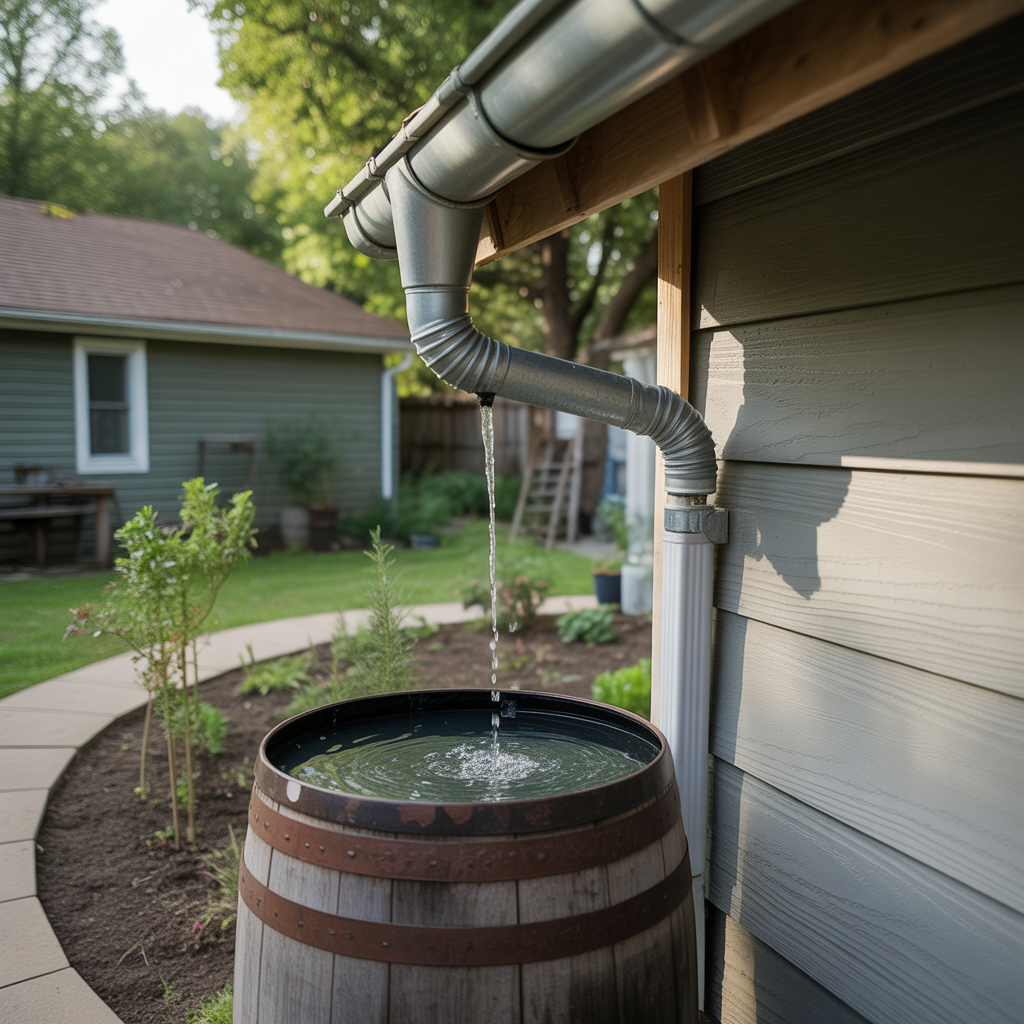
Sometimes drainage problems start at the source — roof runoff. Installing a rain barrel connected to your gutter system captures rainwater before it floods the yard. This reduces pressure on drainage systems while providing reusable water for gardening.
Rain barrels are environmentally friendly and cost-effective. They help prevent soil erosion near downspouts and reduce the amount of water entering already saturated areas. Modern rain barrels come in decorative designs that blend well with landscaping, turning a practical tool into an attractive feature.
By storing water during storms, rain barrels also support sustainable gardening practices. During dry periods, the collected water can be used for plants, reducing dependence on hoses and irrigation systems. This simple upgrade often makes a noticeable difference in managing excess water.
🌧️ 11. Use Retaining Walls to Control Sloped Drainage
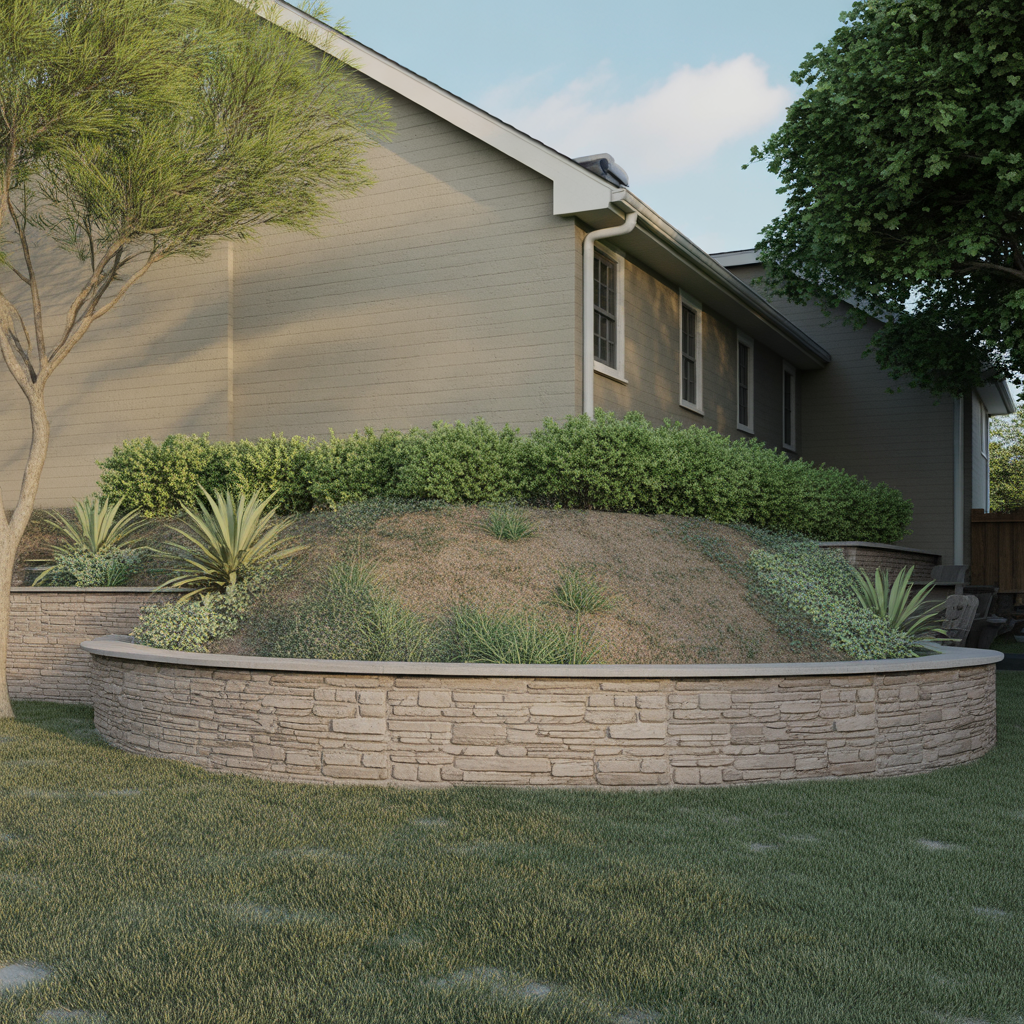
Yards with slopes often experience fast-moving water that causes erosion and pooling at the bottom. Retaining walls help control this by holding soil in place and slowing water movement. Properly designed retaining walls can transform a difficult slope into usable, stable garden space.
The wall creates terraces that break up water flow, allowing it to absorb gradually rather than rushing downhill. Adding drainage gravel behind the wall further improves performance and prevents pressure buildup. Visually, retaining walls also add structure and dimension to a yard, giving it a more finished, professional appearance.
When combined with plants, retaining walls soften the landscape and create opportunities for layered design. This solution is both functional and aesthetic, solving water problems while improving the overall layout of the backyard.
🌧️ 12. Install Underground Drain Pipes for Hidden Solutions
For homeowners who want maximum effectiveness without visible changes, underground drain pipes are an excellent option. These systems collect water from problem areas and transport it away through buried pipes, keeping the surface clean and attractive.
Underground drainage works well in combination with catch basins, downspouts, or French drains. Once installed, the system requires minimal attention and doesn’t interfere with landscaping or outdoor activities. Because everything is hidden below ground, the yard maintains a natural appearance while benefiting from improved drainage.
This solution is particularly valuable for properties with recurring flooding issues or heavy clay soil that drains slowly. Though installation requires planning, the long-term results include healthier lawns, reduced mud, and protection for foundations.
🌧️ 13. Create a Rainwater Diversion Channel Along Property Edges
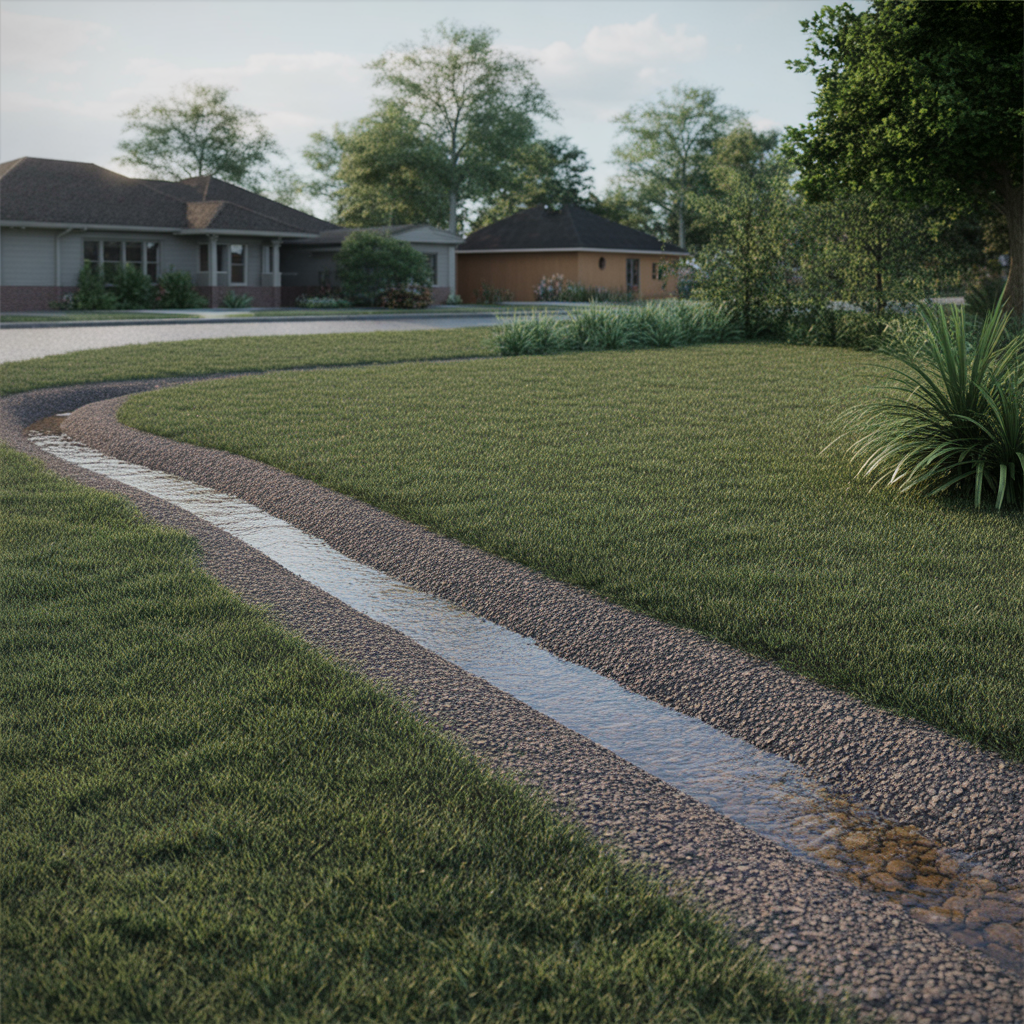
Many backyard flooding problems happen because water enters from neighboring properties or higher ground. A rainwater diversion channel — sometimes called a drainage ditch — redirects this incoming water before it spreads into your yard. Instead of fighting water once it arrives, this solution stops the problem at the boundary.
The channel is typically shallow but wide enough to guide water along the edge of the property toward a safe exit point. Lining it with gravel, stones, or grass prevents erosion while helping it blend naturally into the landscape. This approach is especially effective for yards located downhill or near large paved surfaces that generate runoff.
Besides solving drainage issues, diversion channels help protect lawns, patios, and garden beds from oversaturation. They also reduce muddy zones and keep water away from foundations. Once established, this system works quietly in the background with minimal maintenance, making it one of the smartest long-term drainage investments.
🌧️ 14. Replace Compact Soil with Better-Draining Soil Mix
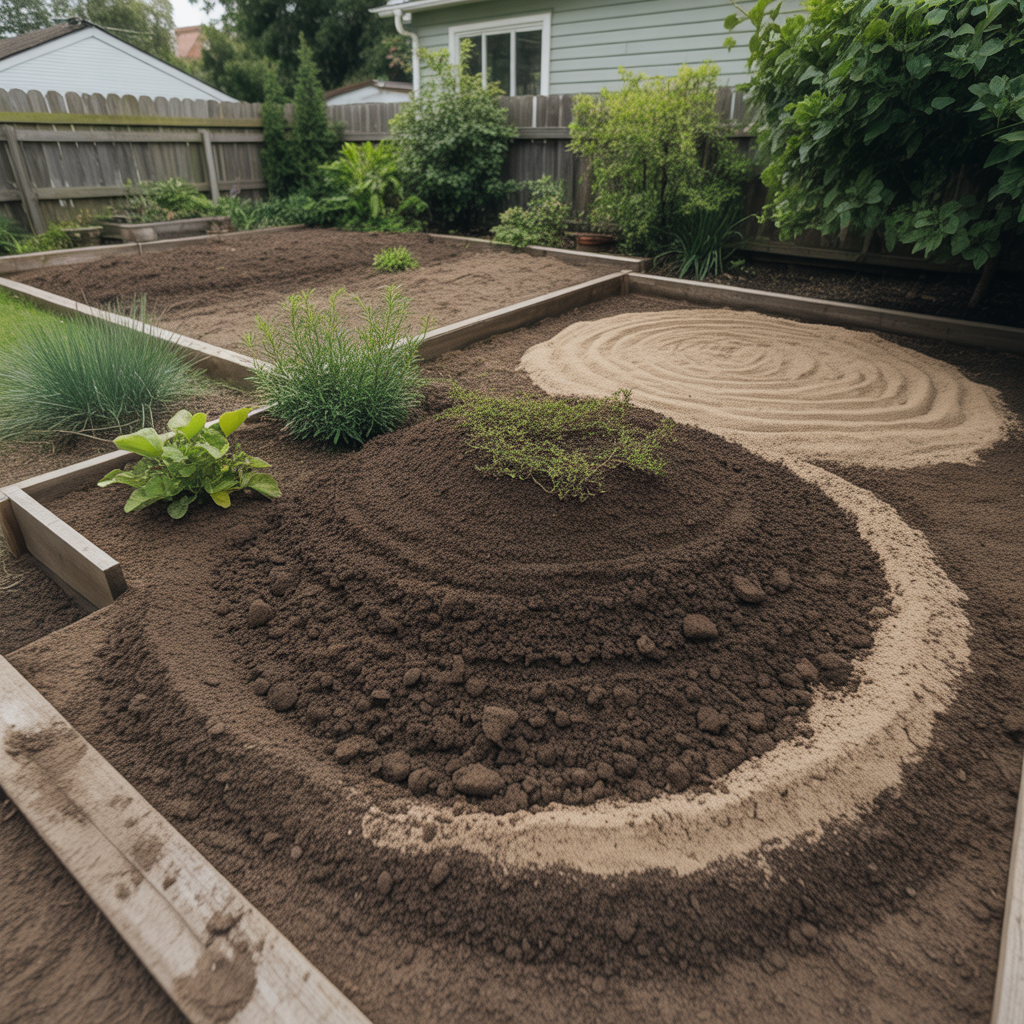
Sometimes drainage problems aren’t caused by layout but by soil itself. Heavy clay or compacted soil prevents water from soaking in, leading to standing water and plant stress. Improving soil composition is a foundational fix that enhances drainage across the entire yard.
Adding organic matter such as compost, sand, or soil conditioners increases air pockets, allowing water to move more freely underground. This not only prevents puddles but also improves root health and plant growth. Over time, healthier soil becomes easier to maintain and less prone to waterlogging.
This method works particularly well in planting beds or lawns that remain soggy long after rain. While it requires some effort initially, the long-term benefits include improved drainage, healthier landscaping, and fewer recurring water problems. It’s a behind-the-scenes solution that supports every other drainage strategy.
🌧️ 15. Install Channel Drains Along Patios or Driveways
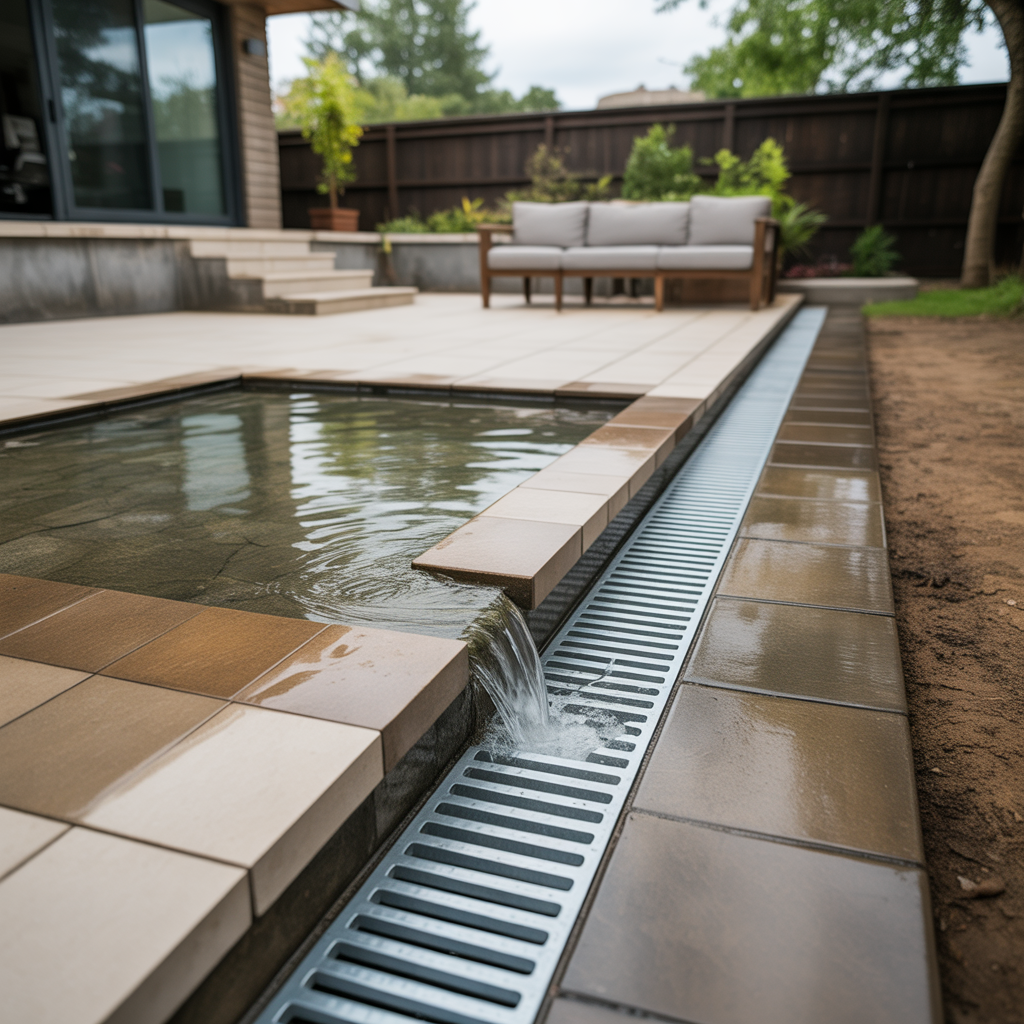
Hard surfaces like patios and driveways often cause water to collect and flow toward unwanted areas. Channel drains — long, narrow drains with metal or plastic grates — capture runoff before it spreads across the yard or reaches the home’s foundation.
These drains are installed flush with the surface, making them both functional and visually subtle. Water enters through the grate and flows into underground pipes that carry it away safely. Channel drains are especially helpful for sloped patios where water naturally rushes downward.
Besides preventing puddles and slippery surfaces, they protect nearby landscaping from erosion. Once installed, maintenance usually involves occasional clearing of leaves or debris. This solution is widely used in professional landscaping because it combines strong performance with a clean, modern appearance.
🌧️ 16. Add Mulch Beds to Absorb Excess Water
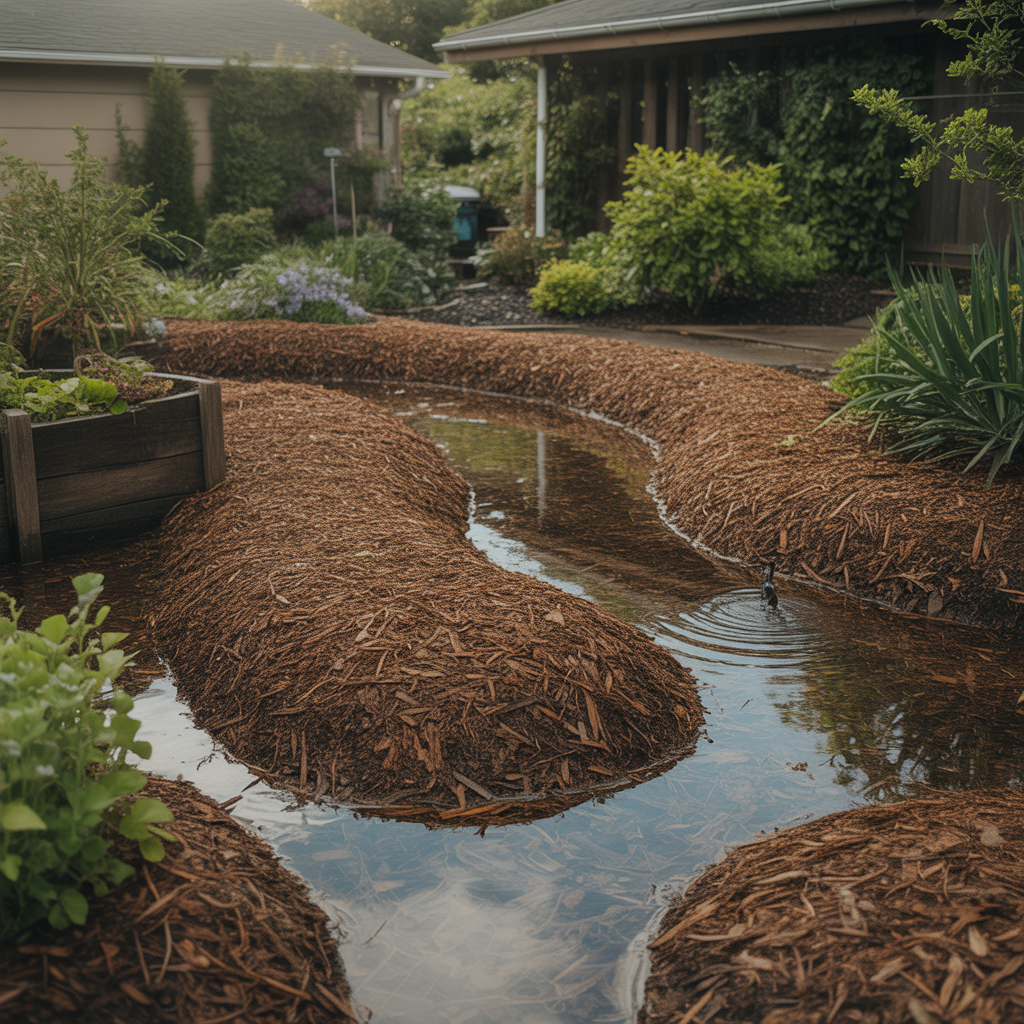
Mulch is often used for aesthetics, but it also plays a major role in water management. Thick mulch beds absorb rainfall, slow runoff, and help water penetrate soil gradually rather than pooling on the surface. This makes mulch an easy and affordable drainage improvement.
Place mulch around trees, shrubs, and garden beds where water tends to accumulate. Organic mulch also improves soil structure as it breaks down, increasing long-term drainage capacity. In addition, it prevents soil compaction caused by heavy rain and reduces erosion.
From a visual perspective, mulch creates a finished, polished appearance while supporting healthier plants. It’s a simple solution that works quietly behind the scenes to improve overall yard performance without major construction.
🌧️ 17. Install a Sump Pump for Severe Drainage Problems
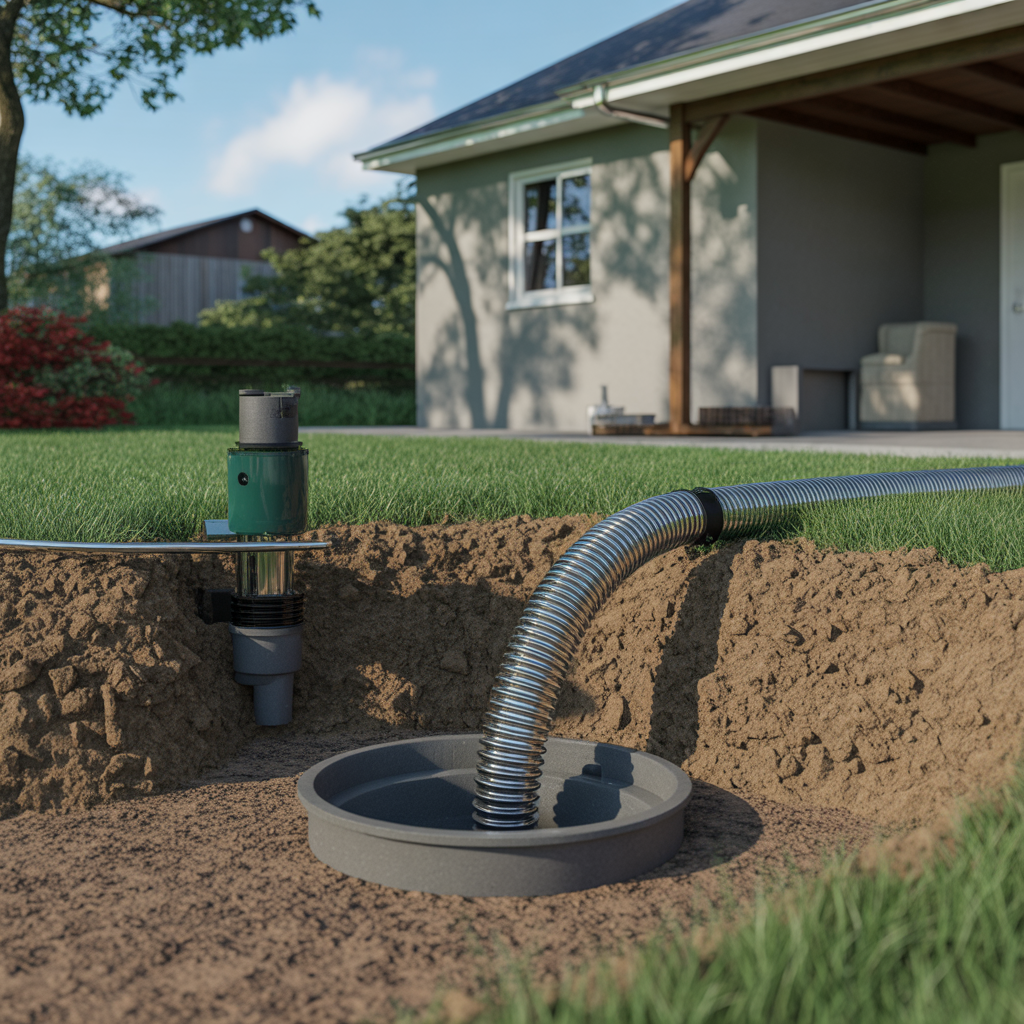
For yards or basements that experience persistent flooding, a sump pump provides a powerful mechanical solution. It collects excess water in a basin and pumps it away from the property before it can cause damage. While more technical than other options, it’s often necessary for areas with high water tables or frequent heavy rain.
Sump pumps are usually installed underground or in crawl spaces, making them mostly invisible once completed. They work automatically when water levels rise, offering peace of mind during storms. Pairing a sump pump with proper outdoor drainage systems ensures maximum effectiveness.
Although installation requires professional help, the long-term protection it provides for foundations and landscaping makes it a worthwhile investment. This solution is less about aesthetics and more about preventing costly water damage.
🌧️ 18. Combine Multiple Drainage Solutions for Maximum Effectiveness
The most successful drainage systems rarely rely on a single method. Professional landscapers often combine several strategies — such as French drains, grading, mulch beds, and catch basins — to create a complete water-management system. This layered approach ensures that water is controlled at every stage: collection, redirection, absorption, and discharge.
For example, roof water can flow into rain barrels, excess runoff can move through swales, and remaining water can be captured by drains or rain gardens. Combining solutions reduces stress on any single system and provides backup during heavy storms.
This holistic approach not only solves drainage problems but also improves the overall design and usability of the yard. Instead of reacting to water issues repeatedly, you create a landscape that works with natural water flow — resulting in a healthier, more resilient outdoor space.