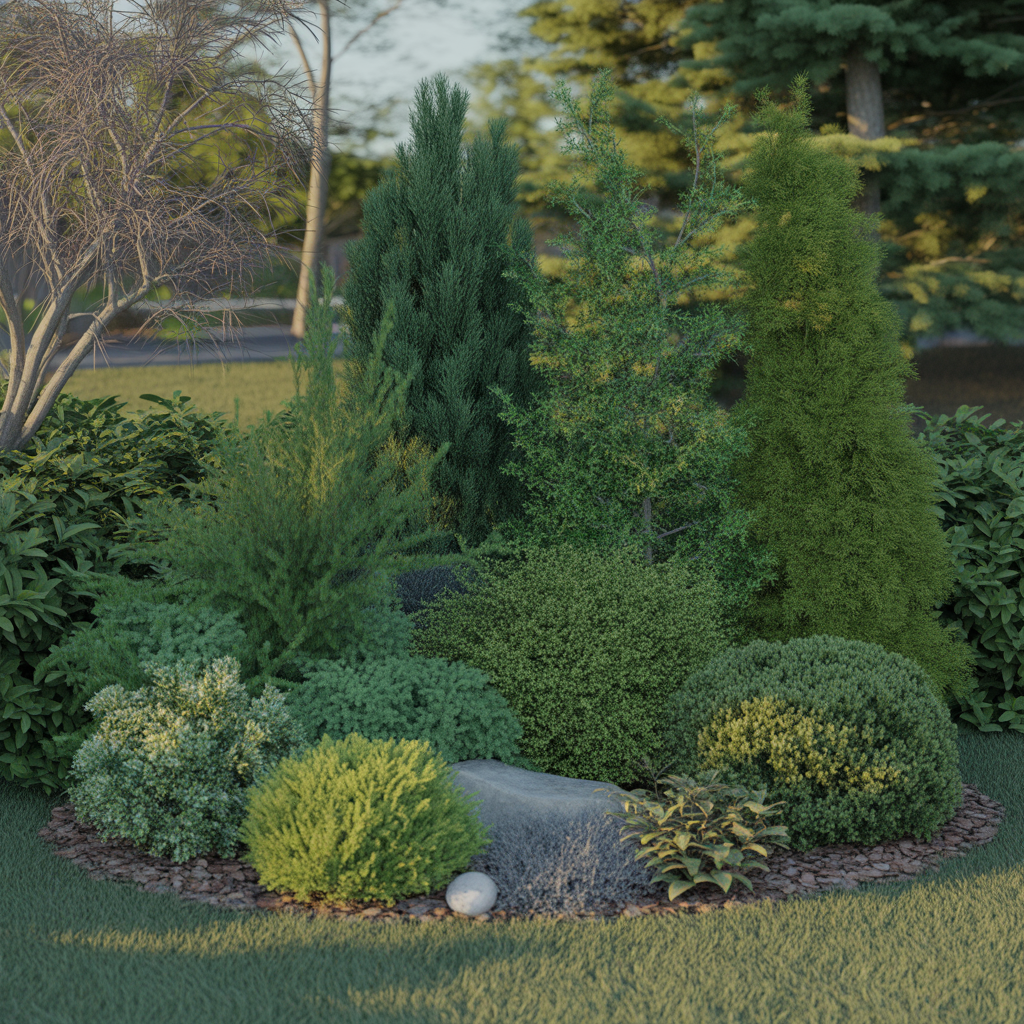
🌿 20 Evergreen Landscape Ideas to Keep Your Yard Beautiful All Year
Evergreen landscaping is the secret behind yards that look beautiful no matter the season. While flowers bloom and fade and lawns change with the weather, evergreen plants provide consistent structure, color, and texture all year long. A well-designed evergreen landscape creates stability — it ensures your yard never looks empty during winter and always feels alive even in challenging climates.
The key to successful evergreen design is variety. Mixing shapes, heights, and textures prevents the space from feeling flat or repetitive. By combining trees, shrubs, and ground covers, you can create a layered landscape that feels lush in summer and elegant in winter. In this guide, we’ll start with the first five evergreen landscape ideas, each explained in depth and paired with a professional 150–200 word AI image prompt so you can generate realistic visuals for blogs, inspiration boards, or design planning.
🌲 1. Create a Layered Evergreen Border for Year-Round Structure
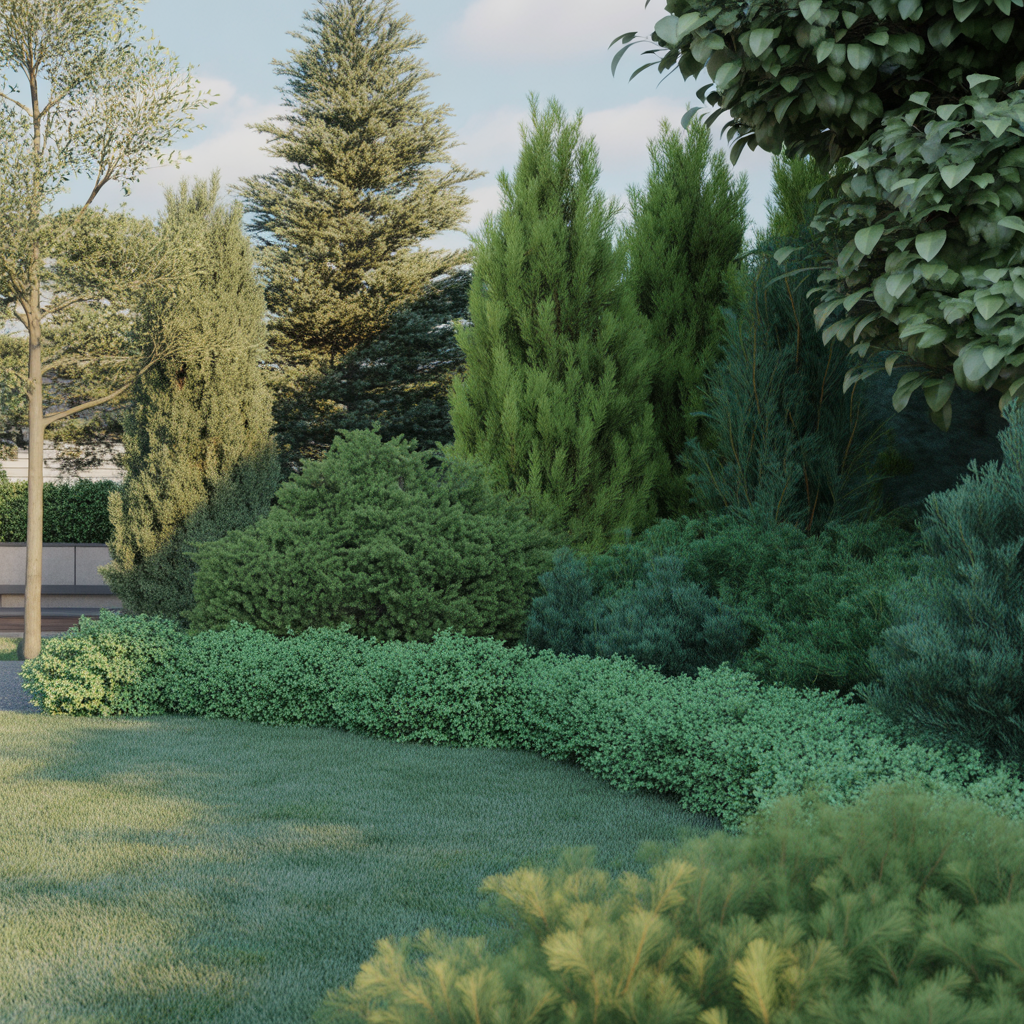
One of the most effective ways to use evergreens is by building a layered border along fences, property lines, or the edge of your yard. Professional landscapers rely on layering because it creates depth and visual richness in every season. Start with tall evergreen trees or large shrubs at the back to establish height and privacy. In front of them, place medium-sized shrubs to soften the transition, and finish with low evergreen ground covers or compact plants near the front edge.
This layered arrangement prevents the landscape from looking flat or sparse, especially during winter when deciduous plants lose their leaves. The variety of textures — needle-like foliage, broad evergreen leaves, and soft ground covers — creates subtle contrast that feels sophisticated and natural. A layered border also reduces maintenance because dense planting suppresses weeds and protects soil moisture.Beyond practicality, this design makes your yard look intentionally designed rather than randomly planted. Even when snow falls or temperatures drop, the structure remains strong and visually appealing, ensuring your outdoor space always feels complete.
🌲 2. Use Evergreen Hedges as Natural Privacy Walls
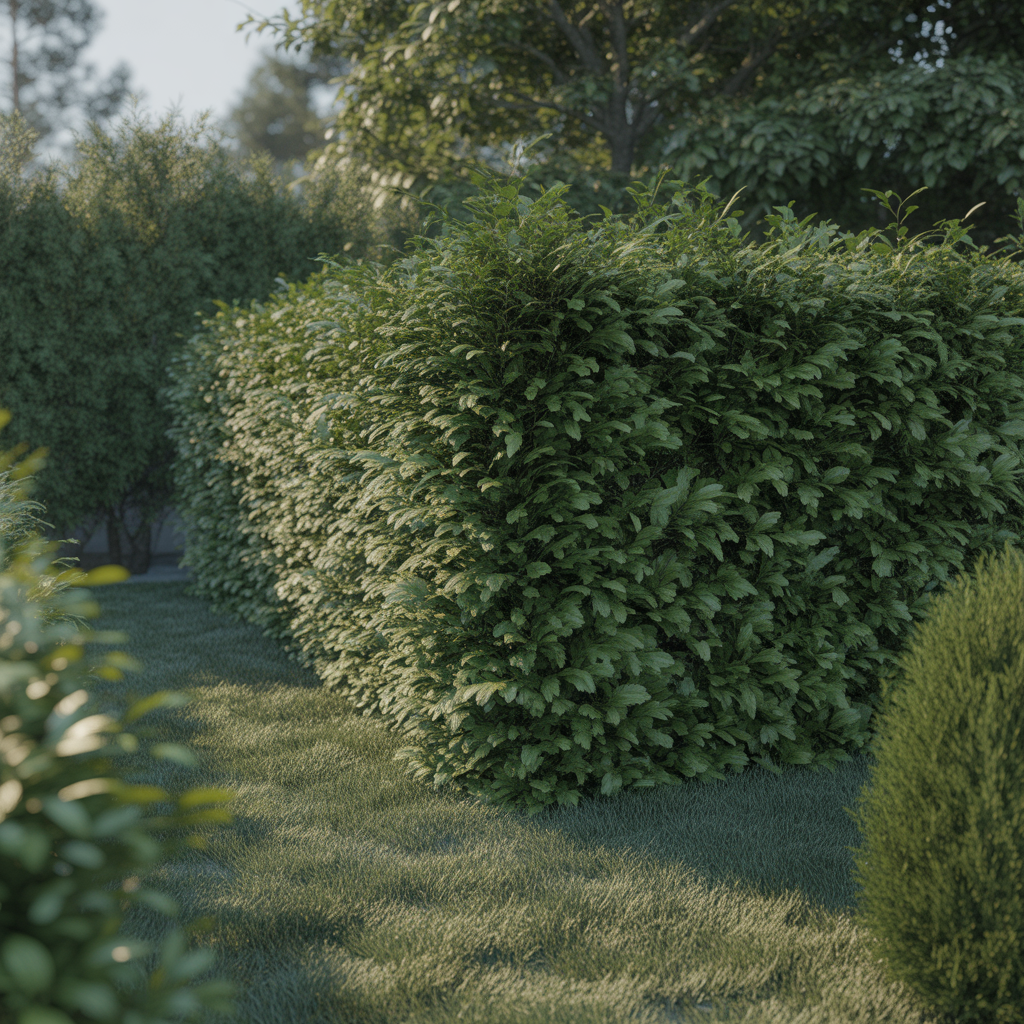
Evergreen hedges are one of the smartest investments for a year-round beautiful yard. Unlike fences, which can feel harsh or artificial, living hedges provide softness, movement, and a natural sense of enclosure. They create privacy without sacrificing beauty and help define outdoor spaces in a way that feels organic.
Choose dense evergreen varieties that maintain foliage throughout the year. Plant them in a straight line for a formal look or in gentle curves for a more relaxed, natural feel. As hedges mature, they form lush green walls that block unwanted views and reduce noise from nearby streets or neighbors.
The beauty of evergreen hedges lies in consistency. While flowers come and go, hedges provide a reliable green backdrop that highlights seasonal plants and garden features. They also act as windbreaks, protecting more delicate plants and making outdoor spaces more comfortable.
Once established, evergreen hedges require only occasional trimming, making them a low-maintenance solution that adds long-term value and elegance to your landscape.
🌲 3. Add Evergreen Ground Covers for a Lush Base Layer
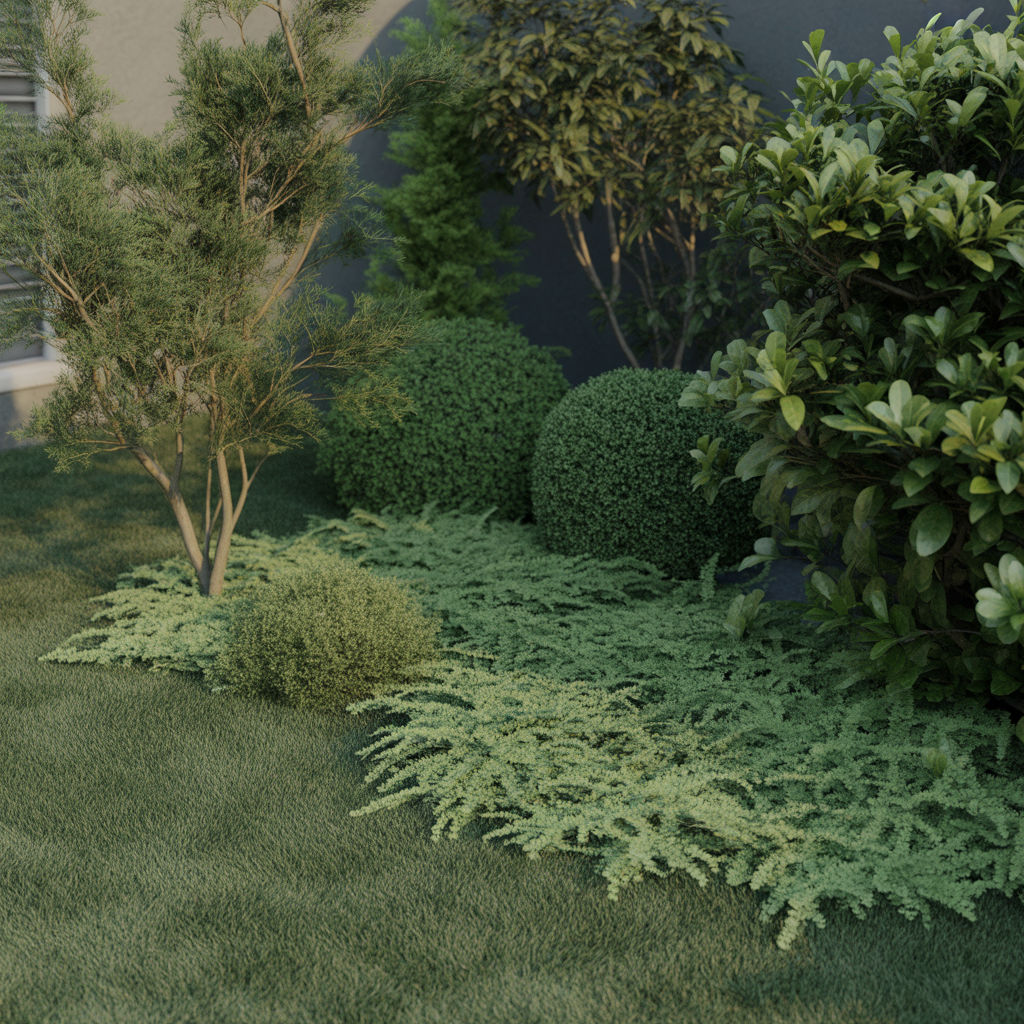
Many homeowners focus on trees and shrubs but overlook the ground layer — a mistake that often makes gardens look incomplete. Evergreen ground covers solve this problem by creating a continuous green carpet that fills empty spaces and keeps the yard visually full throughout the year.
Ground covers spread naturally, reducing bare soil and minimizing weeds. They soften pathways, edges, and planting beds while adding texture close to the ground. Because they stay green in all seasons, they prevent the landscape from looking dull during colder months.
In addition to aesthetics, ground covers help regulate soil temperature and retain moisture, reducing maintenance needs. They work especially well under trees or around shrubs where grass struggles to grow. The result is a cohesive landscape where every layer contributes to the overall design.
When combined with taller evergreens, ground covers create a multi-dimensional effect that feels lush and professionally landscaped, even in smaller yards.
🌲 4. Plant Evergreen Accent Trees for Visual Focal Points
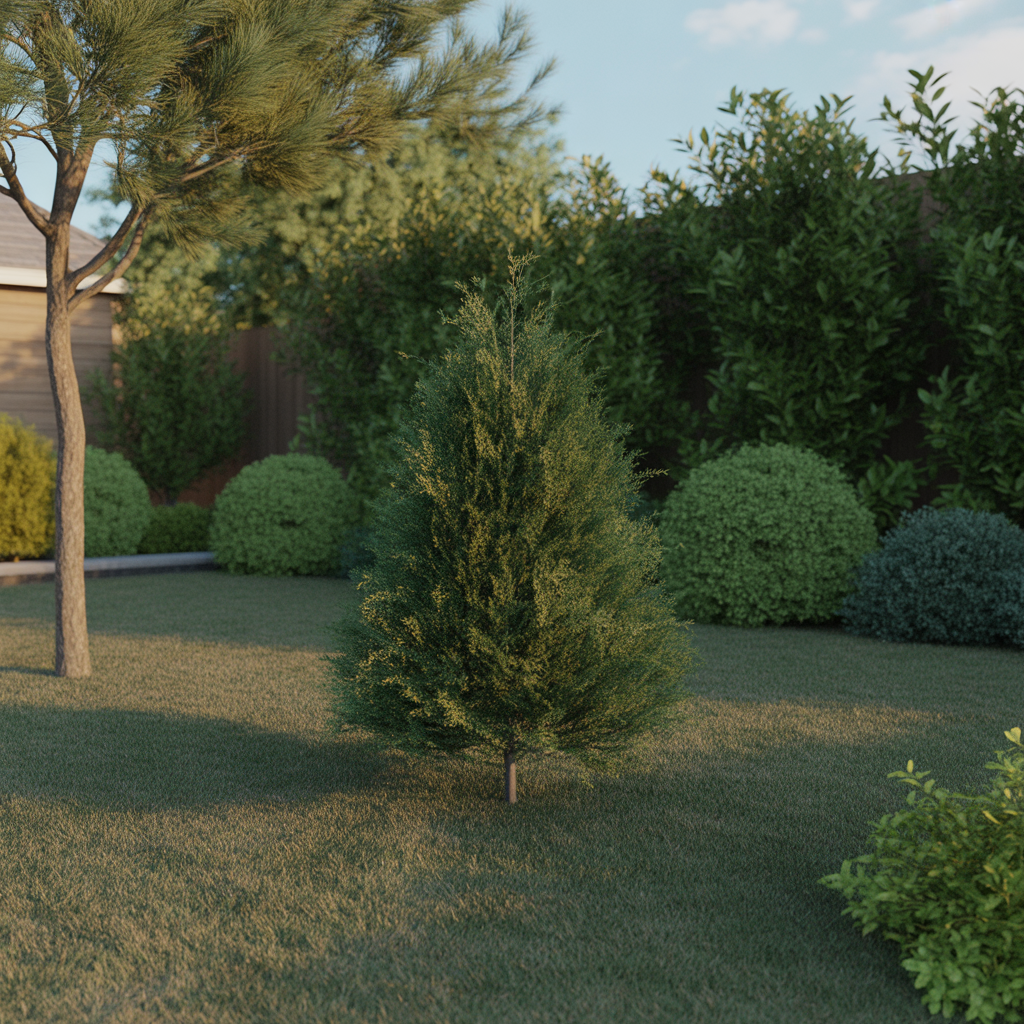
Every great landscape needs focal points — features that naturally draw the eye and anchor the design. Evergreen accent trees serve this role beautifully because they maintain their shape and color all year. Placing one or two carefully chosen trees in strategic locations creates instant elegance and structure.
Accent trees work well near entryways, patios, or the center of open lawns. Their consistent greenery provides visual stability, especially during winter when other plants fade. Choose varieties with unique shapes or textures to create interest without overwhelming the space.
The key is restraint. Rather than planting many trees, use a few strong focal points and allow surrounding plants to complement them. This creates a clean, balanced look often seen in professionally designed landscapes.
Over time, evergreen accent trees become defining features of the yard — the elements that give the space personality and lasting beauty.
🌲 5. Mix Different Evergreen Textures for Designer Appeal
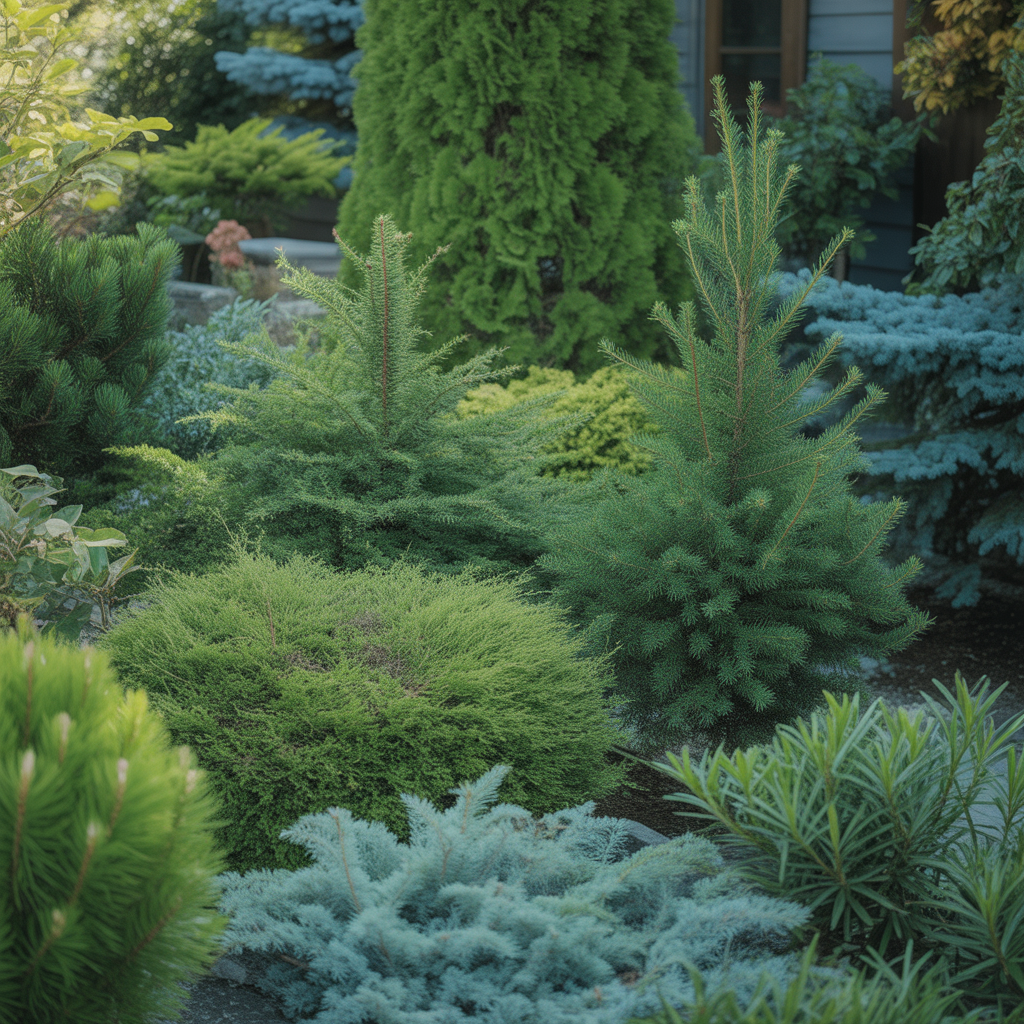
One reason some evergreen landscapes feel boring is lack of variation. Using only one type of plant creates monotony. Professional designers solve this by mixing textures — combining fine needle-like foliage, broad leaves, and soft feathery greenery to create contrast and depth.
Texture variation makes the landscape visually interesting even when colors remain mostly green. Pair upright evergreens with rounded shrubs and spreading ground covers. The interplay between shapes creates movement and keeps the eye engaged.
This approach also enhances seasonal beauty. In winter, when flowers disappear, texture becomes the primary design element. A well-balanced mix ensures the garden still feels dynamic and intentional.
By focusing on texture instead of color alone, you create a sophisticated landscape that looks elegant year-round and requires minimal seasonal changes.
🌲 6. Frame Walkways with Evergreen Plants for Year-Round Definition
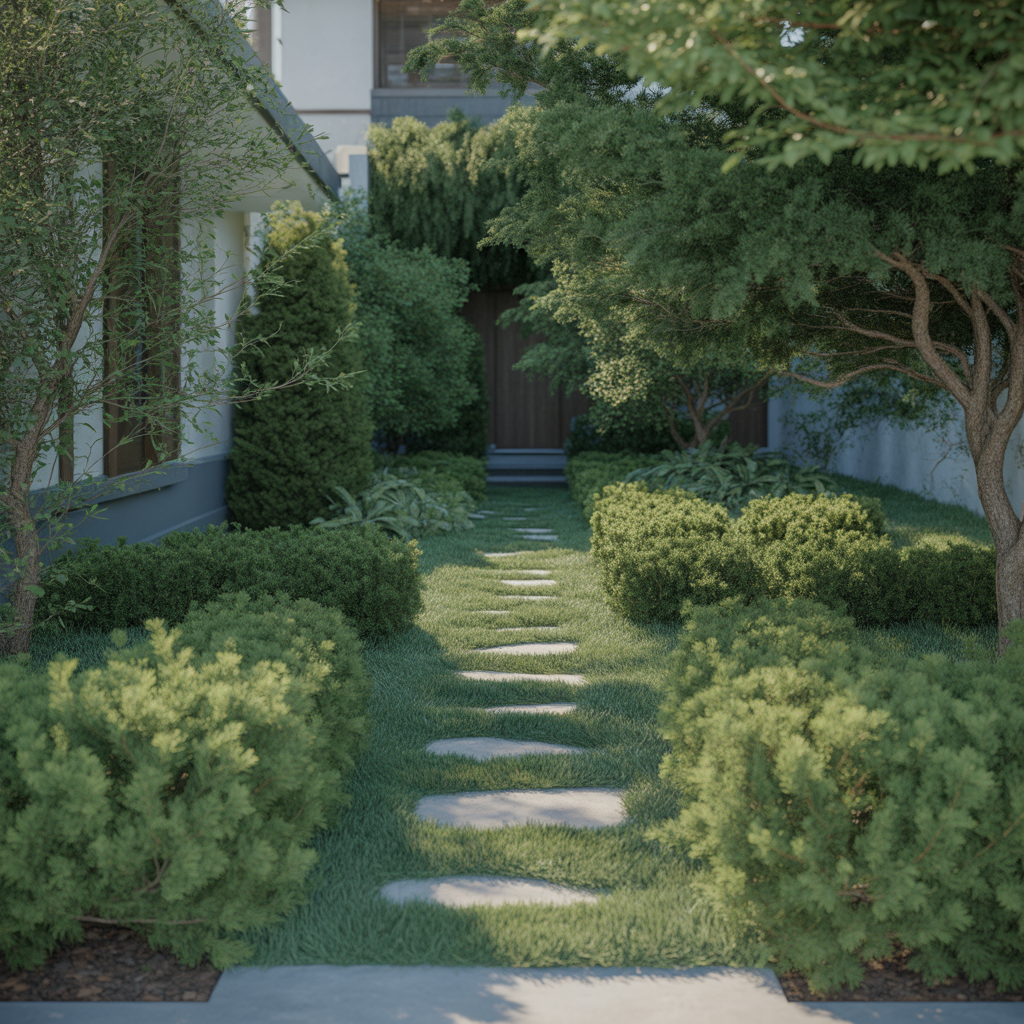
Walkways are often overlooked in landscape design, yet they play a huge role in how a yard feels and functions. By framing paths with evergreen plants, you create clear visual direction while ensuring the space remains attractive in every season. Evergreen borders guide movement through the garden, making even simple paths feel intentional and professionally designed.
Use compact evergreen shrubs or low-growing varieties along both sides of the path. The repetition of greenery creates rhythm and harmony, giving the yard a polished appearance. During winter, when flowers disappear and lawns may fade, these evergreen edges continue to define the space and keep the landscape structured.
Besides aesthetics, evergreen path borders reduce maintenance by preventing soil erosion and discouraging weeds. They also soften hard materials like stone or concrete, blending built elements with nature. The result is a welcoming, cohesive environment where movement through the garden feels calm and natural — a key element in high-end landscaping.
🌲 7. Use Evergreen Containers to Add Flexible Year-Round Color
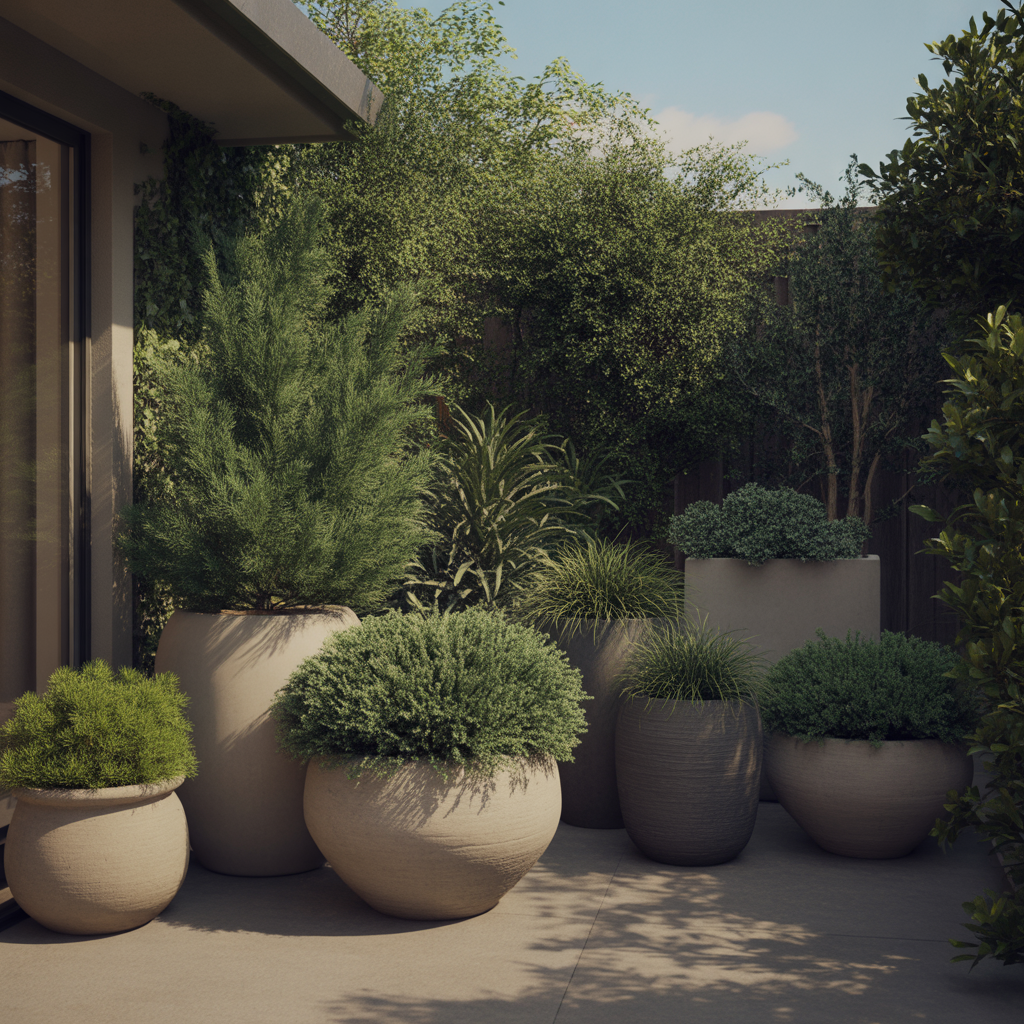
Evergreen plants aren’t limited to garden beds — containers filled with evergreens can instantly elevate patios, entryways, and outdoor seating areas. The advantage of container landscaping is flexibility. You can move planters seasonally, refresh arrangements, or highlight specific zones without major changes to the yard.
Choose evergreen varieties with interesting shapes or textures and pair them with neutral-toned pots for a timeless look. Tall evergreens in containers can frame doorways or create symmetry, while smaller varieties soften patio edges. Because the plants stay green year-round, containers never look empty — even during colder months when seasonal flowers disappear.
Container evergreens also add vertical interest to flat spaces and allow you to introduce greenery where planting in the ground isn’t possible. This approach is especially useful for small yards or modern landscapes where clean lines and simplicity are important. With minimal maintenance, evergreen containers keep outdoor spaces looking fresh and intentional throughout the year.
🌲 8. Create Evergreen Islands in the Lawn for Visual Interest
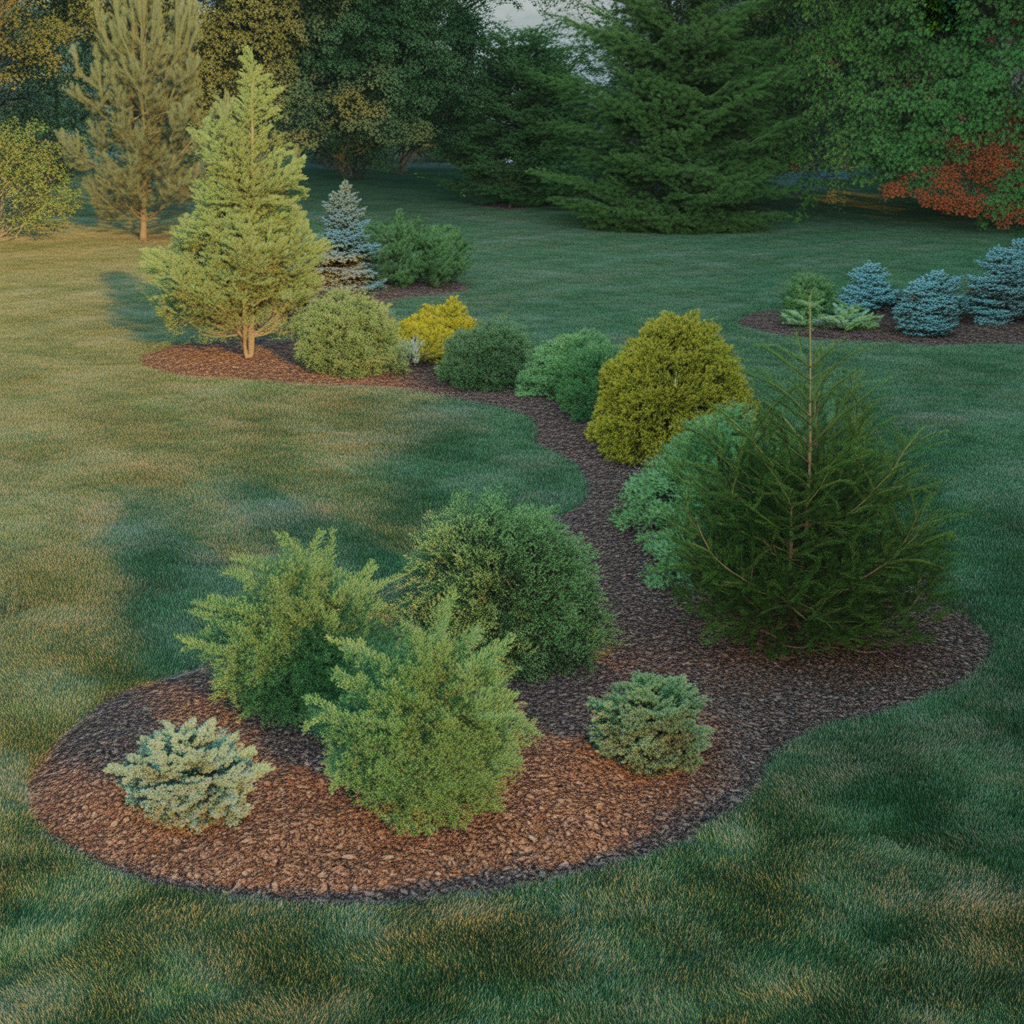
Large open lawns can sometimes feel empty or flat, especially during winter. Evergreen planting islands solve this problem by introducing structure and focal points without eliminating the open feel of the yard. These islands are small clusters of evergreen shrubs or trees placed strategically within the lawn to create depth and movement.
The key is organic placement. Instead of perfect circles, design natural-shaped islands with curved edges that blend into the grass. Combine different evergreen heights to create dimension, and add mulch around the base for a finished appearance. These islands break up large spaces visually, making the yard feel more dynamic and professionally designed.
Because evergreens maintain their shape and color year-round, lawn islands ensure the landscape never looks barren. They also reduce mowing areas slightly, which can lower maintenance over time. The balance between open space and structured greenery creates a calm, elegant atmosphere typical of well-planned landscapes.
🌲 9. Combine Evergreens with Natural Stone for Timeless Style
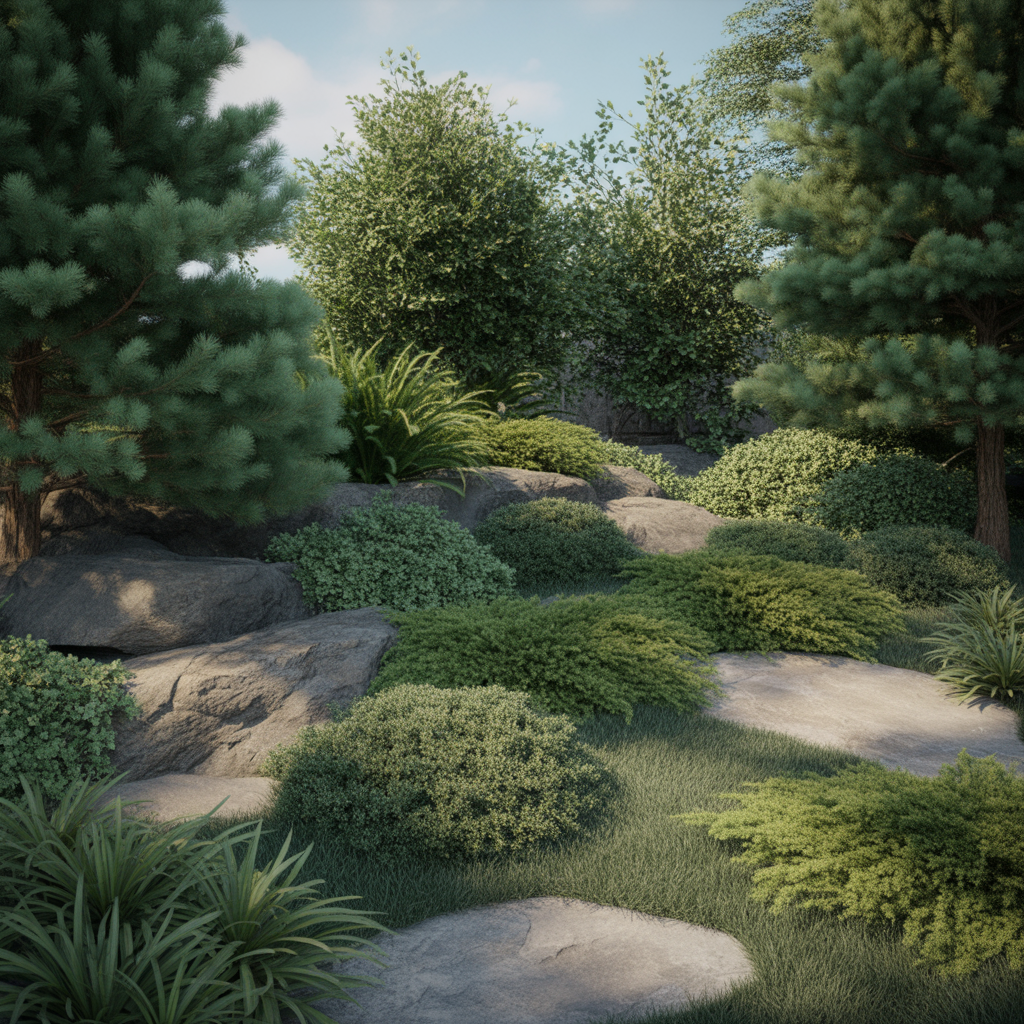
One of the most effective design strategies is pairing evergreen plants with natural stone elements. Stone adds permanence and texture, while evergreens provide softness and life. Together, they create a timeless look that feels both structured and natural — a combination often seen in luxury landscapes.
Use large stones or boulders as anchors within planting beds. Surround them with evergreen shrubs or ground covers to blend hard and soft textures. This contrast creates visual interest even when flowers are absent. During winter, when color is limited, the combination of stone and greenery remains striking and elegant.
Stone also helps with drainage and soil stability, making it practical as well as beautiful. Because both materials age gracefully, this design approach requires very little updating over time. The result is a landscape that feels mature and grounded — beautiful in every season without relying on constant changes.
🌲 10. Use Evergreen Corner Planting to Soften Yard Edges
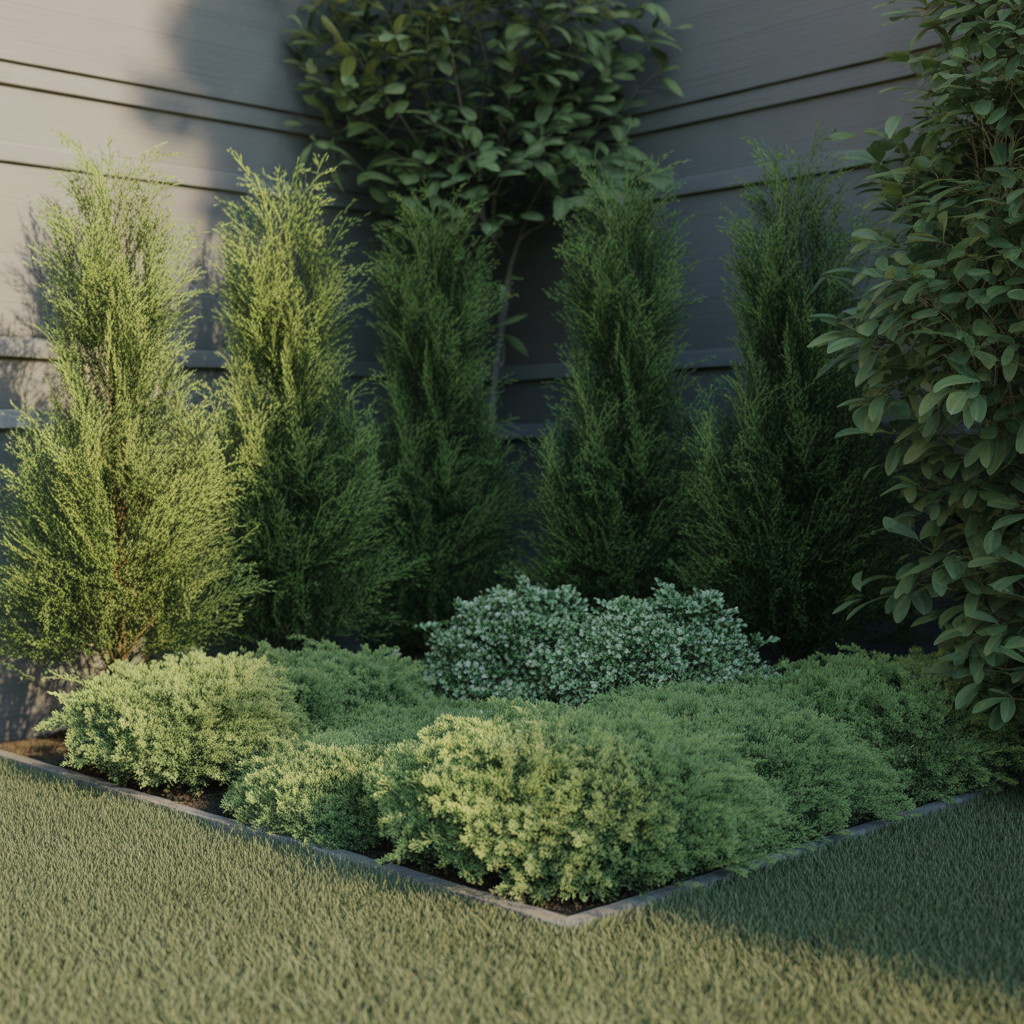
Corners of a yard are often awkward or underused, yet they offer excellent opportunities for evergreen design. Planting evergreens in corners softens harsh boundaries and makes the entire yard feel more cohesive. Instead of abrupt transitions where fences or walls meet, greenery creates gentle visual flow.
Choose taller evergreens for the back corner and gradually step down to medium and low plants toward the front. This layered approach adds depth and prevents the corner from feeling heavy or crowded. Corner plantings also draw the eye outward, making the yard appear larger than it actually is.
Because these areas are often less trafficked, evergreen plantings here require minimal maintenance once established. They quietly provide structure and balance, ensuring that no part of the yard feels forgotten. Over time, these green corners become anchors that tie the entire landscape together.
🌲 11. Create Evergreen Foundation Plantings Around the House
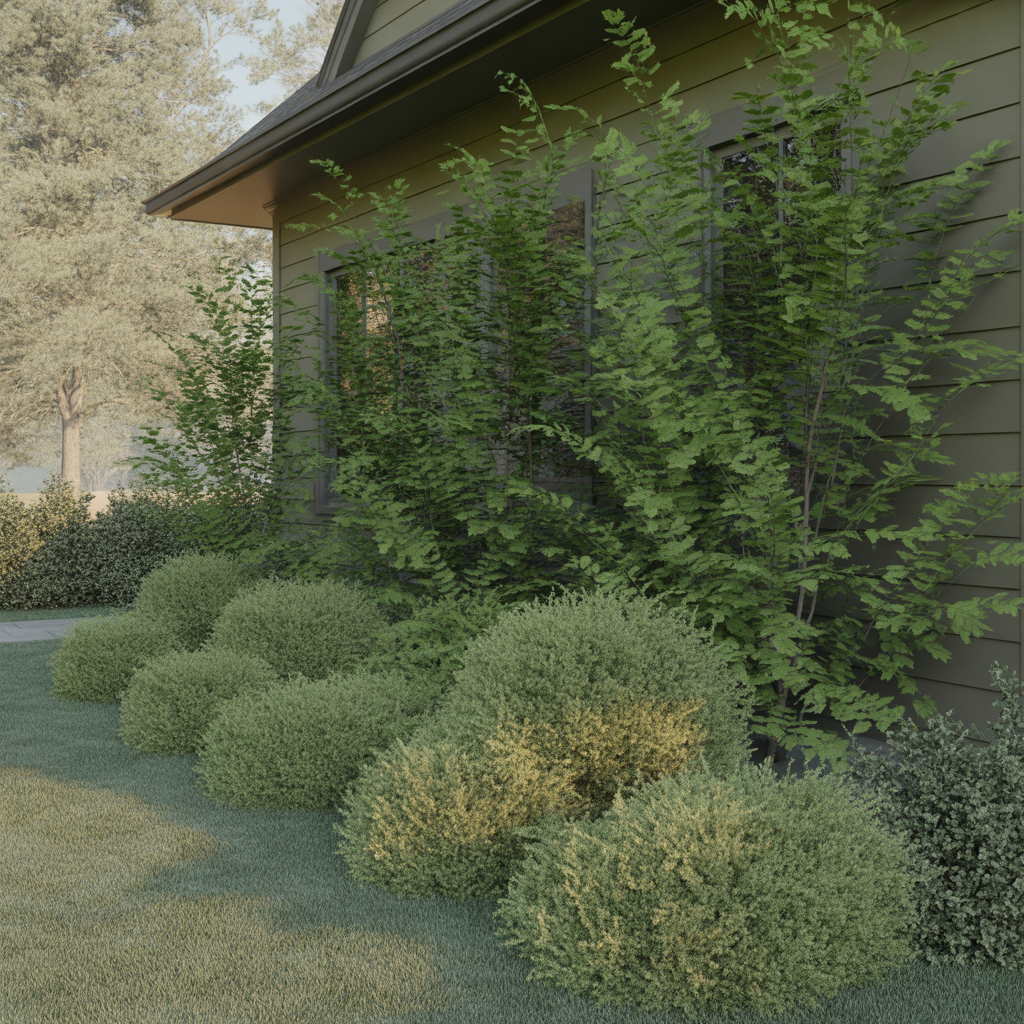
Foundation plantings are the evergreen shrubs placed along the base of your home. These plantings soften hard architectural lines and visually connect the house to the surrounding landscape. Without them, a home can look disconnected from the yard, especially during winter when deciduous plants lose their leaves.
Choose medium-sized evergreen shrubs that stay neat and structured. Arrange them in gentle groupings rather than perfectly straight lines to create a natural look. Mixing textures — such as rounded shrubs with upright evergreens — adds depth and keeps the design from feeling flat.
Beyond aesthetics, foundation plantings also help insulate the home by buffering wind and regulating soil temperature near the walls. Because they remain green all year, they maintain curb appeal even in colder months. A well-designed evergreen foundation instantly makes the entire property feel polished, mature, and professionally landscaped.
🌲 12. Plant Evergreen Trees as Windbreaks
Evergreen trees can serve as natural windbreaks, protecting your yard from harsh weather while adding year-round greenery. Strategically planting rows of evergreens along the edge of your property reduces wind speed, making outdoor spaces more comfortable and protecting delicate plants.
Tall conifers or dense evergreen species work especially well for this purpose. Arrange them with slight spacing so they form a natural barrier while still allowing airflow. Over time, these trees create a strong visual boundary that enhances privacy and gives the landscape a sense of enclosure.
Windbreaks also improve energy efficiency by reducing cold air movement around the home. Visually, they provide a strong vertical element that anchors the landscape and creates balance against open lawn areas. Even during winter storms, these trees maintain their beauty and keep the yard feeling alive.
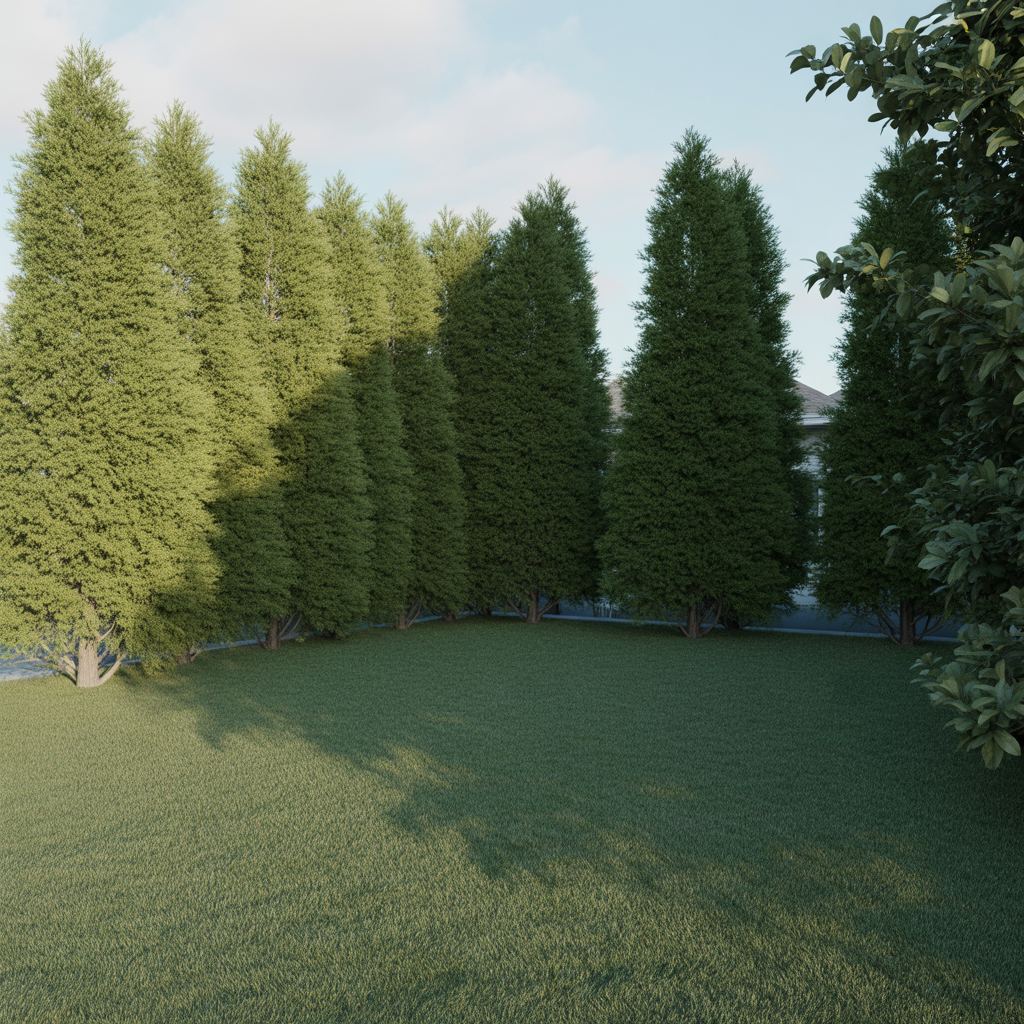
🌲 13. Mix Upright and Rounded Evergreens for Balance
A common landscaping mistake is using only one plant shape. Mixing upright and rounded evergreen forms creates visual balance and keeps the yard from looking monotonous. Upright evergreens add height and direction, while rounded shrubs provide softness and stability.
Place taller, narrow plants as vertical accents and surround them with fuller, rounded shrubs to create contrast. This variation in form mimics natural landscapes and feels more dynamic throughout the year. During winter, when color is limited, shape becomes the main design feature — making this strategy especially valuable.
This balanced approach works in both small and large yards. It allows you to create focal points while maintaining harmony across the landscape. The result is a garden that feels thoughtfully designed and visually engaging from every angle.
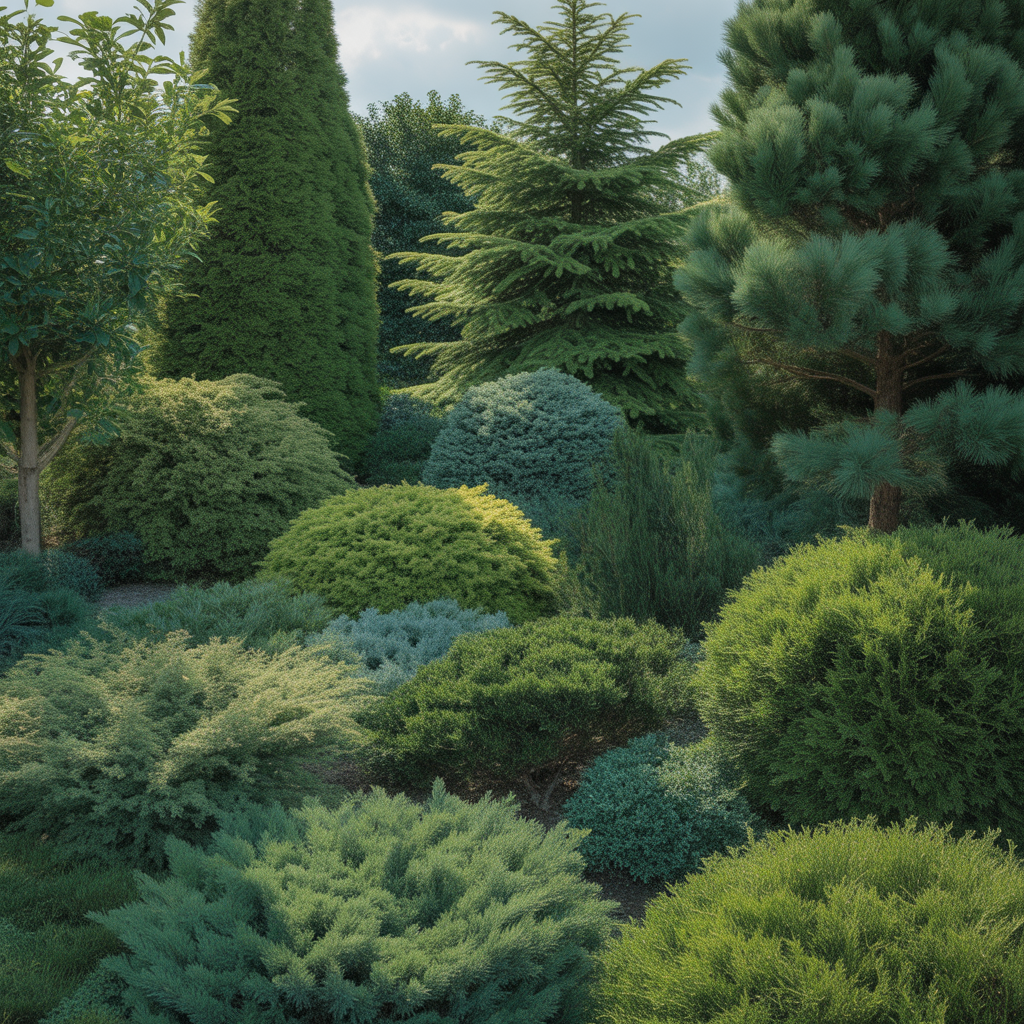
🌲 14. Use Evergreen Topiary for Formal Elegance
Topiary introduces structure and artistry into evergreen landscapes. Carefully shaped shrubs — whether spheres, cones, or simple geometric forms — create a refined, classic appearance often seen in formal gardens.
Even a few topiary plants can elevate the entire yard. Place them near entrances, patios, or pathways where their shapes can be appreciated. The clean lines contrast beautifully with softer surrounding greenery, creating a balance between natural and designed elements.
Topiary requires occasional trimming but offers lasting impact. Because the plants remain green year-round, the structure stays visible in every season. This makes topiary an excellent choice for homeowners who want a polished, upscale look without constant redesign.
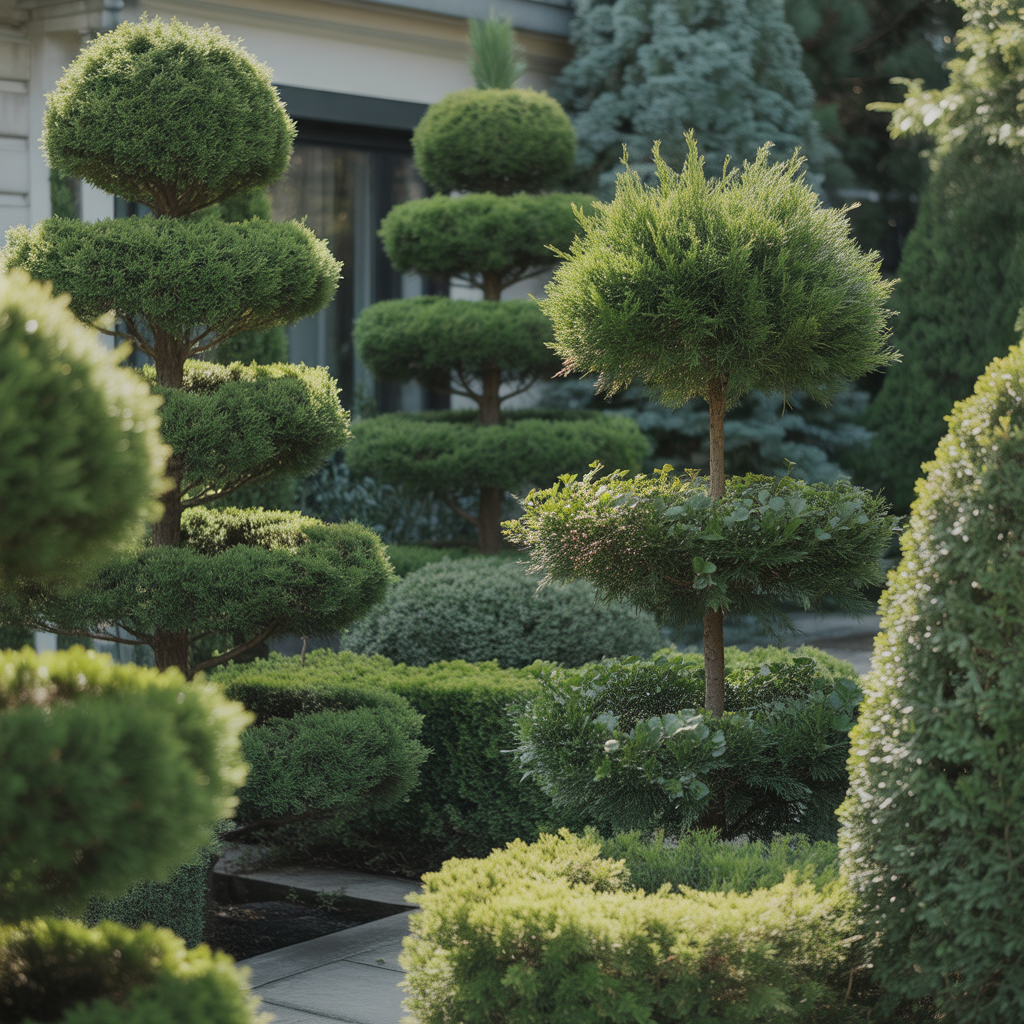
🌲 15. Add Evergreen Plants Around Outdoor Seating Areas
Outdoor seating feels more inviting when surrounded by greenery. Evergreen plants provide a consistent backdrop that makes patios and lounges feel cozy and enclosed throughout the year.
Use medium-height shrubs behind seating to create privacy while keeping views open. Add lower evergreen plants around edges to soften hard surfaces like decks or stone patios. This layered greenery helps integrate furniture into the landscape rather than making it feel separate.
Even in winter, the seating area remains visually warm and alive because the surrounding plants stay green. This encourages year-round outdoor use and creates a relaxing retreat atmosphere.
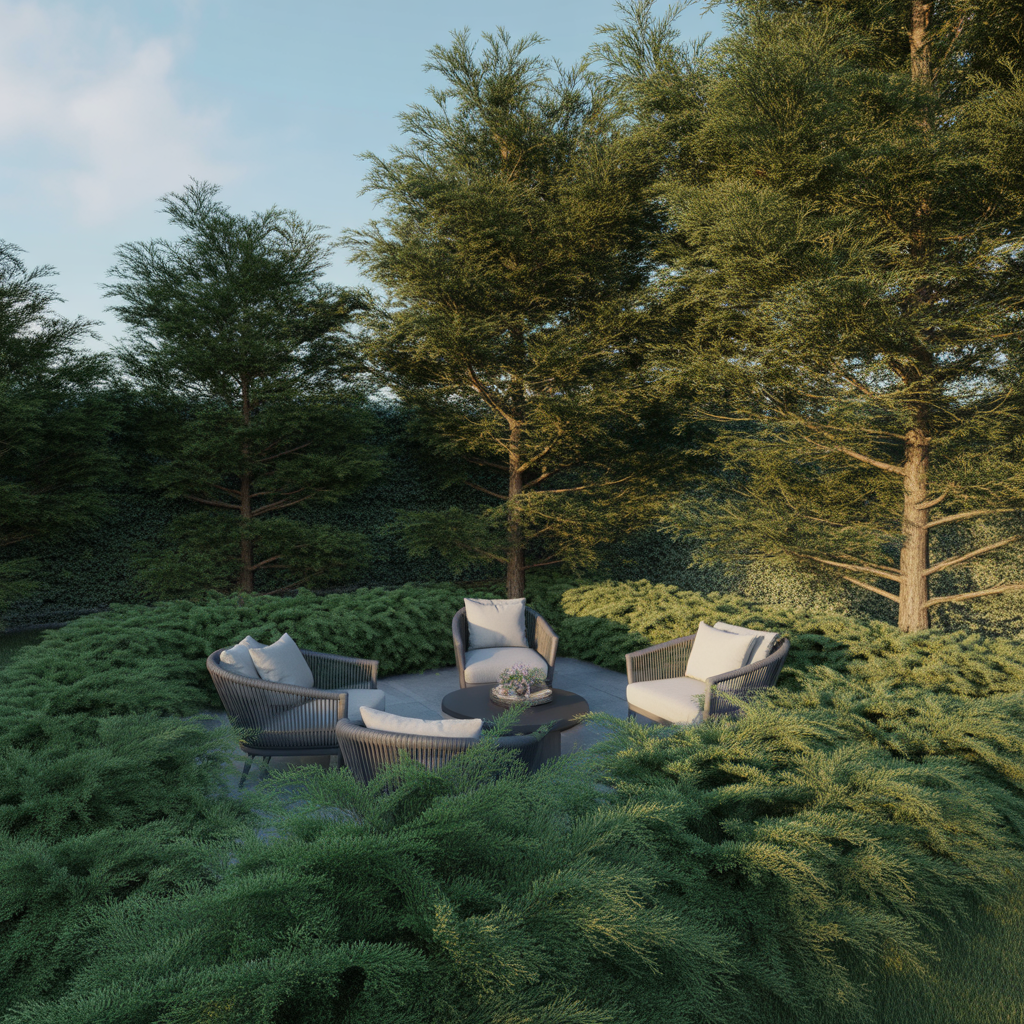
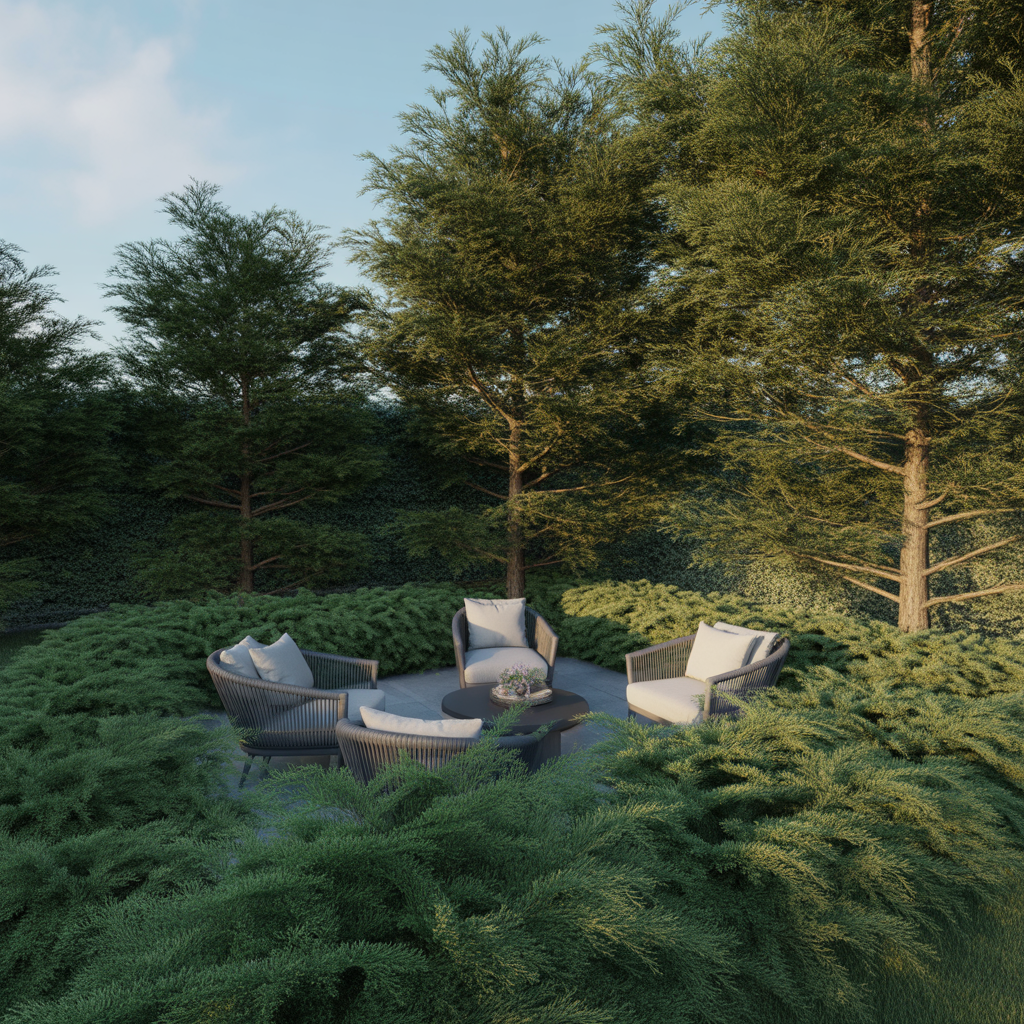
🌲 16. Use Evergreen Ground Layers Under Trees
The area beneath trees often looks bare and difficult to maintain. Adding evergreen ground plants solves this issue while creating a lush, finished appearance.
Low-growing evergreens fill empty spaces, reduce weeds, and help retain soil moisture. They also create a seamless transition between tree trunks and surrounding landscape, making the yard feel more cohesive.
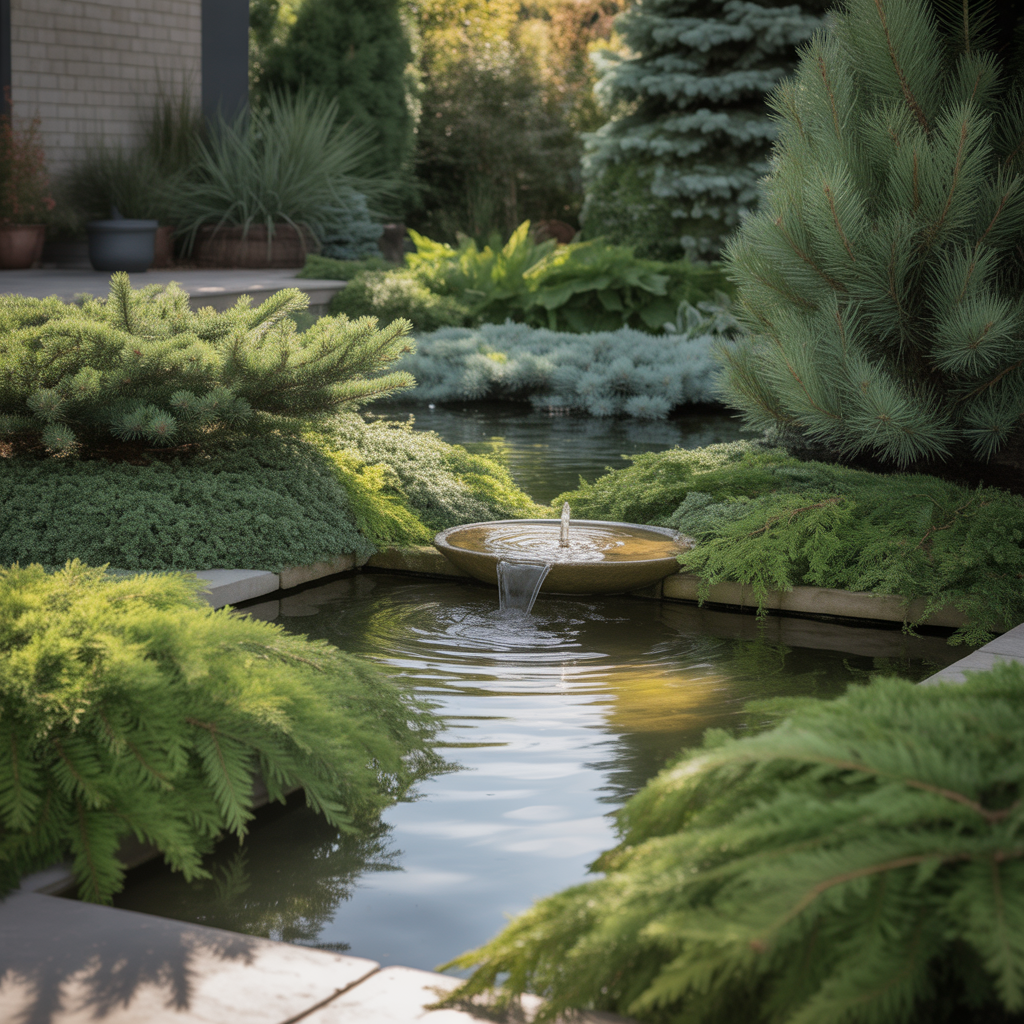
🌲 17. Incorporate Evergreen Plants Around Water Features for Year-Round Calm
Water features naturally draw attention in a landscape, but during colder seasons they can sometimes look empty or disconnected from the rest of the yard. Surrounding fountains, ponds, or small waterfalls with evergreen plants solves this problem by ensuring the area remains visually attractive throughout the year. Evergreens provide structure and softness, framing the water feature and helping it blend naturally into the landscape rather than appearing as a separate object.
Choose a combination of textures — upright evergreens for height, rounded shrubs for balance, and low evergreen ground covers to soften the edges. This layering creates a natural transition from water to land, which is often seen in professionally designed gardens. The consistent green foliage reflects beautifully on the water’s surface, adding depth and movement even when flowers are absent.
Evergreens also help stabilize soil around water features, reducing erosion and keeping edges neat. During winter, when deciduous plants lose leaves, the evergreen greenery ensures the area still feels alive and calming. The overall effect is peaceful and timeless — a quiet retreat that remains visually strong in every season while enhancing the relaxing quality that water naturally brings.
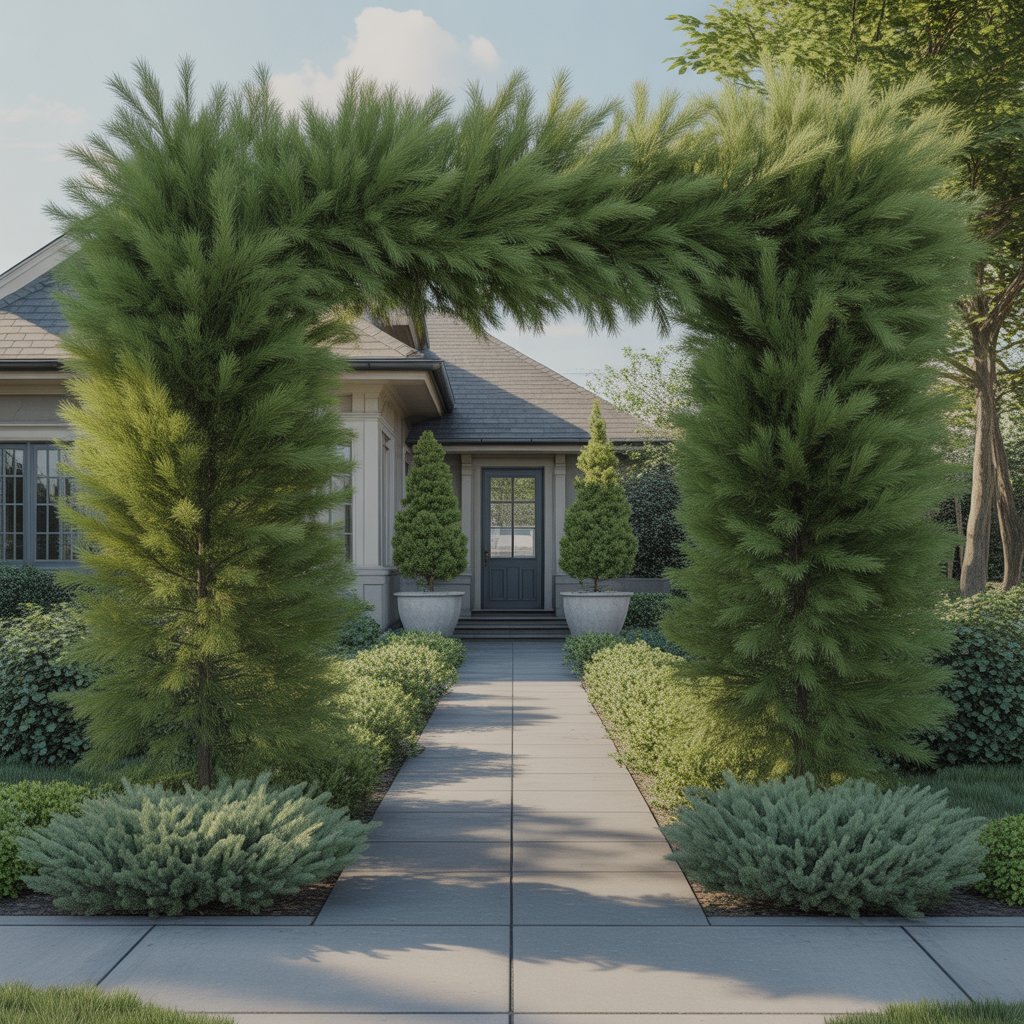
🌲 18. Create Evergreen Entryway Accents for Lasting Curb Appeal
The entrance to your yard or home sets the tone for the entire landscape. Evergreen entryway accents are one of the simplest yet most powerful ways to maintain curb appeal all year long. Unlike seasonal flowers that fade, evergreens provide consistent color and structure, ensuring the entry always feels welcoming and polished regardless of weather.
Symmetry is especially effective here. Placing matching evergreen shrubs or planters on either side of a walkway, gate, or front steps creates balance and elegance. Upright evergreen varieties work well for adding height and drawing the eye toward the entrance, while rounded shrubs soften the look and keep it approachable. Even small spaces benefit from this strategy because it creates a strong visual anchor.
Beyond aesthetics, evergreen entry accents require minimal upkeep. Occasional pruning keeps them neat, and their year-round greenery eliminates the need for constant seasonal replanting. Over time, these plants become defining features of the property, giving it a mature and established appearance. The result is an entrance that always looks cared for — fresh in spring, lush in summer, and vibrant even in the quiet months of winter.
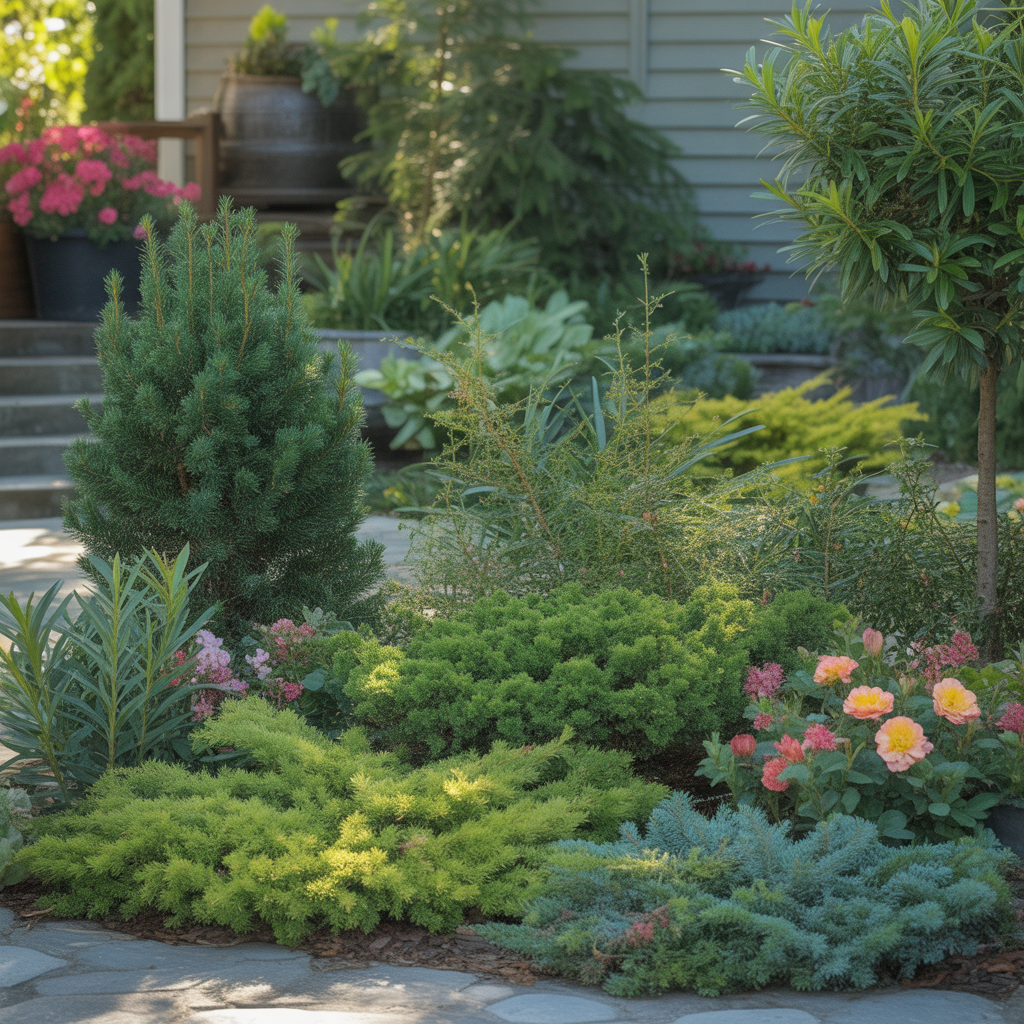
🌲 19. Blend Evergreens with Seasonal Plants for Year-Round Balance
One of the smartest landscape strategies is using evergreens as the permanent foundation while layering seasonal plants around them for changing color and interest. Evergreens provide stability — they maintain structure, height, and greenery throughout the year — while seasonal flowers and perennials bring bursts of color during spring and summer. This combination allows your yard to look dynamic without ever feeling empty.
Start by placing evergreen shrubs or small trees as anchor points in planting beds. These plants act as the visual backbone of the garden. Around them, add flowering plants that bloom at different times of the year. As seasonal plants fade, the evergreens ensure the space still feels full and intentional. This approach reduces the pressure to constantly replant or redesign your garden each season.
From a design perspective, the contrast between consistent greenery and temporary color creates depth and rhythm. Evergreens highlight the beauty of seasonal blooms rather than competing with them. Maintenance is also simplified because the main structure remains unchanged year after year. The result is a landscape that feels lively in summer, calm in winter, and balanced in every season — the hallmark of a professionally planned yard.
🌲 20. Design an Evergreen Focal Corner for Strong Winter Interest
Every yard benefits from having one area that remains visually strong even during the quietest seasons. Creating an evergreen focal corner ensures that your landscape never feels empty when flowers fade or trees lose their leaves. This corner acts as an anchor — a visually rich area designed specifically to provide winter interest and year-round beauty.
Choose a corner that is visible from key viewpoints, such as a patio, window, or main pathway. Layer different evergreen heights and textures to build depth. Taller conifers or upright shrubs can serve as the backdrop, while rounded evergreens and ground covers fill the middle and front layers. Adding natural stone or mulch helps define the area and enhances contrast.
The beauty of a focal corner is that it draws the eye and gives the entire yard a sense of completeness. Even when the rest of the landscape is dormant, this section remains lush and alive. Over time, as plants mature, the corner becomes a signature feature — one that gives your garden personality and ensures visual interest no matter the season.