18 Enchanting French Garden Ideas for a Timeless Retreat
There is something undeniably romantic and sophisticated about a French garden. Whether it’s the structured elegance of a formal jardin à la française or the lived-in charm of a rustic Provencal courtyard, French landscaping is all about harmony, sensory appeal, and timeless style. If you are looking to elevate your outdoor space with a touch of European flair, these ideas will help you create a sanctuary that feels both organized and effortlessly poetic.
In this guide, we are breaking down the first five essential elements to kickstart your garden transformation.
1. The Art of Symmetrical Boxwood Parterres
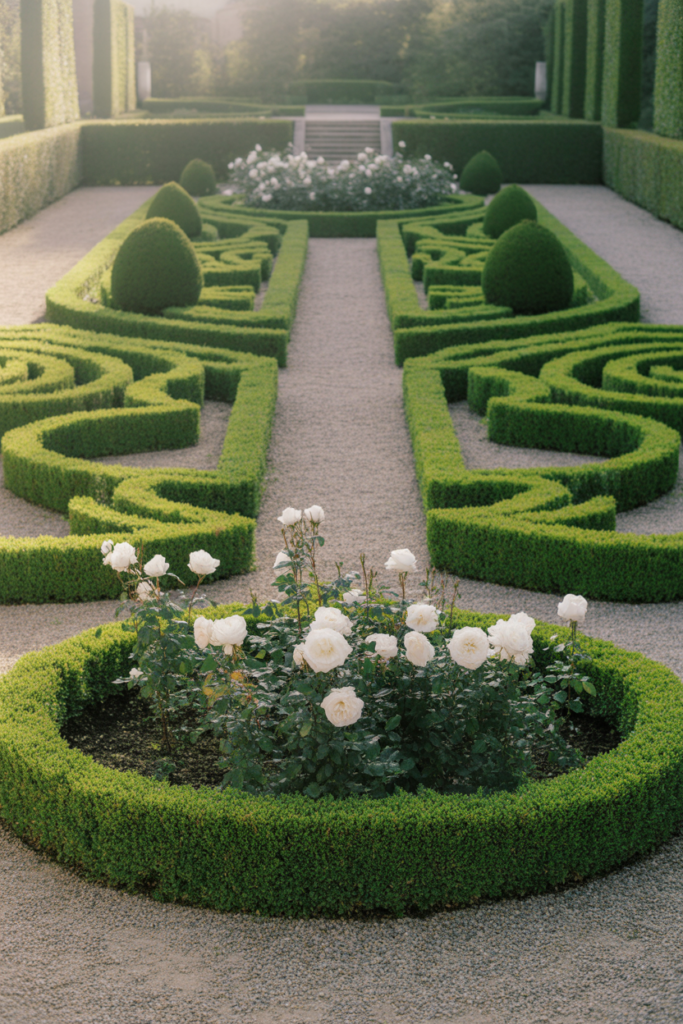
Symmetry is the backbone of French formal design. Creating structured “rooms” using low-growing boxwood hedges (Buxus) allows you to define paths and highlight floral displays. These parterres create a sense of order and permanent greenery that looks stunning even in the winter months. For a modern twist, keep the outlines geometric but fill the centers with soft, whimsical perennials to contrast the rigid borders.
2. Gravel Pathways and Crunching Sounds
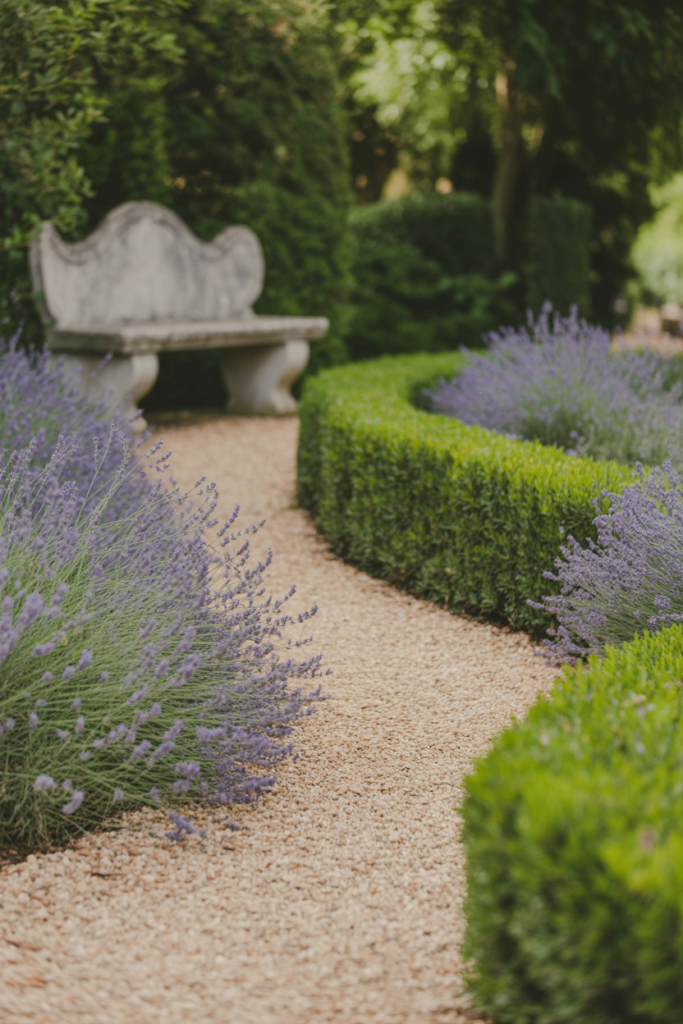
In a French garden, the journey is just as important as the destination. Replace traditional concrete or wooden decks with fine pea gravel or crushed limestone in shades of cream, tan, or soft grey. Not only does gravel provide excellent drainage, but it also creates that iconic “crunch” underfoot that defines the atmosphere of a chateau walk. Line these paths with lavender or lavender-cotton to soften the edges.
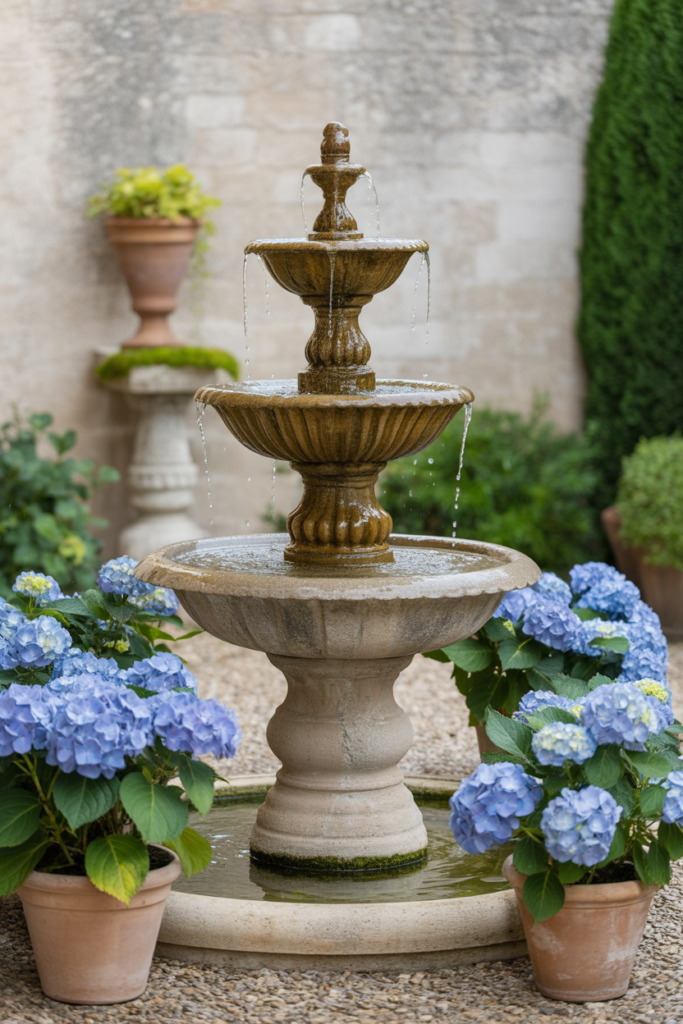
3. Classic Limestone Water Features
Water is a central element in French landscaping, symbolizing life and cooling the air. A tiered limestone fountain or a simple stone wall spout pouring into a rectangular basin acts as a sophisticated focal point. You don’t need a massive estate for this; even a small, weathered stone birdbath or a wall-mounted lion’s head fountain can bring the soothing sound of trickling water and a sense of antiquity to a small patio.
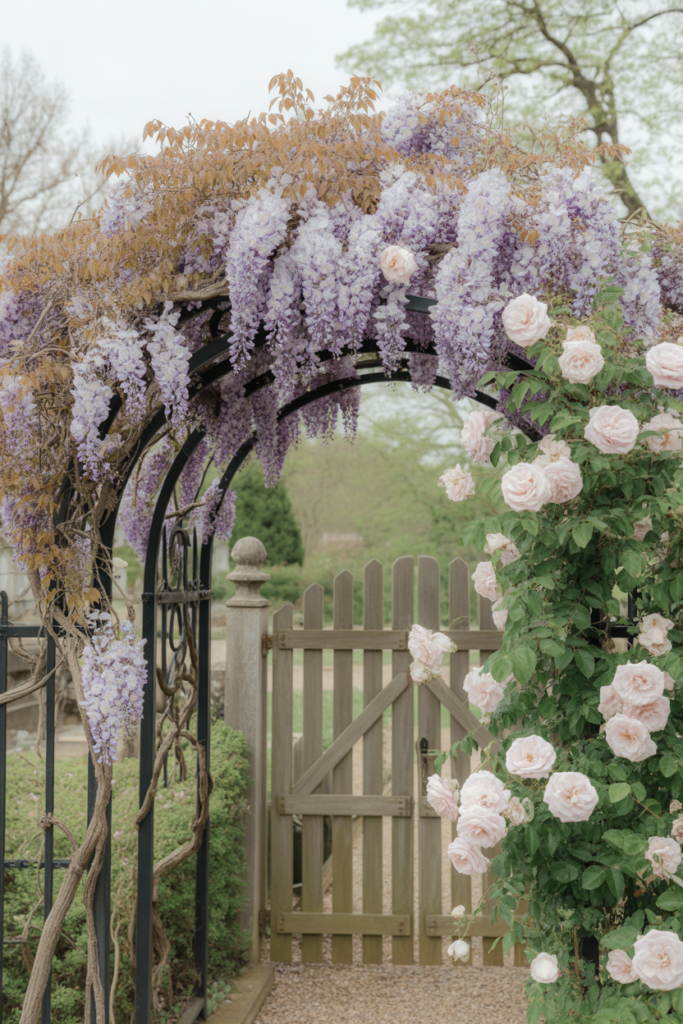
4. The Romance of Climbing Wisteria and Roses
To capture the “cottage” side of French style, vertical interest is key. Train climbing roses or fragrant wisteria to crawl over iron pergolas, wooden arbors, or directly onto stone walls. The goal is to create a lush, overhead canopy of blooms that feels like it has been there for decades. Opt for soft pastel palettes—pale pinks, creamy whites, and lavender hues—to keep the look ethereal and classic.
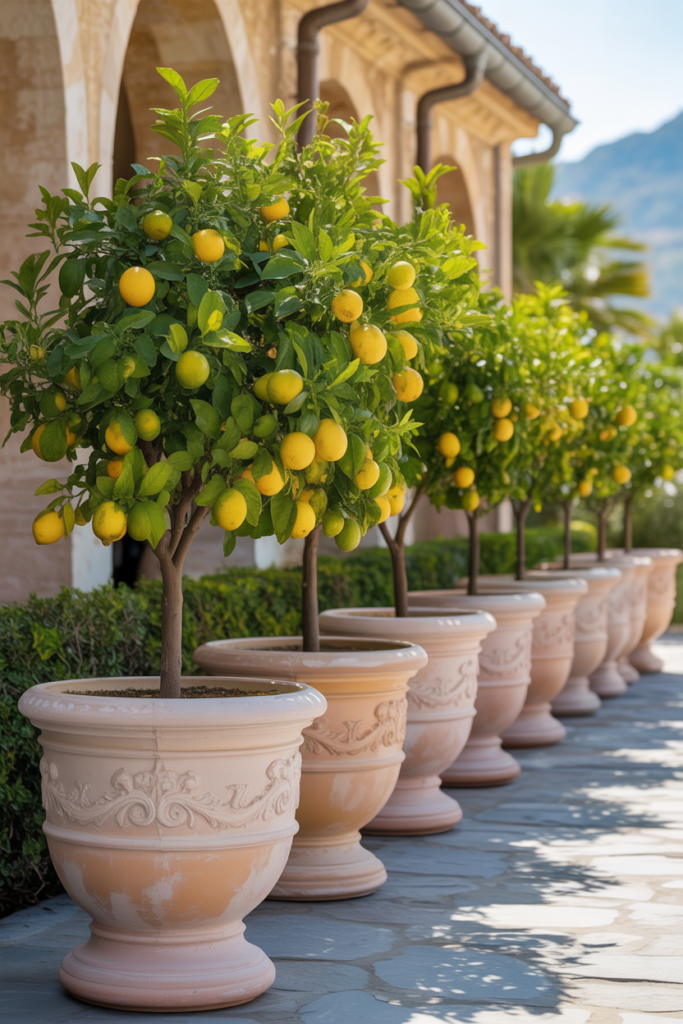
5. Potted Citrus and Terracotta Accents
The “Orangerie” look is a staple of French gardens. Large, classic terracotta pots (like the famous Anduze style from Southern France) filled with lemon trees, olive trees, or manicured bay laurels add an instant Mediterranean vibe. These pots allow for versatility; you can move them to frame doorways or line a terrace, and they bring a structured, architectural element to the softer garden beds.
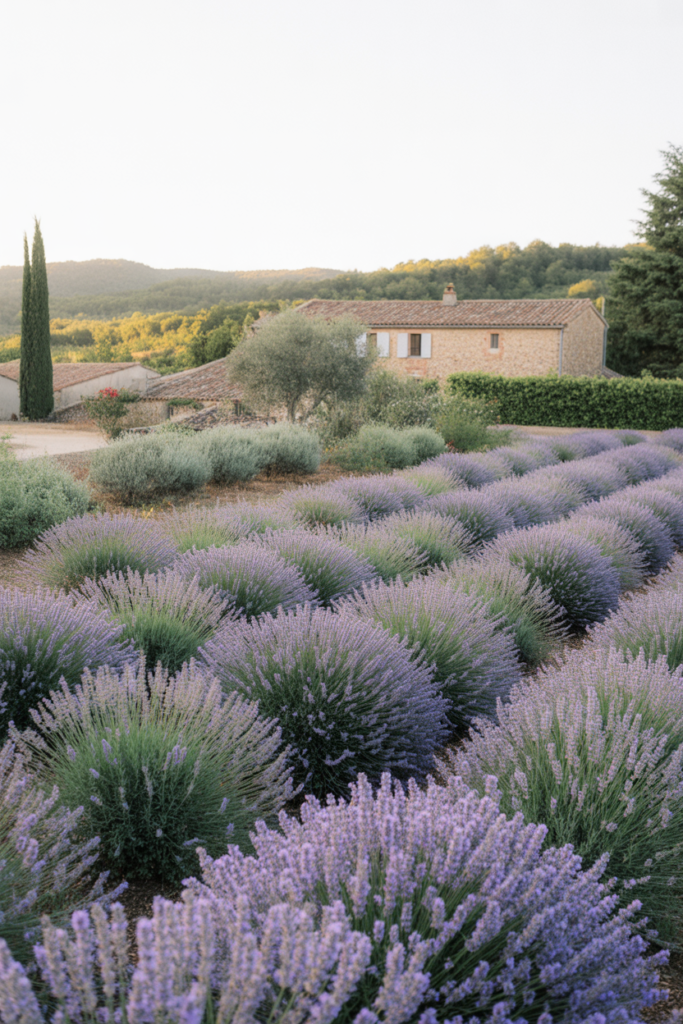
6. The Provencal Lavender Field Effect
Nothing says “French countryside” quite like the sight and scent of mass-planted lavender. To achieve this look, avoid planting single shrubs in isolation. Instead, plant rows of Lavandula angustifolia to create soft, undulating drifts of purple. This works beautifully along the edges of a driveway or as a border for a sunny patio. The silvery-green foliage provides year-round interest, while the summer blooms attract pollinators, adding movement and life to your garden.
7. Pleached Trees for Living Privacy
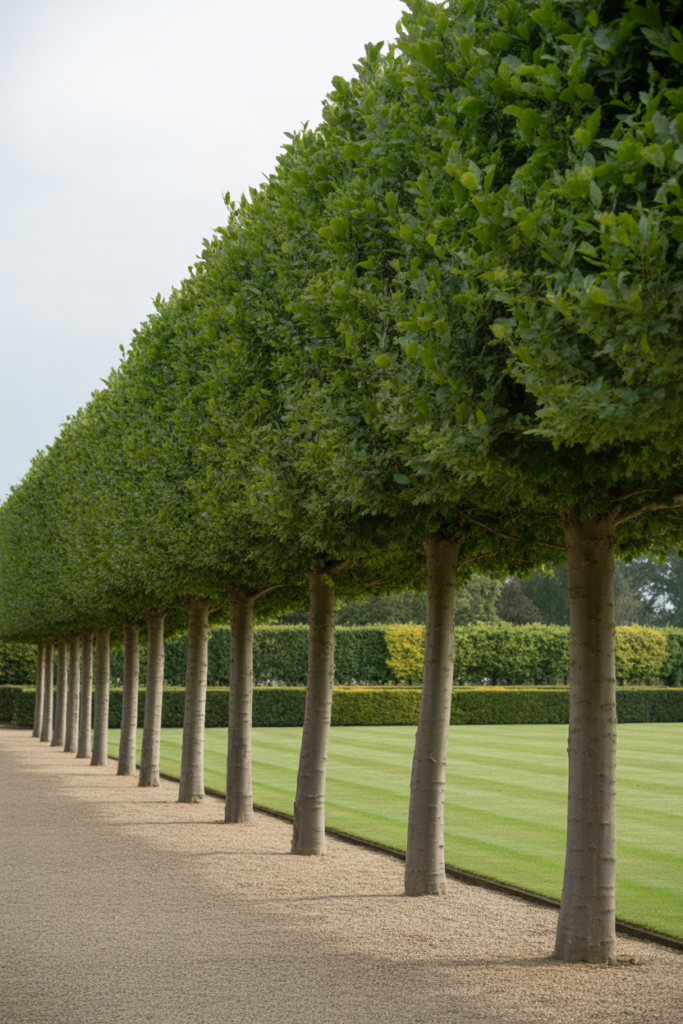
Pleached trees are essentially “hedges on stilts.” By training trees like Hornbeam or Lime (Linden) onto flat frames, you create a high-level screen that offers privacy without taking up the ground space of a traditional hedge. This is a classic French technique used to create shaded “allées” or to block the view of neighboring buildings. It adds a sophisticated, architectural height that makes a small garden feel like a grand estate.
8. Weathered Iron Gazebos and Furniture
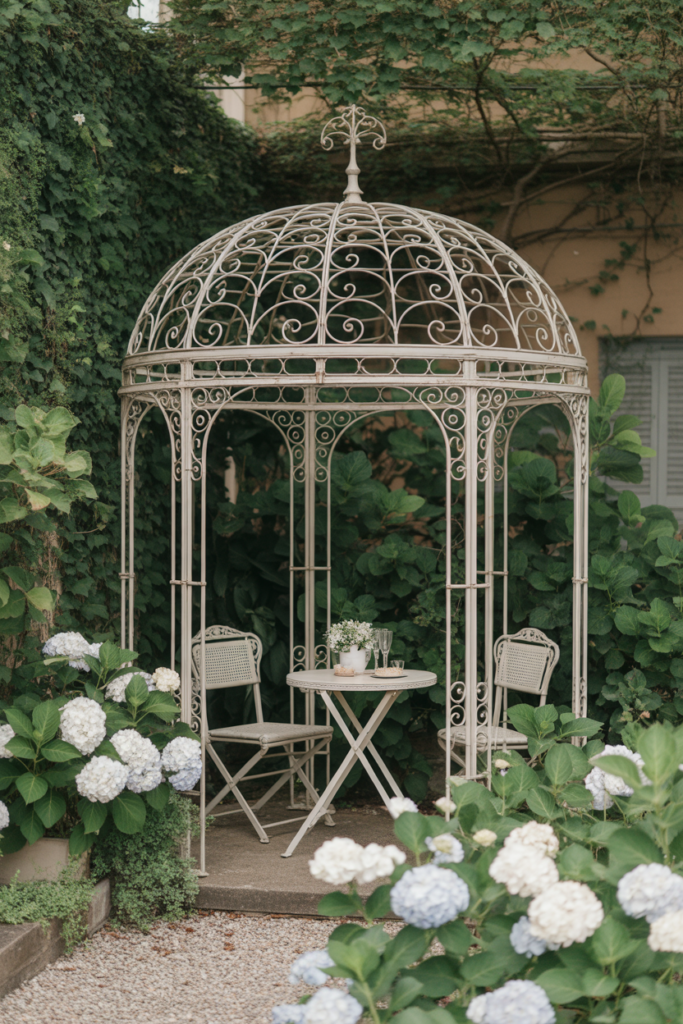
The French garden is designed for “flânerie”—the art of strolling and lounging. Incorporating ornate, wrought-iron furniture in shades of sage green, white, or rusted antique bronze creates an inviting spot for morning coffee. A delicate iron gazebo draped in ivy or jasmine serves as a romantic focal point and a structured retreat from the sun. Look for “shabby chic” finishes to ensure the pieces feel integrated into the landscape rather than brand new.
9. Fruit Espaliers Against Stone Walls
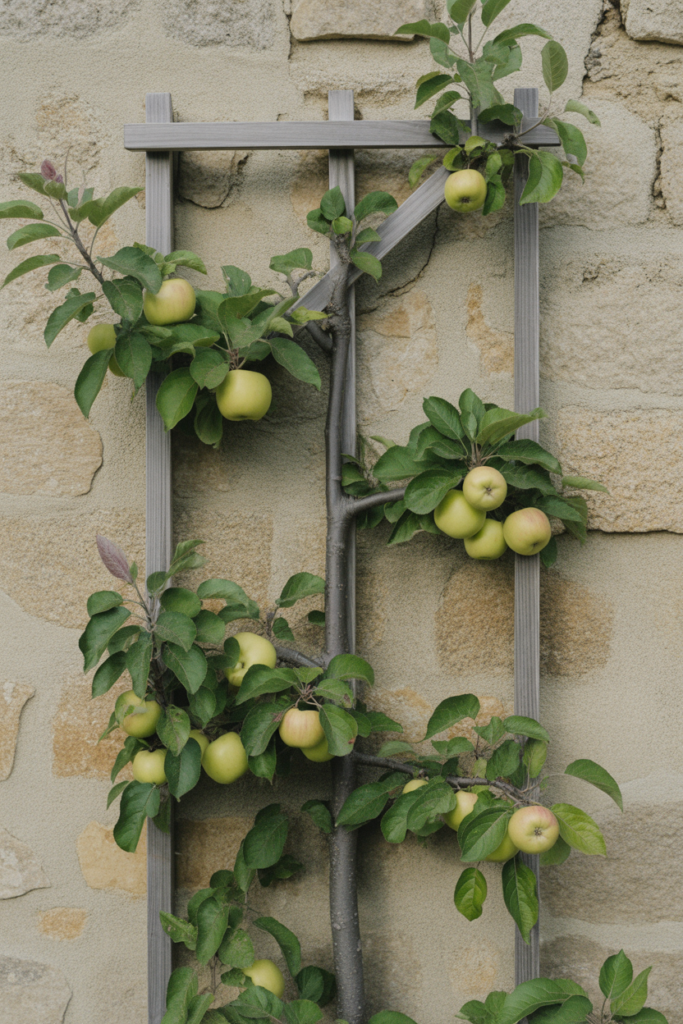
Espalier is the ancient practice of training fruit trees to grow flat against a wall or fence in decorative patterns like cordons or fans. This is a brilliant space-saving technique for smaller gardens and adds a layer of “functional art.” Apple, pear, or fig trees look stunning when their branches are meticulously guided into horizontal lines, especially when set against a warm, sun-baked stone wall.
10. The Wild Elegance of a “Jardin de Curé”
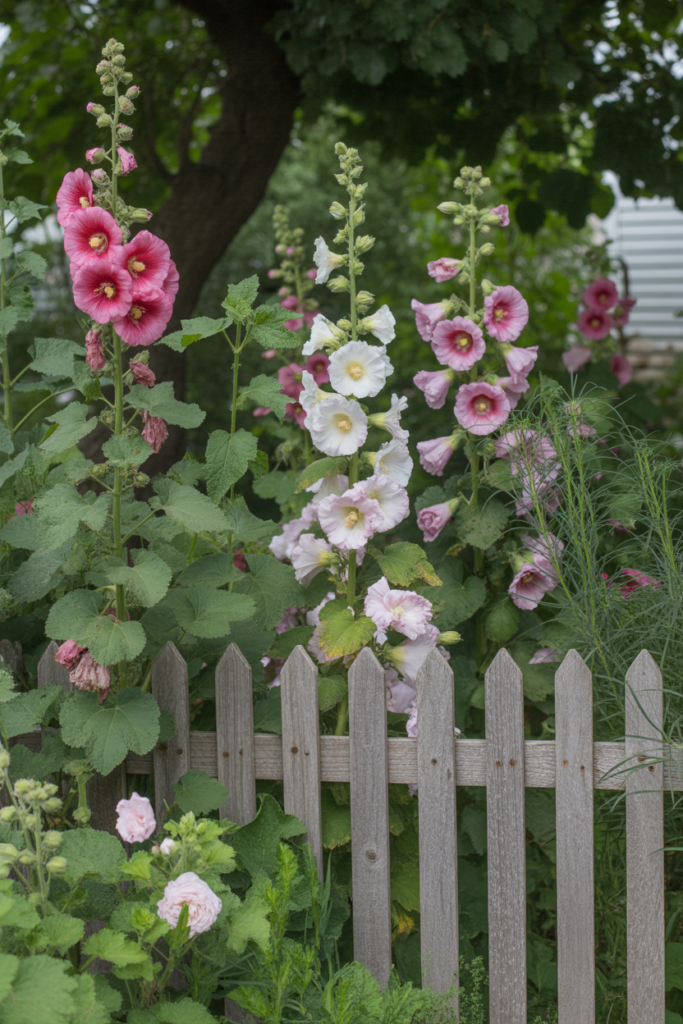
The Jardin de Curé, or priest’s garden, is the French version of a cottage garden. It blends utility with beauty, mixing medicinal herbs, vibrant flowers, and vegetables in a relaxed but enclosed space. Think of a mix of tall hollyhocks, dahlias, and sunflowers leaning over paths, interspersed with rosemary and kale. It is intentionally less “perfect” than a formal garden, celebrating a lush, overflowing abundance that feels cozy and lived-in.
11. The Grandeur of an Allée of Trees
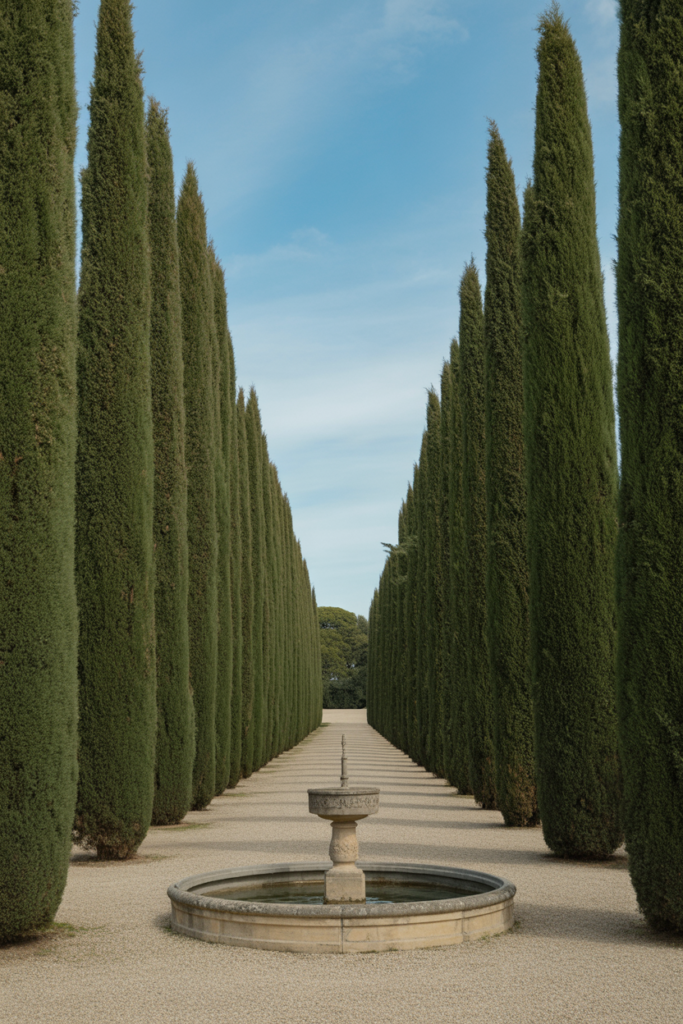
An allée is a straight path or carriage drive lined with a uniform row of trees on each side. While traditionally used in vast estates, you can adapt this for a standard backyard by using smaller, narrow-profile trees like Italian Cypress or Columnar Hornbeam. This technique draws the eye toward a focal point—such as a statue or a doorway—and creates an incredible sense of depth and perspective that makes even a medium-sized garden feel monumental.
12. Sun-Drenched Stone Terraces
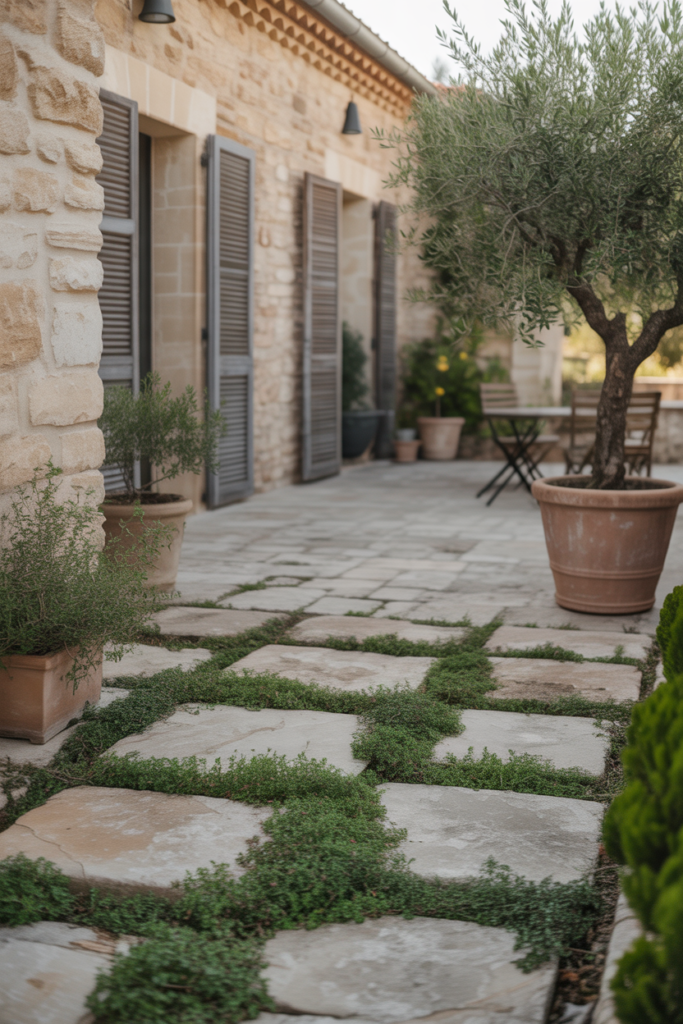
French outdoor living often centers around a stone terrace that acts as an extension of the home. Using large, irregular flagstones or travertine pavers creates a rugged yet refined floor for your “outdoor room.” To get the authentic look, allow moss or creeping thyme to grow in the crevices between the stones. This softens the hardscape and makes the terrace look as though it has been weathered by the sun for a century.
13. Ornate Statuary and Focal Points
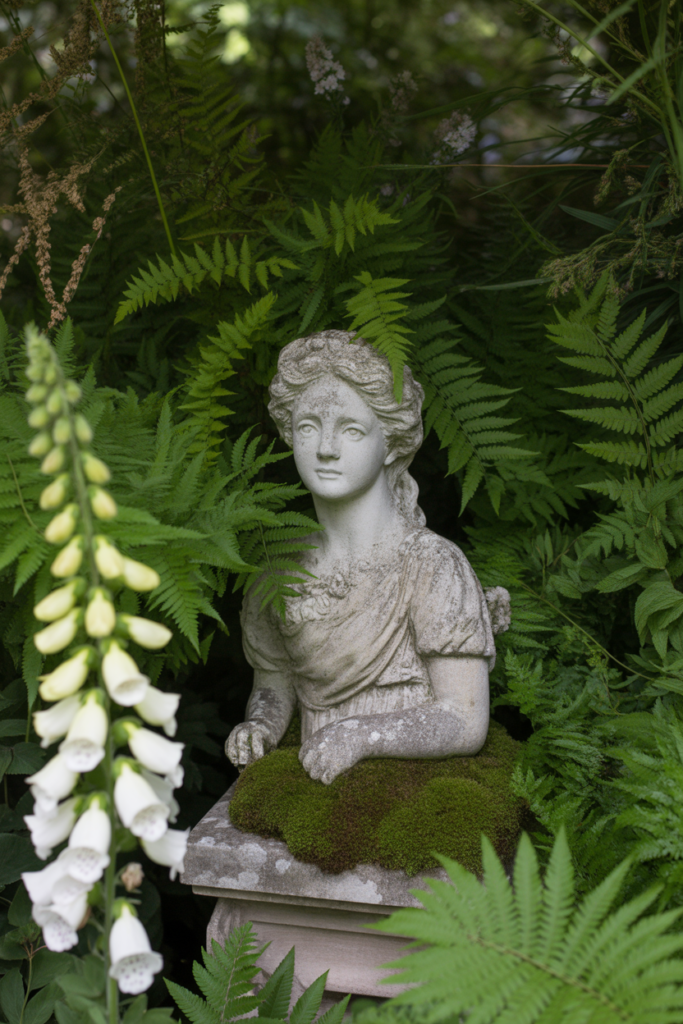
Integrating classical statuary is a hallmark of French design. A weathered stone bust, a Grecian-style urn, or a lead garden ornament tucked into a niche of greenery adds a layer of history and sophistication. The key is placement: use a statue to end a visual axis or hide one partially behind a flowering shrub for a “secret garden” feel. These pieces serve as permanent residents that provide structure when the flowers have finished blooming.
14. Kitchen Gardens (Potager) with Style
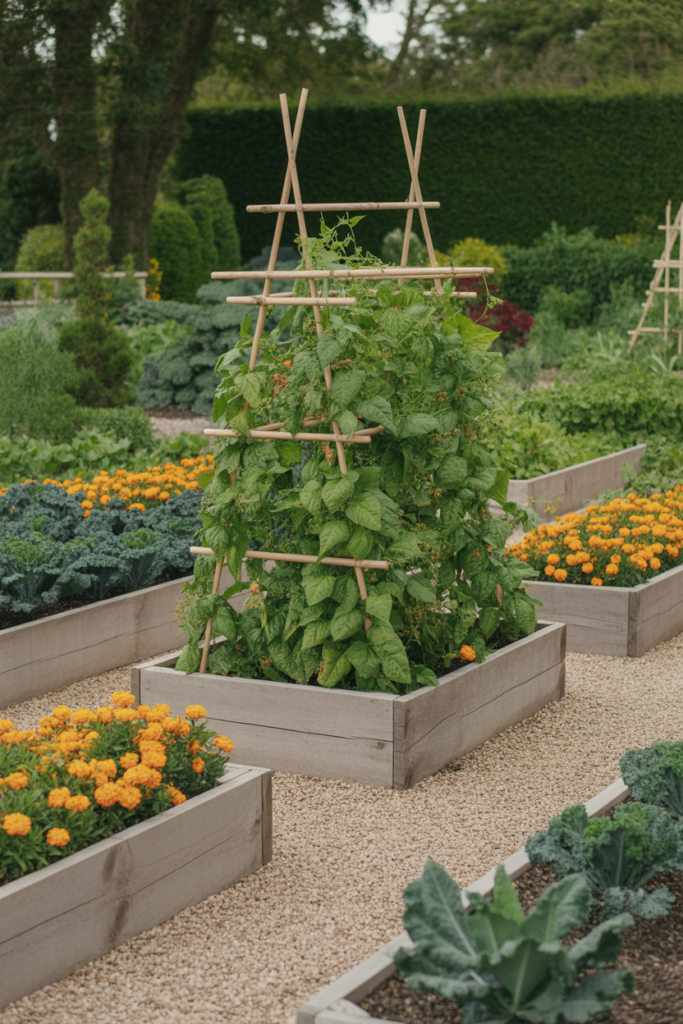
The French Potager is a vegetable garden designed to be as beautiful as it is productive. Instead of plain rows, vegetables are planted in geometric beds, often edged with low boxwoods or braided willow. Mix in edible flowers like marigolds and nasturtiums with your lettuce and herbs to create a tapestry of color. A central tuteur (a wooden or metal pyramid) for climbing beans or sweet peas adds the necessary vertical element to complete the look.
15. Enchanting Evening Lighting with Lanterns
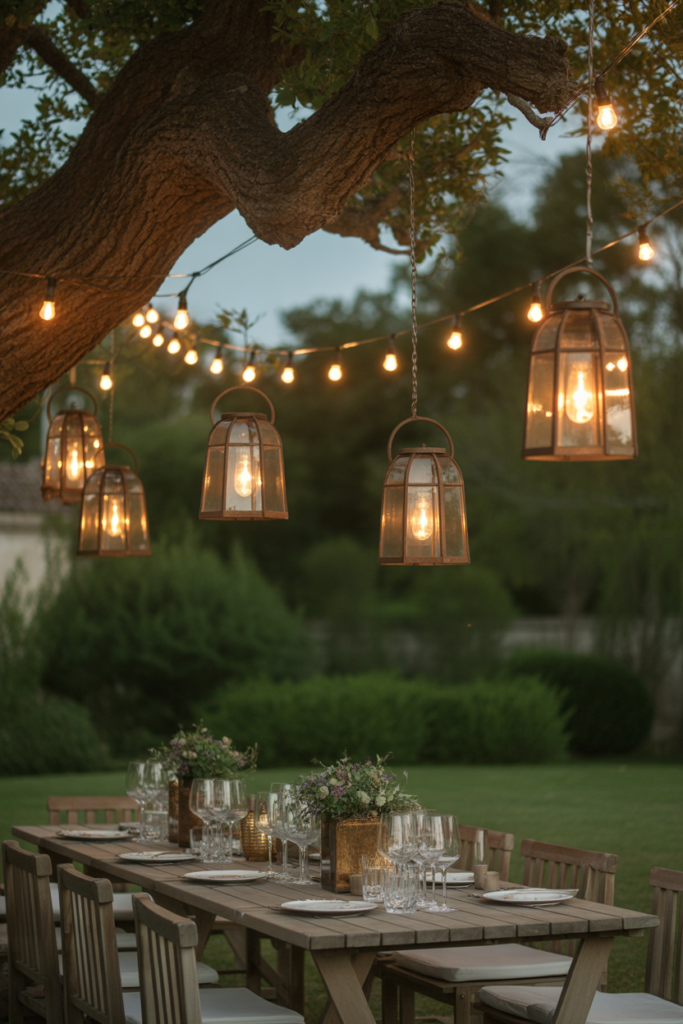
French gardens are designed to be enjoyed well into the night. Avoid harsh spotlights and instead opt for the soft, flickering glow of lanterns. Hanging wrought-iron lanterns from tree branches or placing oversized glass hurricanes along stone steps creates a magical, intimate atmosphere. String lights—often called “guinguette” lights in France—can be draped over a dining area to mimic the feel of a charming Parisian bistro.
16. The Visual Depth of a “Ha-Ha” Wall
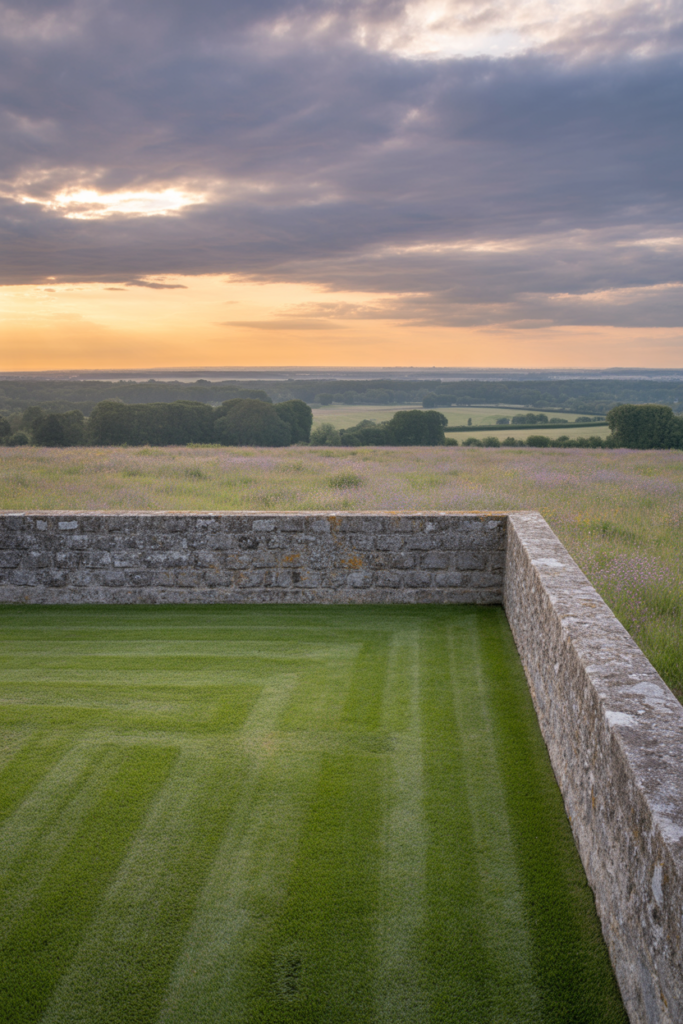
For gardens with a view, the “ha-ha” is a classic French and English landscape trick. It is a recessed landscape design element that creates a vertical barrier (like a hidden stone wall) while preserving an uninterrupted view of the horizon. By digging a ditch with one sloped side and one vertical stone face, you can keep your garden secure without the need for a distracting fence. This creates the illusion that your manicured lawn blends seamlessly into the rolling hills or woods beyond.
17. Topiary as Living Sculpture
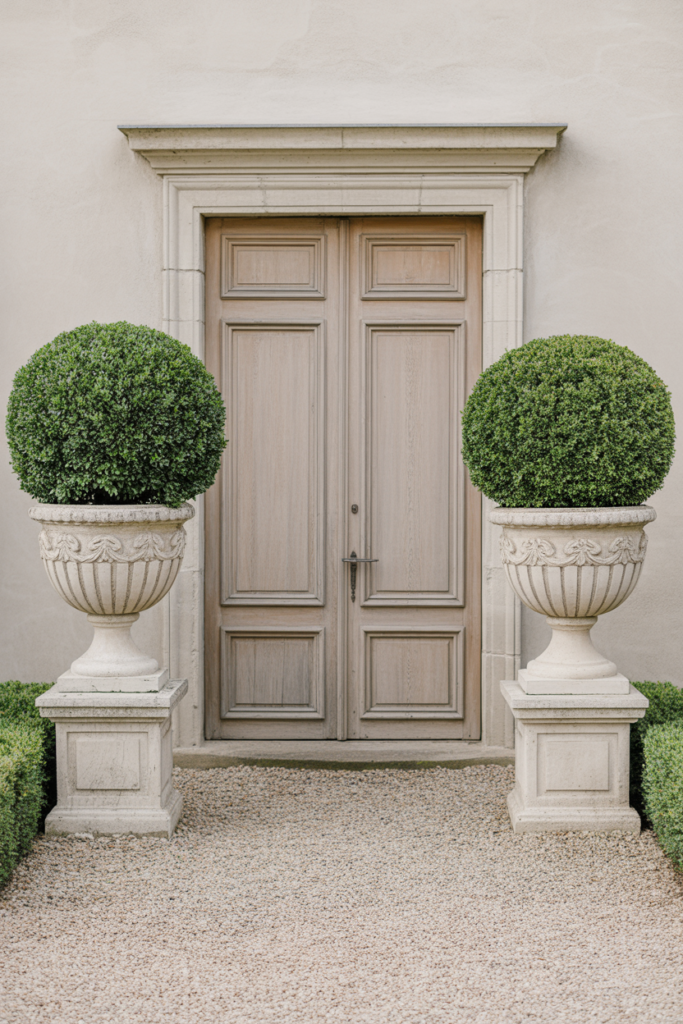
Beyond simple hedges, the French garden often features “living sculptures” in the form of topiary. Boxwood, yew, or privet can be meticulously clipped into spheres, cones, or even more whimsical spirals. These shapes provide strong architectural lines and act as green “anchors” throughout the changing seasons. Placing a pair of perfectly spherical topiaries in large pots on either side of an entrance creates an immediate sense of French sophistication and curb appeal.
18. Shaded “Berceau” or Trellised Walkways
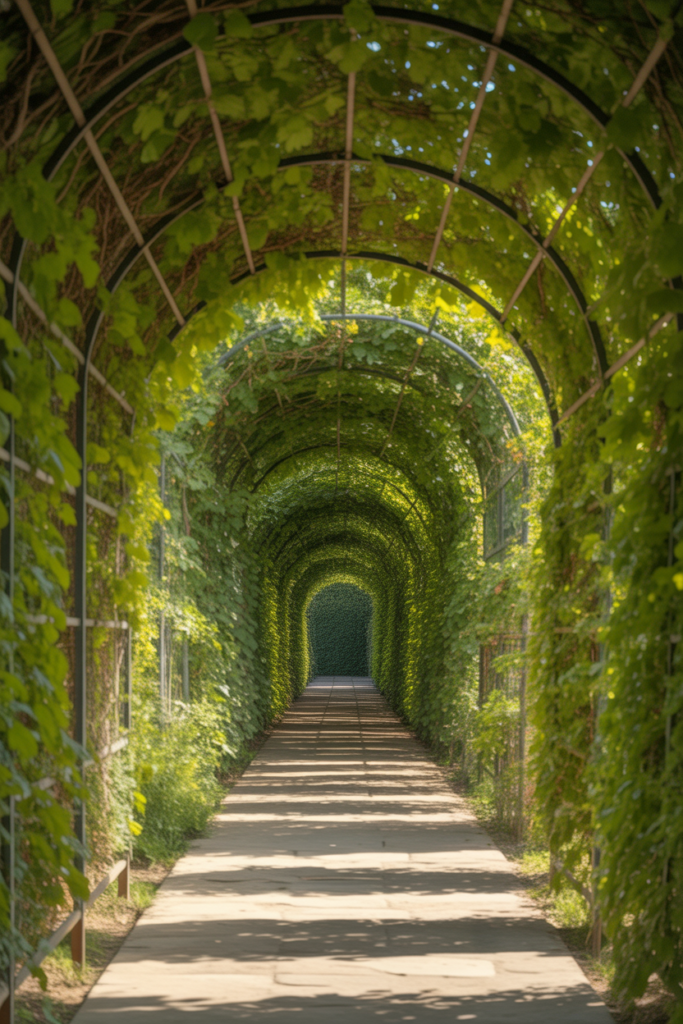
A berceau is a long, arched trellis that creates a shaded tunnel of greenery. Often covered in climbing hornbeam, lime trees, or fragrant jasmine, these walkways provide a cool retreat during hot summer afternoons. Walking through a tunnel of dappled light and leaves feels incredibly intimate and private. It is the ultimate way to add structure and a sense of “discovery” to your backyard, leading guests from one garden “room” to the next.