
17 Ball Python Enclosure Ideas
A proper enclosure is essential for keeping a Ball Python healthy, stress-free, and active. These snakes thrive in environments that feel secure, warm, and slightly hidden, not open or exposed. The goal is to recreate a natural habitat while keeping maintenance practical.
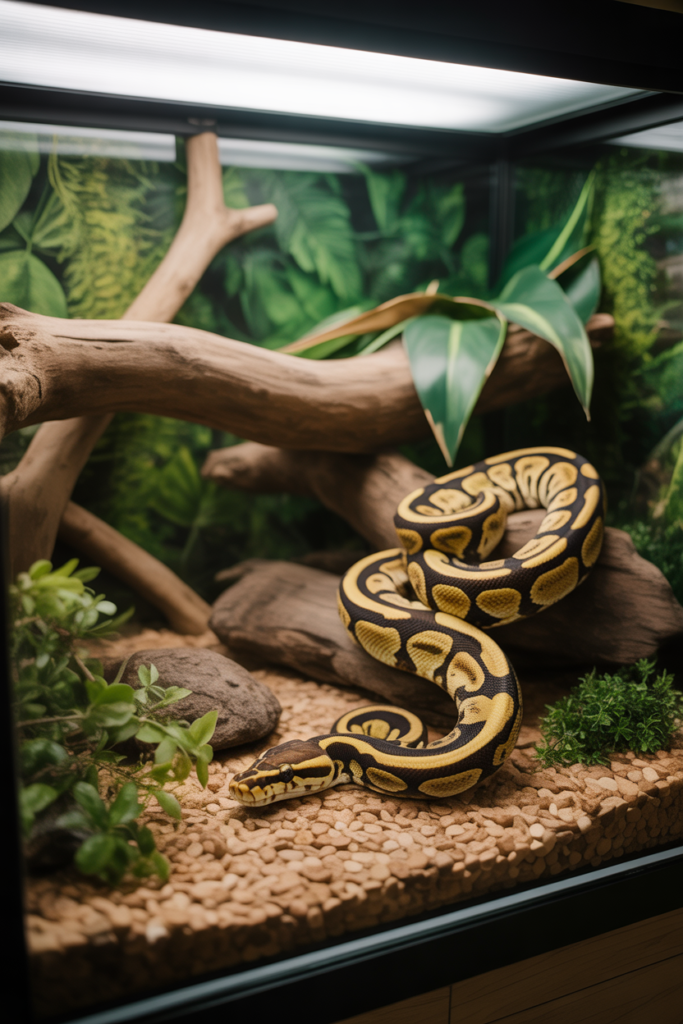
1. Naturalistic Forest-Style Enclosure
Create a habitat that mimics the natural African environment of a ball python. Use substrate like coconut fiber, add branches, leaf litter, and natural hides. Include live or artificial plants to create a dense, enclosed feel. This setup works because ball pythons prefer cluttered environments where they can hide easily and feel secure.
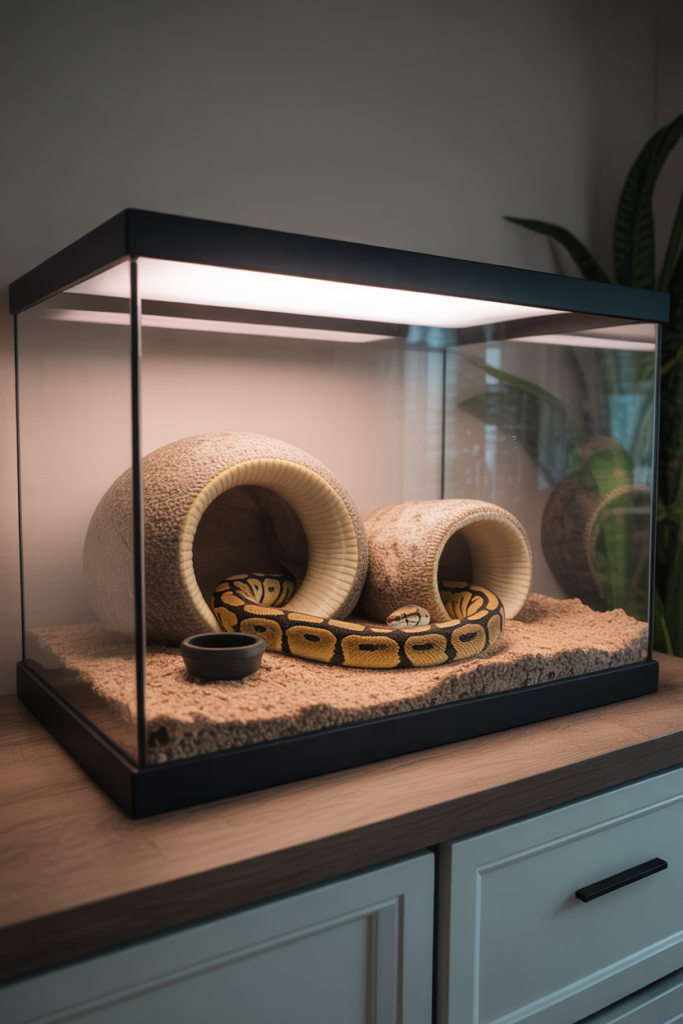
2. Minimalist Enclosure with Secure Hides
For beginners, a simple setup works best. Use a clean enclosure with two hides (warm and cool side), a water bowl, and basic substrate. Avoid overcrowding but ensure the snake has tight hiding spots. This idea works because ball pythons feel safest in enclosed spaces and don’t need large open areas.
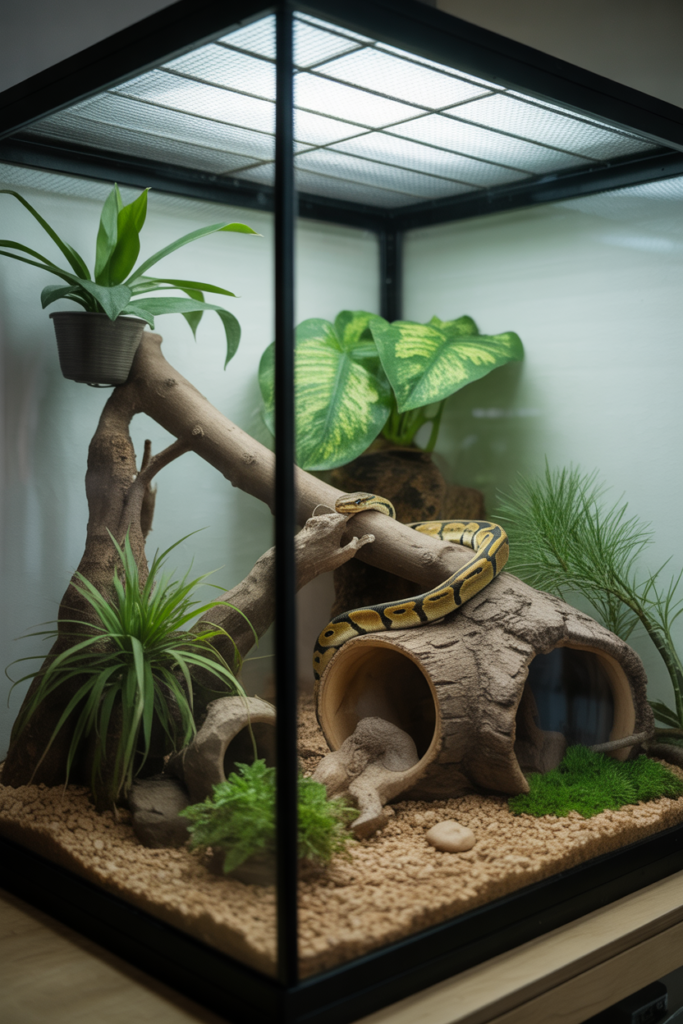
3. Bioactive Enclosure with Live Plants
A bioactive setup includes live plants, clean-up crew (isopods/springtails), and natural substrate layers. This creates a self-sustaining ecosystem that reduces cleaning. This idea works because it closely mimics nature and maintains humidity levels naturally.
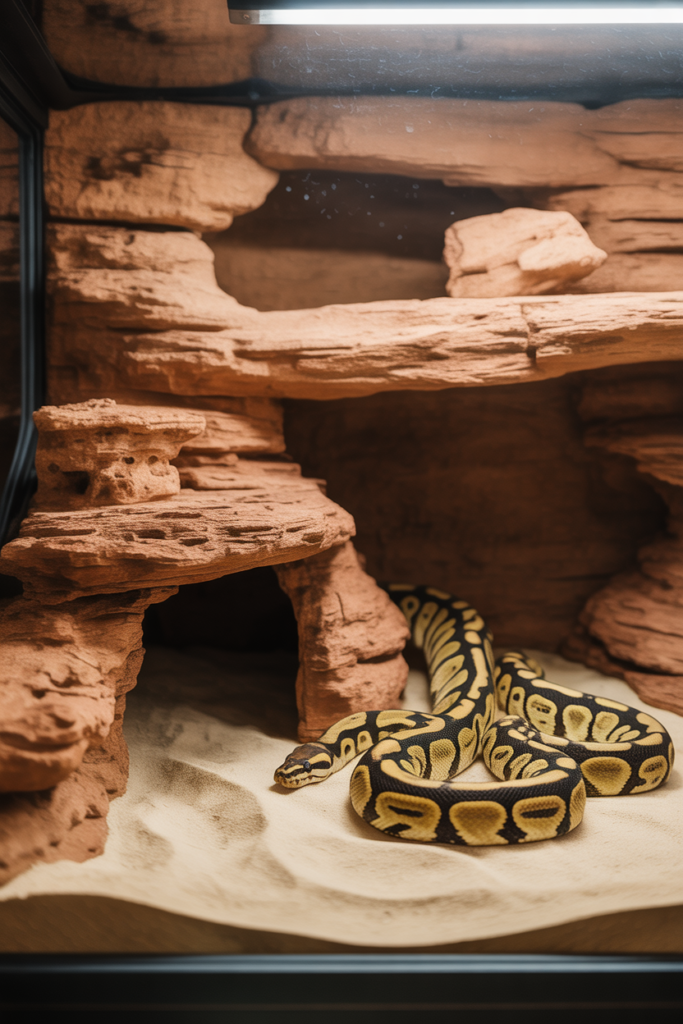
4. Rock Cave Desert-Style Enclosure
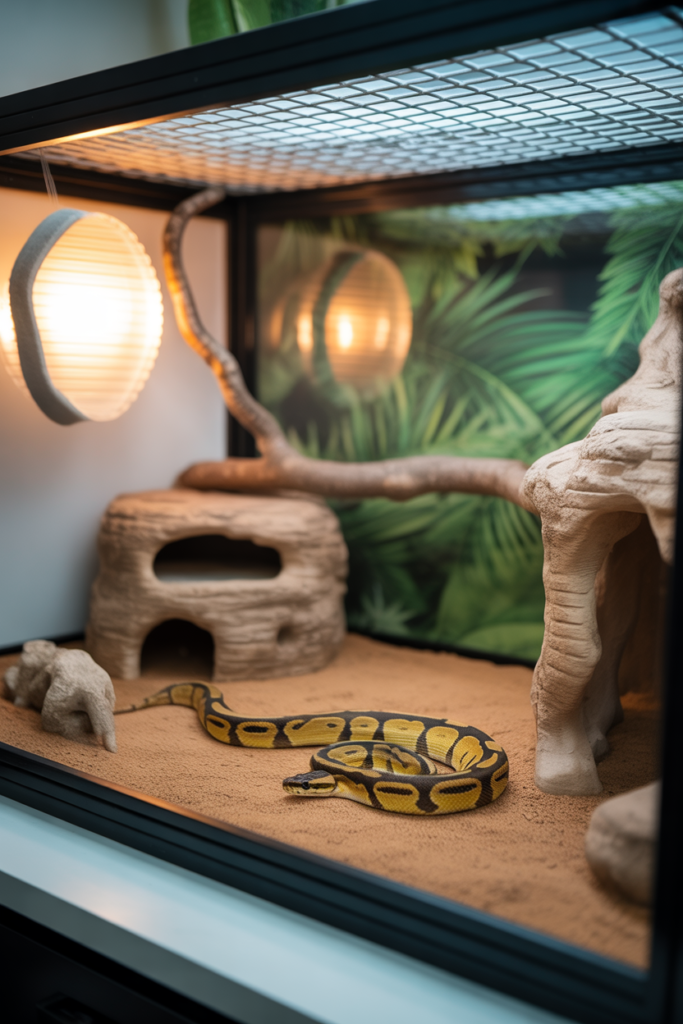
Use rock formations and cave-like hides to create a dry, structured enclosure. While ball pythons are not desert animals, this style can work if humidity and temperature are controlled properly. The key is creating tight hiding spaces within rocks. This idea works because snakes love enclosed, cave-like environments.
5. Jungle-Themed Enclosure with Dense Cover
Create a lush jungle-style enclosure using artificial vines, plants, and climbing branches. This gives the snake multiple hiding and exploring opportunities. This idea works because it reduces stress by providing cover from all angles.
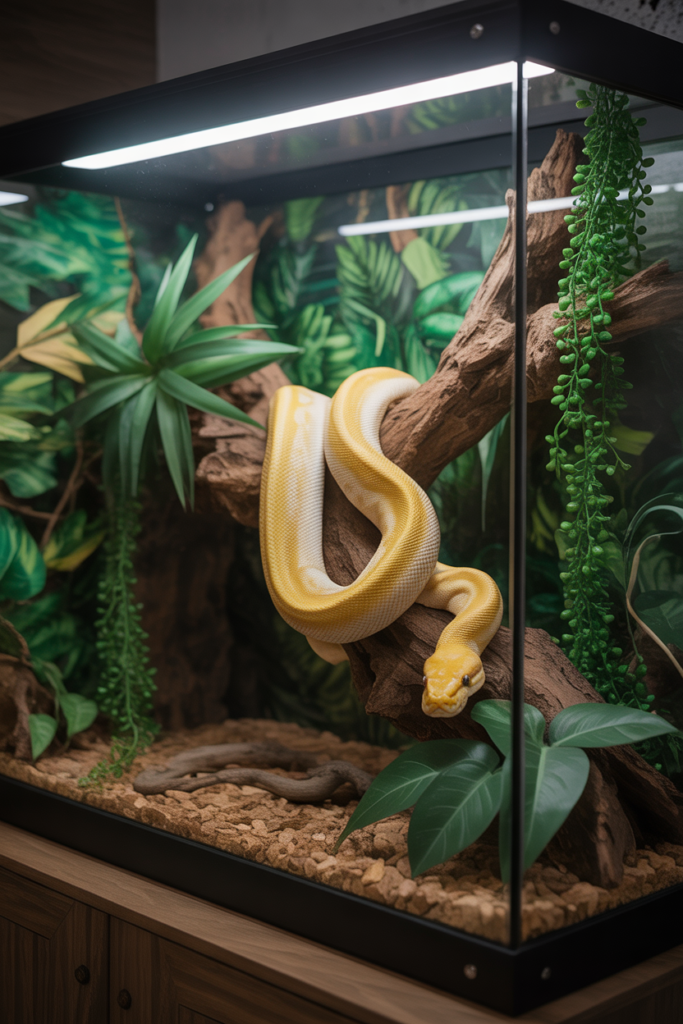
6. PVC Enclosure with Controlled Environment
A PVC enclosure is one of the best upgrades for ball python keepers because it holds heat and humidity much better than glass tanks. Add front-opening doors, proper ventilation, and secure locks. This setup works especially well because ball pythons require stable temperatures and humidity, and PVC makes that easier to maintain consistently
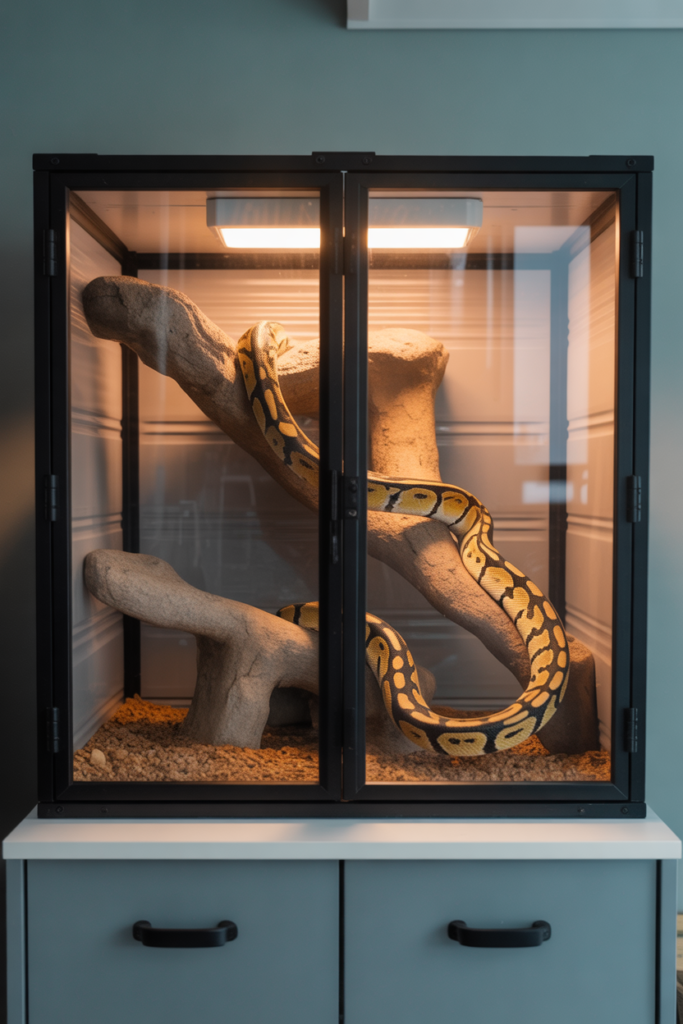
7. Drawer-Style Rack System for Efficiency
A rack system uses sliding drawers instead of traditional enclosures. Each drawer contains substrate, a hide, and a water bowl. This setup is popular for breeders or multiple snakes because it saves space and keeps conditions consistent. It works because ball pythons prefer tight, enclosed spaces and feel secure in smaller environments.
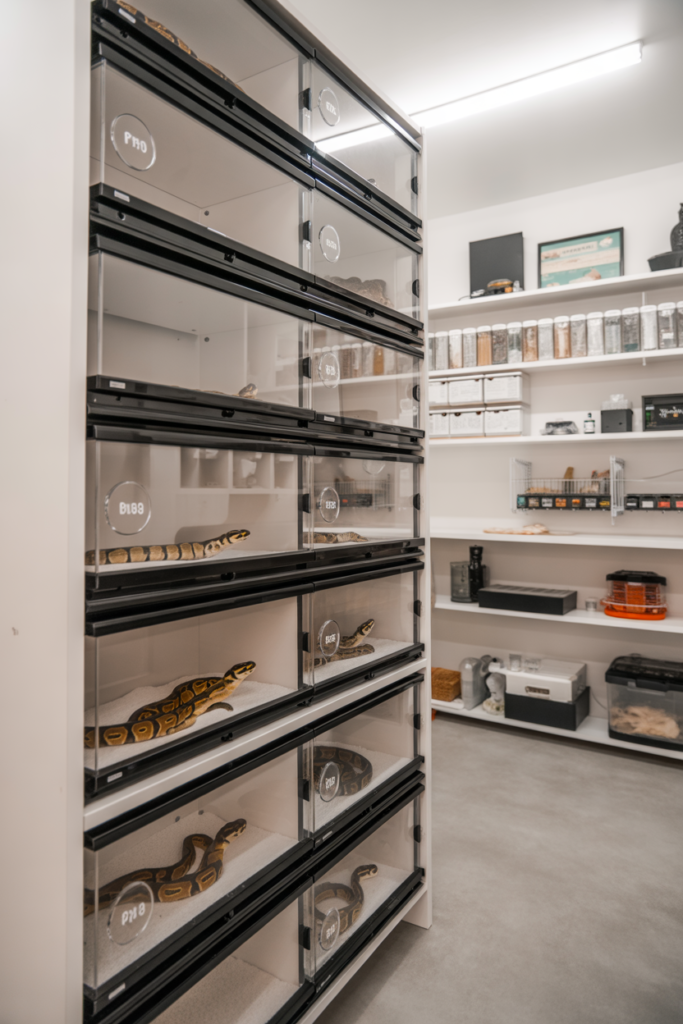
8. Display Enclosure with Background Wall
A display enclosure focuses on aesthetics while still meeting the snake’s needs. Add a textured background (rock, wood, or foam) to create depth and a natural look. Include plants, hides, and branches. This idea works because it combines visual appeal with proper husbandry, making it perfect for showcasing your snake.
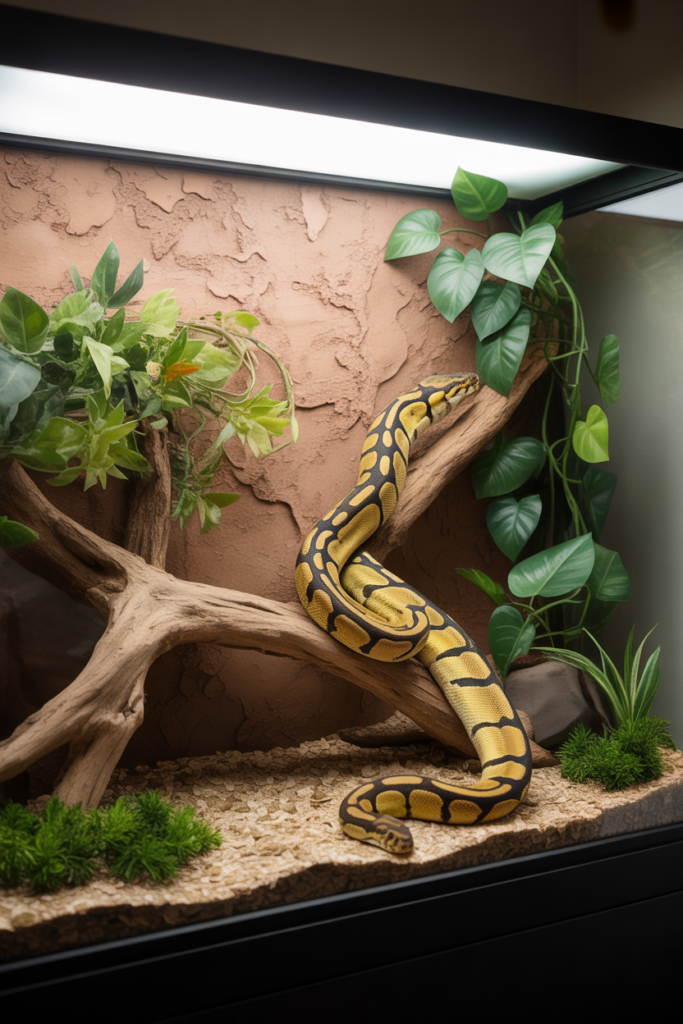
9. Split-Level Enclosure for Exploration
Although ball pythons are mostly ground-dwelling, adding a small raised platform or second level can give them extra enrichment. Keep it low and safe with easy access. This idea works because it adds variety without overwhelming the snake.
10. Enclosure with Hidden Tunnel System
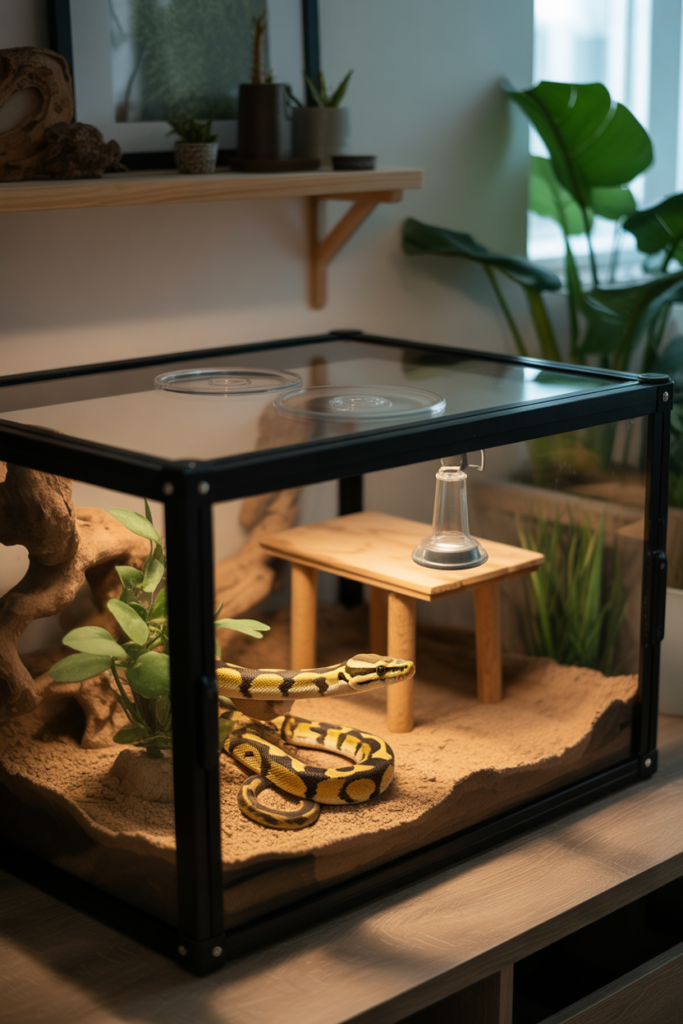
Create tunnels using cork bark, tubes, or buried hides beneath the substrate. This gives the snake secret pathways to move through. This idea works because it mimics natural burrowing behavior and makes the snake feel more secure.
11. Enclosure with Dual Hide System (Warm + Cool Side)
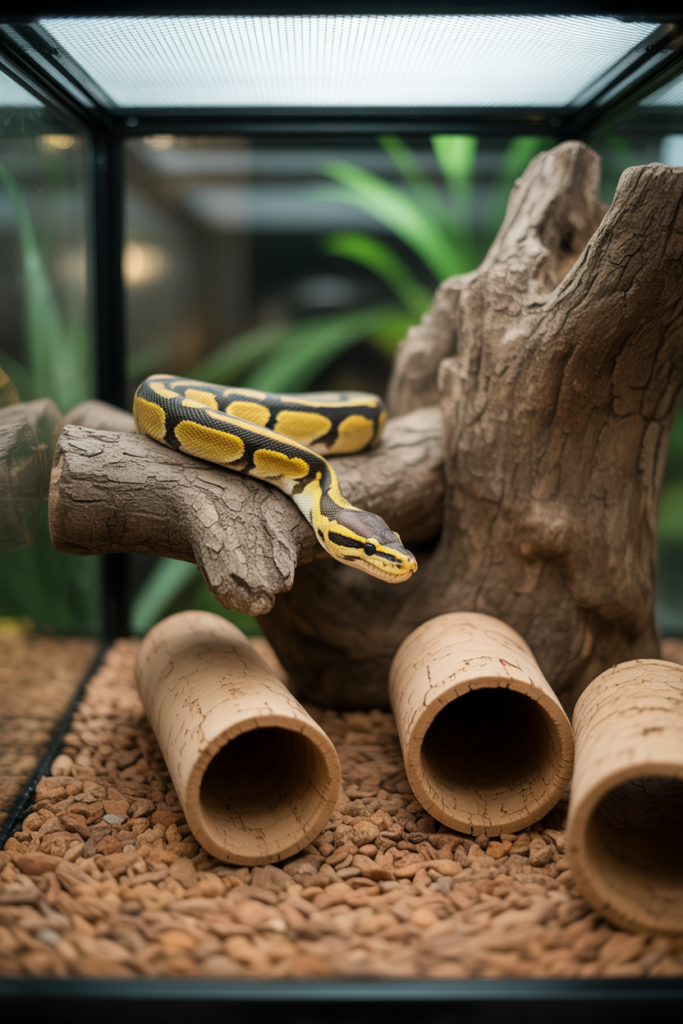
Every proper setup should include two tight hides—one on the warm side and one on the cool side. This allows your Ball Python to thermoregulate without feeling exposed. Use snug, enclosed hides that touch the snake’s body on multiple sides. This idea works because ball pythons prioritize security over openness, and having two identical hides prevents them from choosing safety over proper temperature.
12. Humid Hide Enclosure for Shedding Support
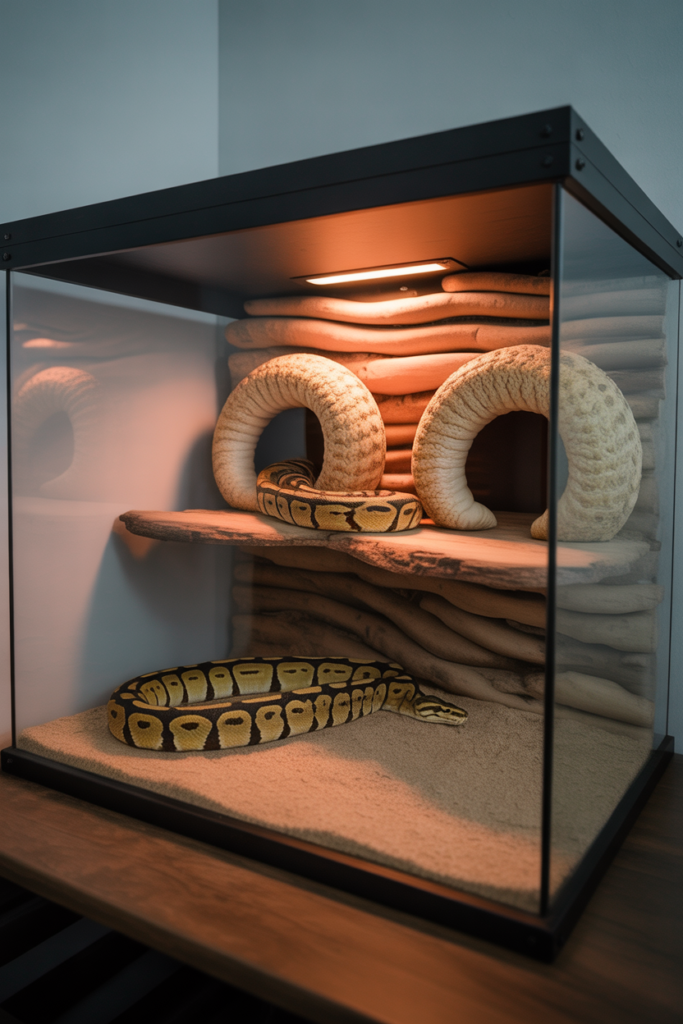
Add a humid hide filled with damp sphagnum moss to help with shedding. Place it on the warm side so humidity stays consistent. This idea works because ball pythons often struggle with incomplete sheds in low humidity, and a dedicated moist hide solves that naturally.
13. Enclosure with Overhead Heating + Thermostat Control
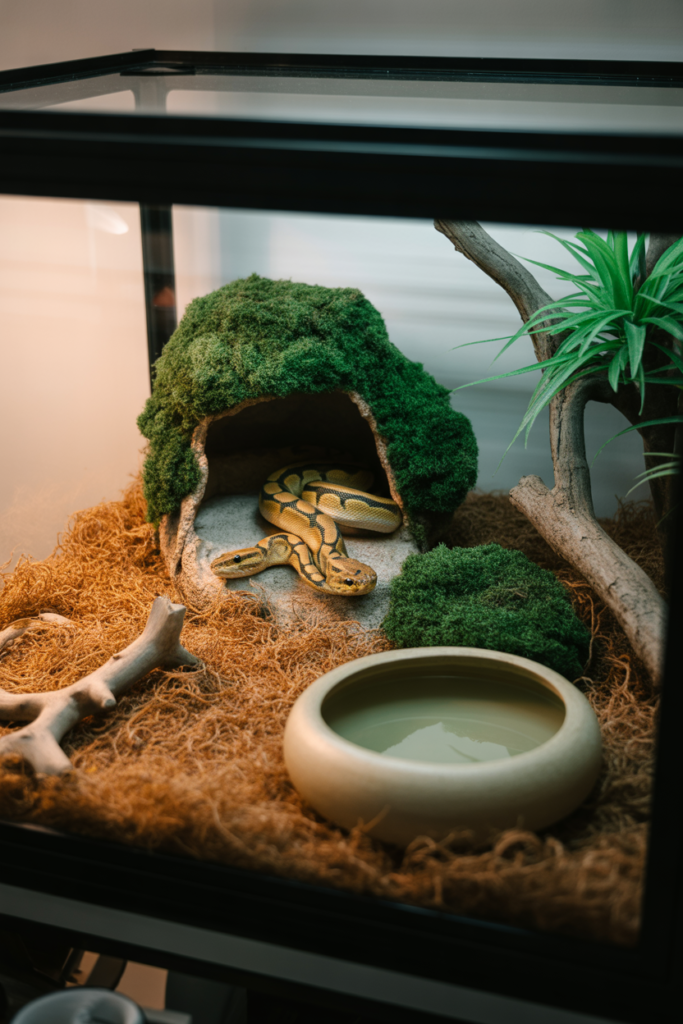
Use overhead heating (ceramic heat emitter or radiant heat panel) instead of under-tank heating for better temperature control. Always connect it to a thermostat. This setup works because it creates a natural heat gradient and reduces burn risk while keeping conditions stable.
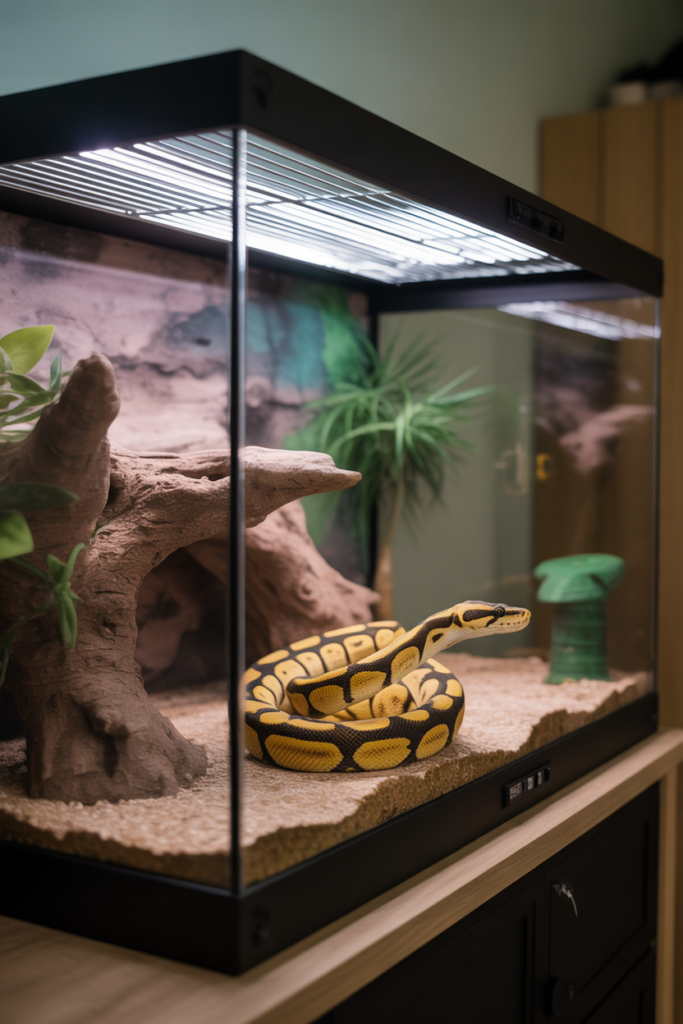
14. Enclosure with Cluttered Ground Cover
Instead of leaving open space, fill the enclosure with clutter—plants, bark, branches, and hides. This reduces stress by giving the snake constant cover. This idea works because ball pythons feel vulnerable in open environments and thrive in cluttered setups.
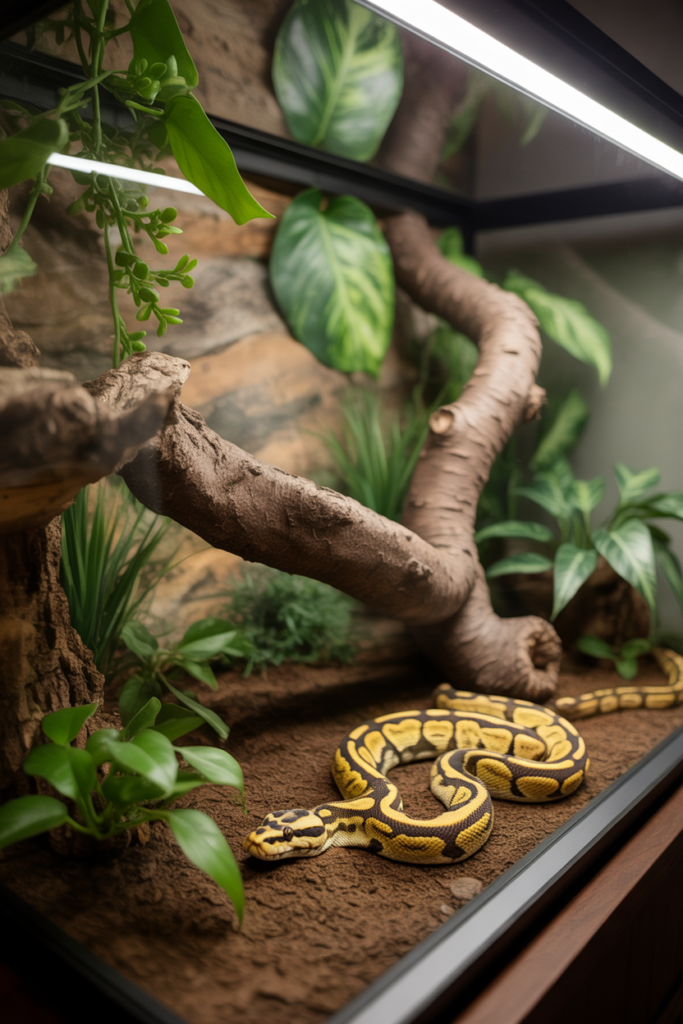
15. Enclosure with Large Water Bowl for Soaking
Provide a water bowl large enough for the snake to fully coil inside. This supports hydration and helps during shedding. Place it on the cool side to prevent excess humidity spikes. This idea works because it supports natural behavior and improves overall health.
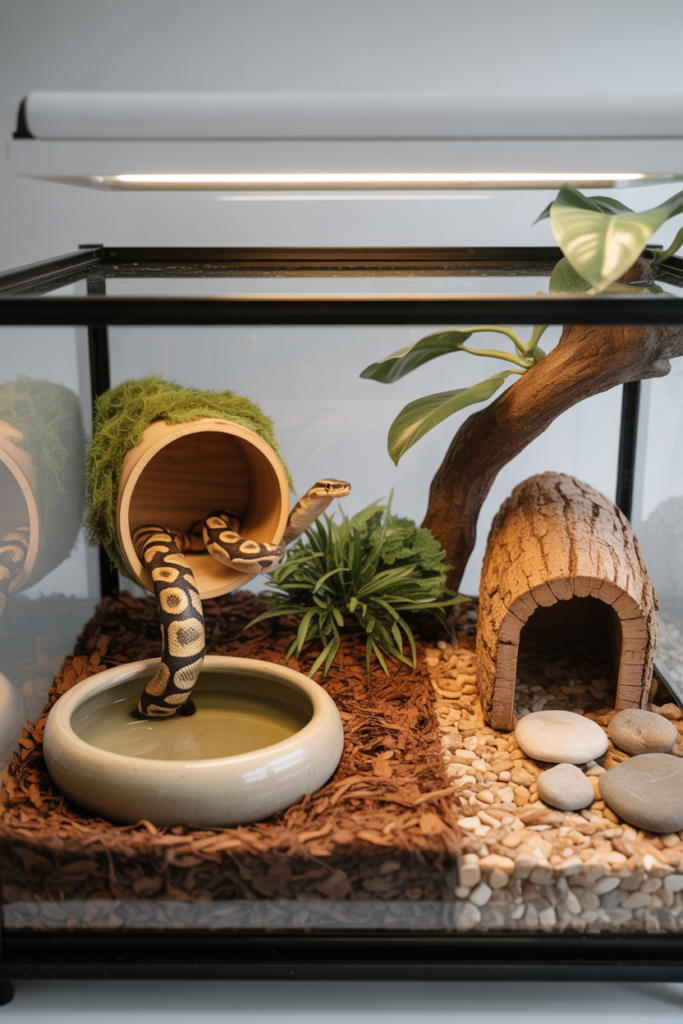
16. Enclosure with Secure Locking System
A secure locking mechanism is essential for any Ball Python enclosure. Ball pythons are surprisingly strong and can push open loose lids or doors. Use front-opening enclosures with proper locks or clips to prevent escapes. This idea works because safety is just as important as comfort—keeping your snake contained protects both the animal and your home environment.
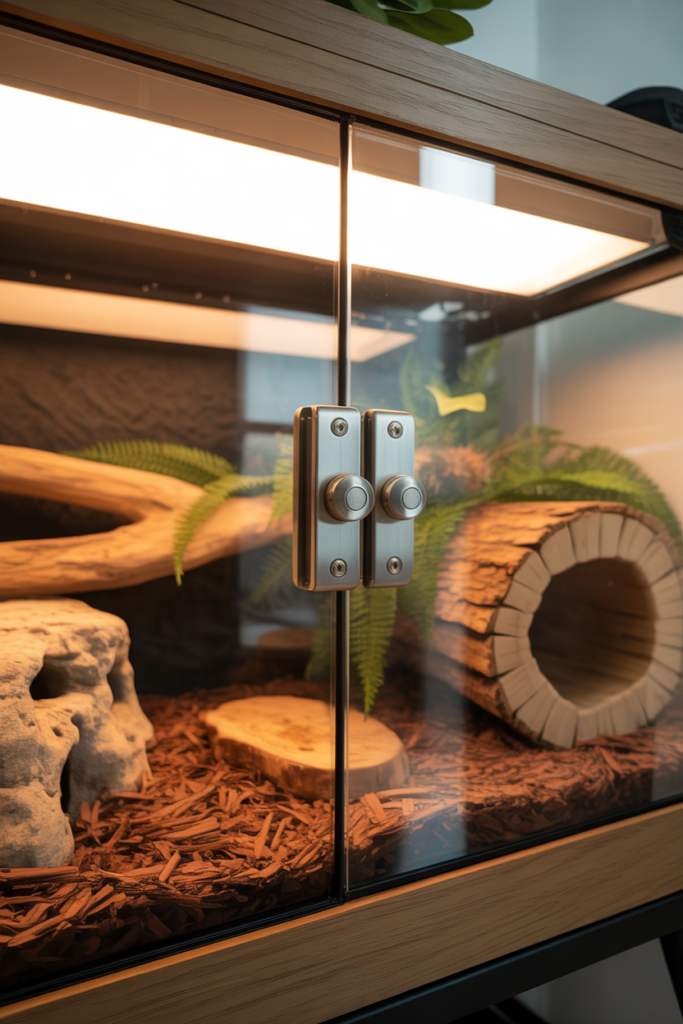
17. Temperature Gradient Enclosure (Warm to Cool Zones)
A proper temperature gradient is critical for a healthy enclosure. One side should be warm (around 88–92°F) and the other cooler (around 75–80°F). This allows the snake to regulate its body temperature naturally. This idea works because ball pythons rely on external heat, and without a gradient, they can’t digest food or stay healthy.
Conclusion
Creating the perfect enclosure for your ball python is about balancing security, comfort, and proper environmental conditions. These snakes thrive in spaces that feel safe, warm, and slightly hidden rather than open and exposed.
To build the ideal setup:
- always provide tight hides and clutter for security
- maintain proper temperature gradients and humidity levels
- use safe heating and controlled environments
- ensure the enclosure is escape-proof and easy to maintain
Whether you prefer a naturalistic display enclosure or a simple beginner setup, the goal is to create a space where your snake feels secure and can behave naturally.
A well-designed enclosure doesn’t just look good—it keeps your ball python healthy, stress-free, and thriving